Search by topic
- archaeology
- Building of Local Interest
- chapel
- charity
- church
- crime
- dressmaker
- Great Eastern Railway
- Listed building
- Mapping Relief
- medieval
- oral history
- poverty
- Public House
- railway worker
- Religious House
- Roman
- scholar
- school
- Then and Now
- tudor
- women
- work
- world war one
- world war two
Search by text


Fifty Farm, Isleham Fen
History of Filty Farm
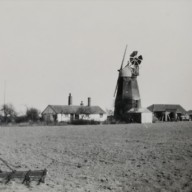
Thomas Aves lived here as tenant. The farm was owned by a charity. It fell down after the war. Polly Hills book, The History of Isleham Fen in the 1930s contains a section of the Aves family; her interest in them is that she states that they are the only example of a Fen family which farmed on such a large scale, by Fen standards, over a period of at least a century.
1881
Charles Aves, bailiff
1901
Charles Aves, 57, farmer, b Isleham
Sarah, 53, b Downham
Bertie, 23, b Isleham
Thomas, 21, b Isleham
Valraita, 19, b Isleham
Belanda, 15, b Isleham
Emily, 12, b Isleham
In 1891 the Aves family were living at St Bernards Cottage, Mildenhall Road
1911 Fen Bank (farm rented from School Charity Trustees)
Thomas Aves, 31, farm labourer
Elizabeth, 27,
Dorothy, 5,
Cyril, 2,
William, 1,
The farm, of 50 acres, was large, with a dairy and up to 18 cows. Thomas Aves was growing sugar beet before the beet factory opened at Queen Adelaide in 1925.
1921 The Bank
Thomas Aves, 42, farmer, b Isleham
Elizabeth, 37, b Isleham
Sara Aves, mother, 73, b Little Downham
Dorothy, 15, b Isleham
Cyril, 13, b Isleham
William, 11, b Isleham
Sidney, 8, b Isleham
Lilian, 2, b Isleham
1948
Will Aves married Evelyn Palmer whose father was a farm worker on the Fen bank.
1963
Thomas Aves died
Projects
Contribute
Do you have any information about the people or places in this article? If so, then please let us know using the
Contact page or by emailing
capturingcambridge@
Licence
This work is licensed under
CC BY-NC-SA 4.0


 not including content on external links as indicated
by
not including content on external links as indicated
by .
.