Search by topic
- archaeology
- Building of Local Interest
- chapel
- charity
- church
- crime
- dressmaker
- Great Eastern Railway
- Listed building
- Mapping Relief
- medieval
- oral history
- poverty
- Public House
- railway worker
- Religious House
- Roman
- scholar
- school
- Then and Now
- tudor
- women
- work
- world war one
- world war two
Search by text


Beeching Closures in Cambridgeshire
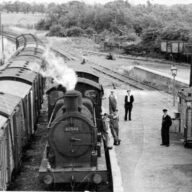
The Beeching closures of the 1960s led to the loss of many railway lines and stations across Cambridgeshire. Intended to reduce costs and modernise the network, these cuts reshaped transport.
Overview
In 1963, Dr Richard Beeching published The Reshaping of British Railways, recommending the closure of underused and unprofitable lines. Across Cambridgeshire, a number of branch lines and smaller stations were identified for closure.
These changes formed part of a national programme that significantly reduced the size of the railway network.
Lines and Stations Affected
Several local routes were closed or reduced in service during the 1960s. These included rural branch lines linking market towns and villages, as well as smaller intermediate stations on larger routes.
Communities that had relied on rail for travel, trade, and communication were left increasingly dependent on road transport.
Impact on Communities
The closures had a lasting effect on daily life in Cambridgeshire. For some villages, the railway had been a vital connection to Cambridge and beyond. Its loss made commuting more difficult and reduced access to markets, services, and employment.
Local economies and patterns of movement changed, with buses and private cars becoming more important.
Landscape and Legacy
Although many lines were lifted, traces remain in the landscape. Former trackbeds, bridges, and station buildings can still be identified, and in some cases have been reused as footpaths, cycle routes, or guided busways.
These remnants provide a visible reminder of the once extensive railway network that served the county.
Reassessment and Modern Change
In recent years, there has been renewed interest in rail expansion, with some former routes reconsidered for reopening or alternative transport use. Modern developments, including new stations and improved services, reflect changing priorities in regional transport.
The legacy of the Beeching closures continues to shape debates about connectivity and infrastructure in Cambridgeshire.
Contribute
Do you have any information about the people or places in this article? If so, then please let us know using the
Contact page or by emailing
capturingcambridge@
Licence
This work is licensed under
CC BY-NC-SA 4.0


 not including content on external links as indicated
by
not including content on external links as indicated
by .
.