Search by topic
- archaeology
- Building of Local Interest
- chapel
- charity
- church
- crime
- dressmaker
- Great Eastern Railway
- Listed building
- Mapping Relief
- medieval
- oral history
- poverty
- Public House
- railway worker
- Religious House
- Roman
- scholar
- school
- Then and Now
- tudor
- women
- work
- world war one
- world war two
Search by text


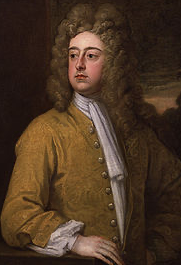 Francis Godolphin Osborne
Wandlebury Round / Gog magog House
History of Wandlebury
Listed Building
Lodge, early C19 with C20 additions.
Granary. Early C15 and c.1980. Formerly at Tadlow, Essex, moved to its present date c.1976 and re-erected c.1980. (Historic England)
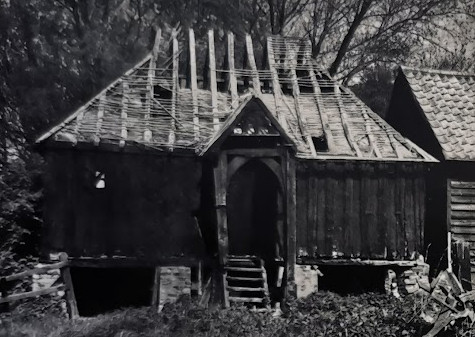
Tadlow granary, 16th cent., RCHM
For general information about the site see the Wikipedia article:
https://en.wikipedia.org/wiki/Wandlebury_Hill
Listed building on Heritage at Risk Register
There is a ghost story associated with the site:
CAS 2005 Evaluation Survey and Excavation at Wandlebury Ringwork Cambridgeshire 1994-97: Part II, The Iron Age Pottery by Leo Webley.
CAS 2024 Short report on 2024 excavation at Wandlebury
In 2024 evidence of a later Bronze Age ditch was uncovered supported by a pottery sherd of the same period.
1211
Gervae of Tilbury wrote in his Otia Imperialia about 1211:
There is a place called Wandleberia, from the fact that the Wandali, when ravaging Britain and savagely murdering the Christians, placed their camp there.
For the rest of this text see Enid Porter, Cambridgeshire Customs and Folklore, p187f.
1572-3 John Baxter, esquire Bedell, went ‘to gogmagog hils at the tyme of playes’ (University Accounts)
1620 (A H Nelson) Early Cambridge Theatres p.99:
Saturday, 15 July 1620. The Iron Age Wandlebury Round in the Gig Magog Hills south-east of Cambridge. Robert Scott, Master of Clare College and this year’s Vice-Chancellor, has caught word of impending sports and games at the Gogs. ……. Surmounting the ancient earthworks, Scott descries numerous booths and widescale preparation for ‘horseraces, bull bayting, beare bayting, Loggattes, ninehoales, ryfling’ [gambling] as well as athletic games. Scott learns that John Adamson of Ware, the entrepreneur, expects activities to continue for at least three weeks, and perhaps as many as five. Scott and Tabor, Registrary. bind over a crowd of suspicious Cambridge characters: the widow Juda Hudson, a suspected bawd and whore commonly known as Jumping Judy; George Cook and George Clark, victuallers; John Fardell, carpenter, whose wife is a known and noted whore; Thomas Whaley, innkeeper; and John Cochey, carrier.
1724
William Cole recorded that around this year, when he was a child, he used to see the figure of a giant outlined in the turf when travelling from Balsham to Cambridge.
1753
The famous stallion, the Godolphin Arabian, was buried in the Cupola stable black.
Home of Francis Godolphin Osborne, Lord Godolphin, who represented Cambridgeshire in Parliament from 1810 to 1831. He was made High Steward of Cambridge in 1836.
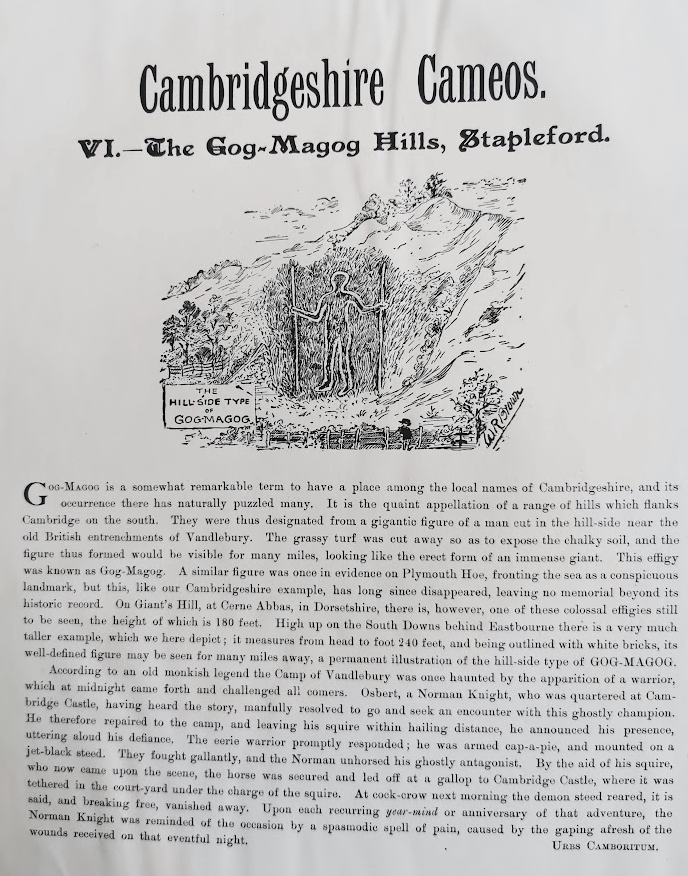
Urbs Camboritum, Gog Magog Hills
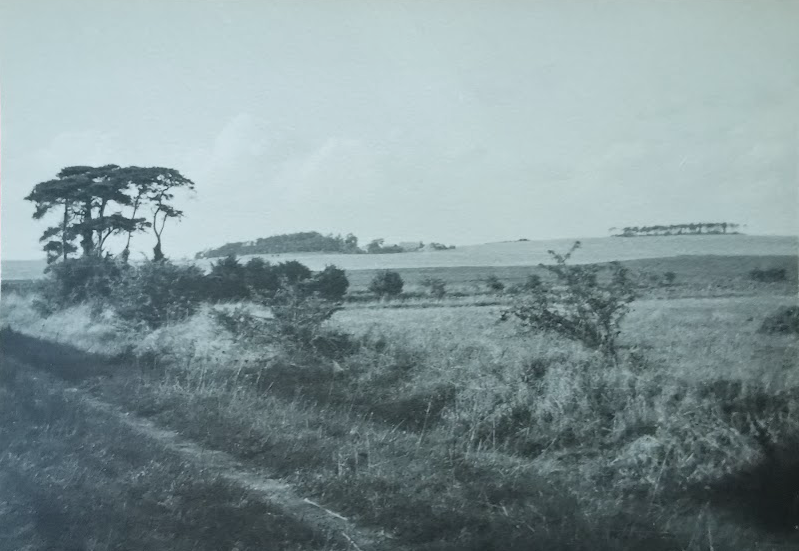
Roman Road, Gog Magog, 1932 (MoC251/54)
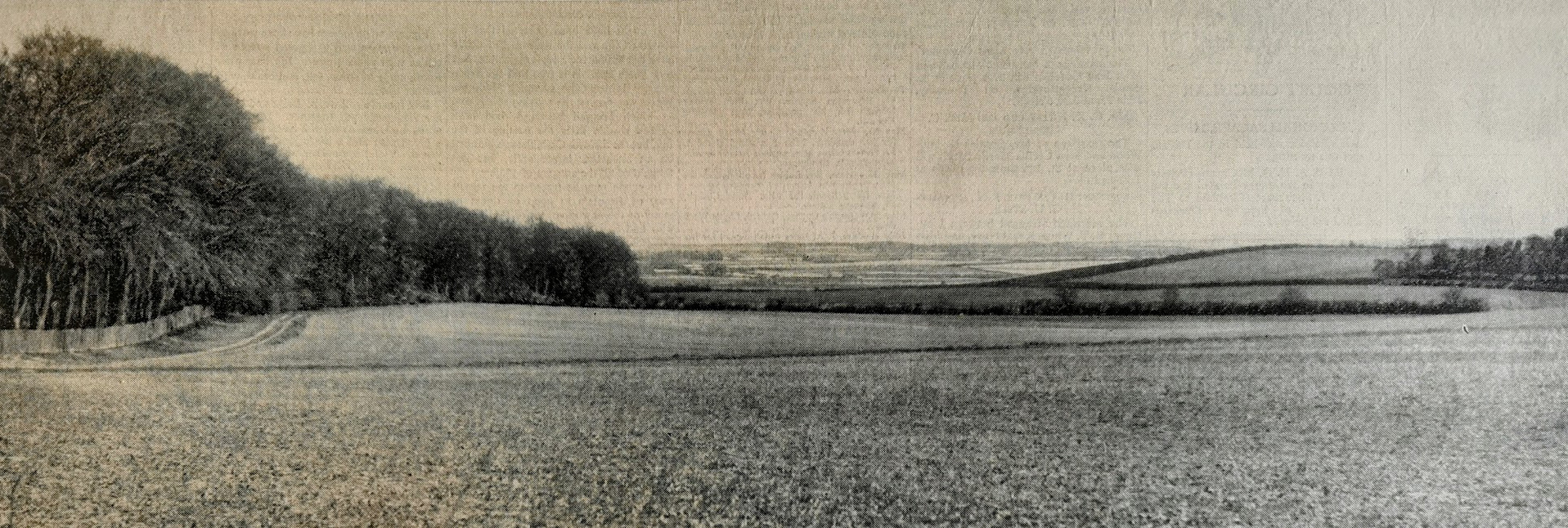
Gog Magog Hills 1936
1954
T C Lethbridge excavated the site and made claims of traces of figure of Magog, Earth Goddess walking beside her chariot, followed by Gog or Helioth or Baal, the Spirit of Darkness walking in front of them. His findings were written up in ‘Gogmagog – The Buried Gods’, T C Lethbridge, 1957.
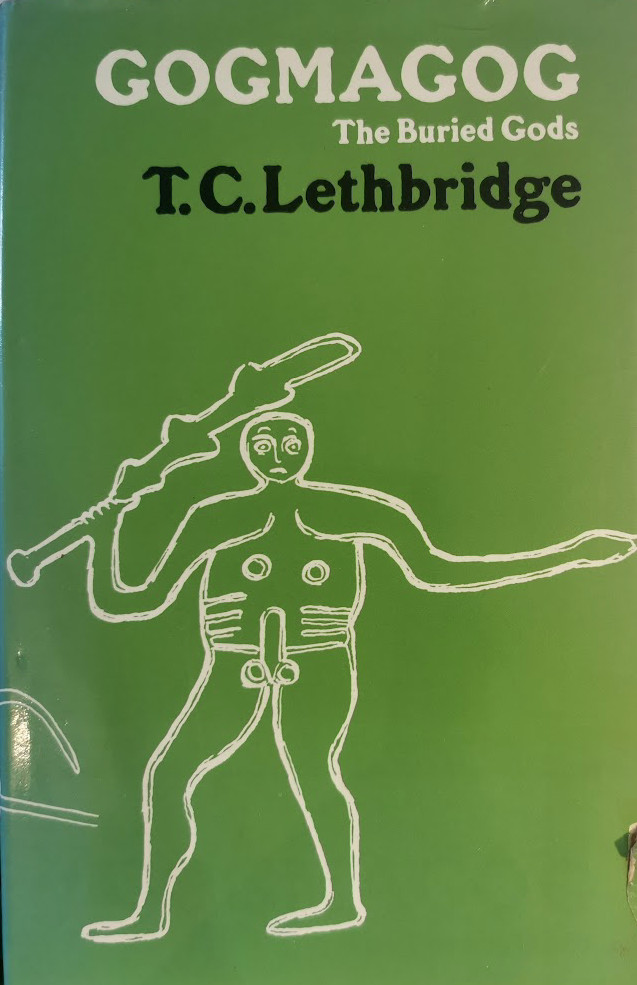
Gogmagog, T E Lethbridge, 1957, 1975
However, his ideas were strongly disputed by other archaeologists. It was argued that the shapes discovered by Lethbridge were in fact natural having been formed in the last ice age. Following this rejection of his research Lethbridge moved away from Cambridge and took up research into the paranormal.
1950s Osborne Mansion
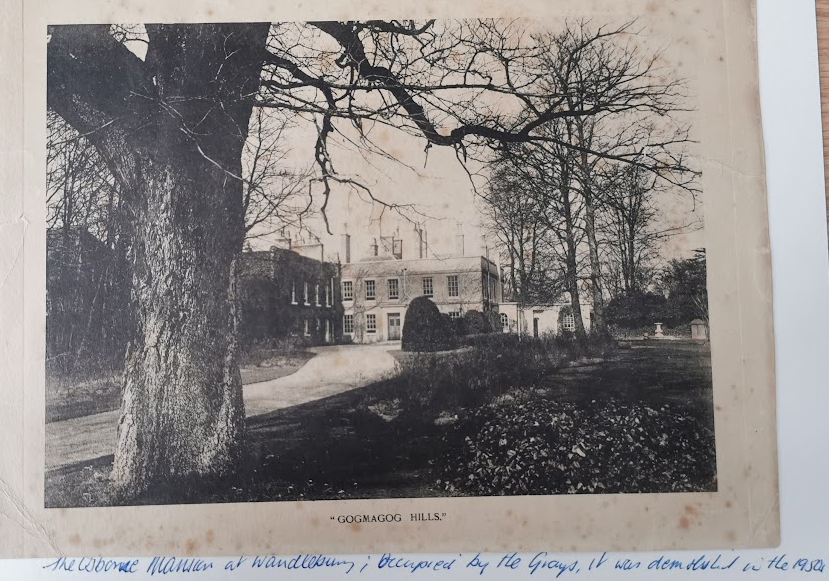
Osborne Manor, Wandlebury (MoC)
1976
Following gales in January which uprooted several trees, human bones were found and excavated. There were five adults aged between 15 and 35. They were considered to belong to one of the phases of the iron Age hill-fort. (CAS Vol LXVII 1977)
A further report can be found in CAS Vol CXIV 2025.
Projects
Contribute
Do you have any information about the people or places in this article? If so, then please let us know using the Contact page or by emailing capturingcambridge@
Licence
This work is licensed under CC BY-NC-SA 4.0