Search by topic
- archaeology
- Building of Local Interest
- chapel
- charity
- church
- crime
- dressmaker
- Great Eastern Railway
- Listed building
- Mapping Relief
- medieval
- oral history
- poverty
- Public House
- railway worker
- Religious House
- Roman
- scholar
- school
- Then and Now
- tudor
- women
- work
- world war one
- world war two
Search by text


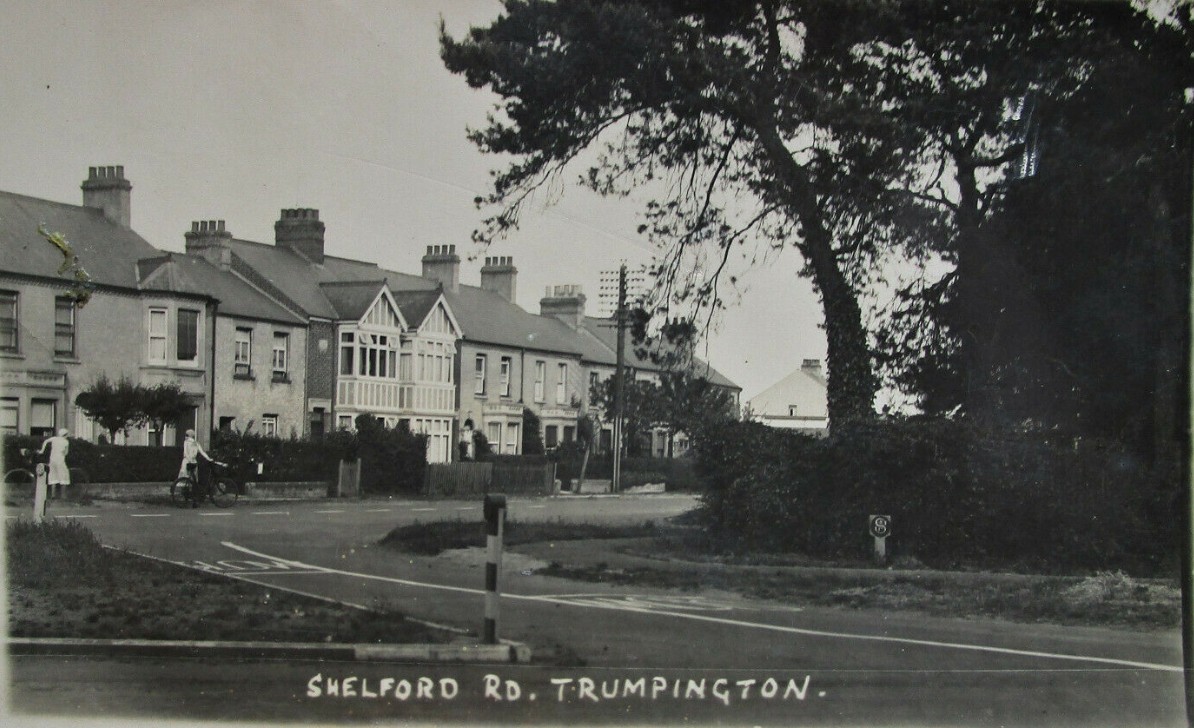 Shelford Road / Trumpington Road junction, date unknown
Shelford Road / Trumpington Road junction
History of Shelford Road / Trumpington Road junction
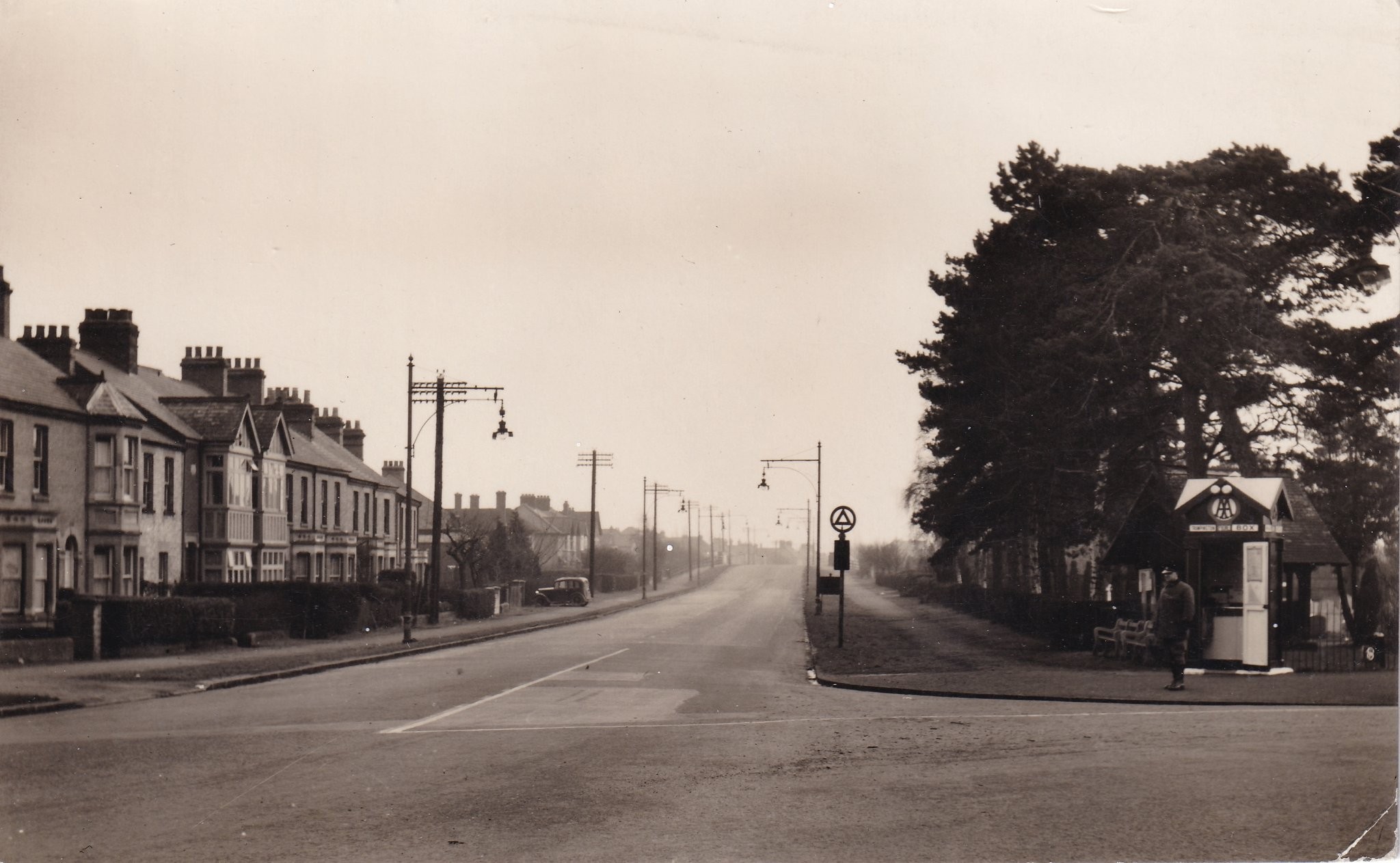
AA box Shelford Road, Trumpington (after 1912)
Then and Now (David Gent) – Trumpington.
View along Shelford Road towards Shelford.
First picture shows the AA box and patrol man. This postcard is undated. First introduced in c.1912, the AA box was a place for the AA patrol man to wait between emergencies. Later used as a means for AA members to seek assistance, and to shelter from weather while waiting for that assistance. The boxes were lit by oil lamps, and had maps, a fire extinguisher and a telephone available for members’ use. Members were issued with a key that fitted all AA boxes. The 1970s and 1980s saw boxes phased out and replaced by more economical designs, ultimately simply a telephone on a post. The spread of mobile phones in the 1990s rendered the boxes largely obsolete, and in 2002, the AA abandoned its telephone network. In their heyday there were almost 1,000 boxes – now only 19 remain, eight of which have a Grade II heritage listing.
Second picture taken July this year
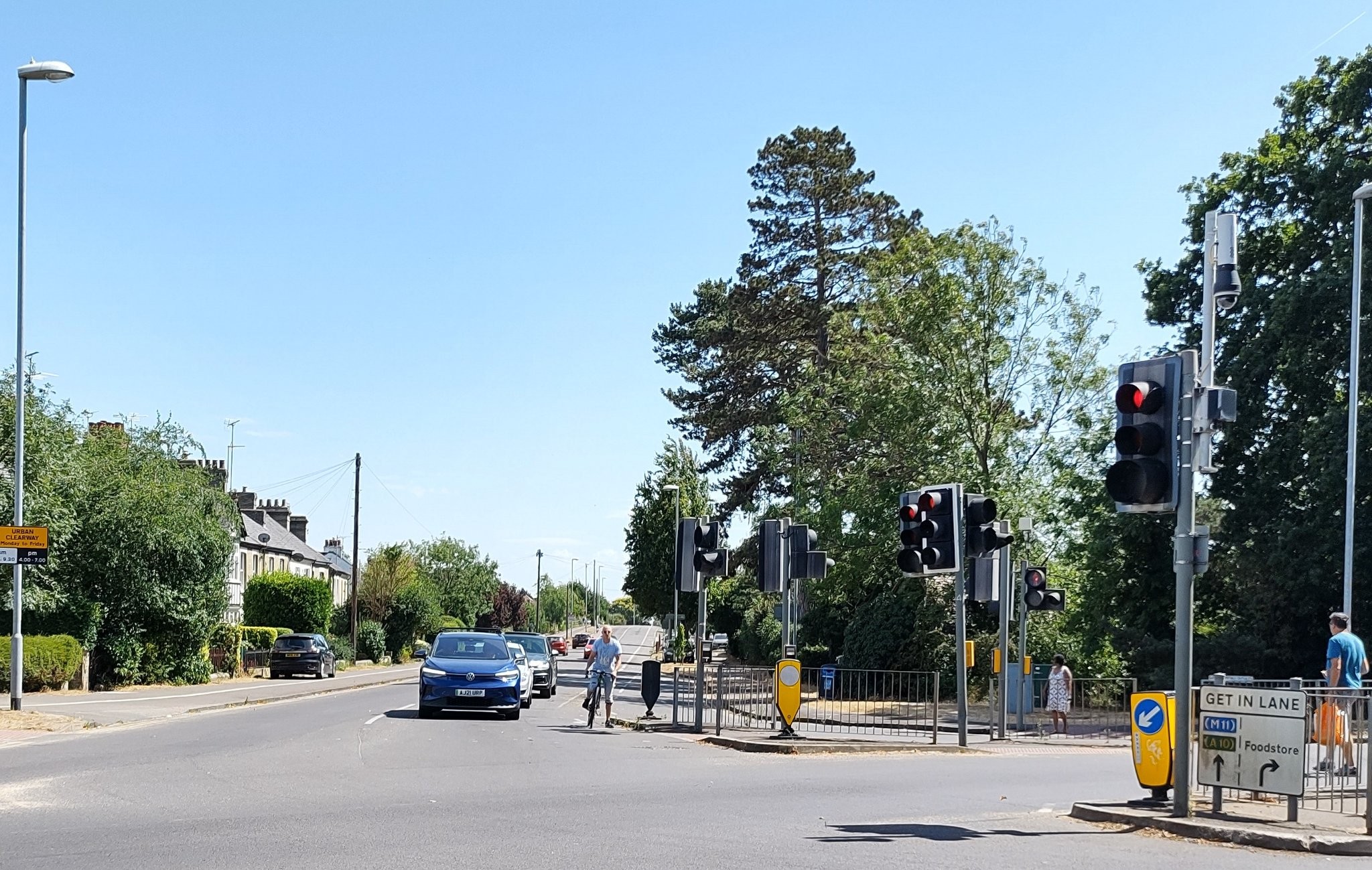
Shelford Road, Trumpington (photo DG 2022)
Then and Now
Projects
Contribute
Do you have any information about the people or places in this article? If so, then please let us know using the
Contact page or by emailing
capturingcambridge@
Licence
This work is licensed under
CC BY-NC-SA 4.0


 not including content on external links as indicated
by
not including content on external links as indicated
by .
.