Search by topic
- archaeology
- Building of Local Interest
- chapel
- charity
- church
- crime
- dressmaker
- Great Eastern Railway
- Listed building
- Mapping Relief
- medieval
- oral history
- poverty
- Public House
- railway worker
- Religious House
- Roman
- scholar
- school
- Then and Now
- tudor
- women
- work
- world war one
- world war two
Search by text
49 Grange Road, Elmside
History of 49 Grange Road
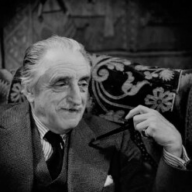
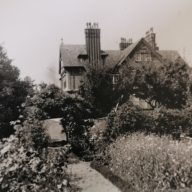
Elmside, an Arts and Crafts style house built 1885 to the designs of ES Prior, is listed at Grade II for the following principal reasons: * Architectural interest: as an assured work by accomplished architect ES Prior, a leading architect of the Arts and Crafts movement; * Architectural composition: for its impressive asymmetrical composition, use of traditional building materials, and finely crafted details which are characteristic of the Arts and Crafts style; * Interior: for the survival of some interior details of note, including an original staircase and joinery in the entrance hall, original cupboards, and fireplaces; * Historic interest: for its association with Trinity College mathematician and author Walter William Rouse Ball, who commissioned the house and lived there until his death in 1925; * Context: it forms part of an exceptional suburban development in West Cambridge which encompasses the work of some of the most notable architects of the day; * Group value: for its group value with numerous listed houses and college buildings on Grange Road, notably 48 Grange Road by Basil Champneys opposite (c1880), and nearby Selwyn College by Sir Arthur Blomfield (1882-9) and Cambridge University Library by Sir Giles Gilbert Scott (1931-4), all listed at Grade II.
Projects
Contribute
Do you have any information about the people or places in this article? If so, then please let us know using the Contact page or by emailing capturingcambridge@
Licence
This work is licensed under CC BY-NC-SA 4.0