Search by topic
- archaeology
- Building of Local Interest
- chapel
- charity
- church
- crime
- dressmaker
- Great Eastern Railway
- Listed building
- Mapping Relief
- medieval
- oral history
- poverty
- Public House
- railway worker
- Religious House
- Roman
- scholar
- school
- Then and Now
- tudor
- women
- work
- world war one
- world war two
Search by text


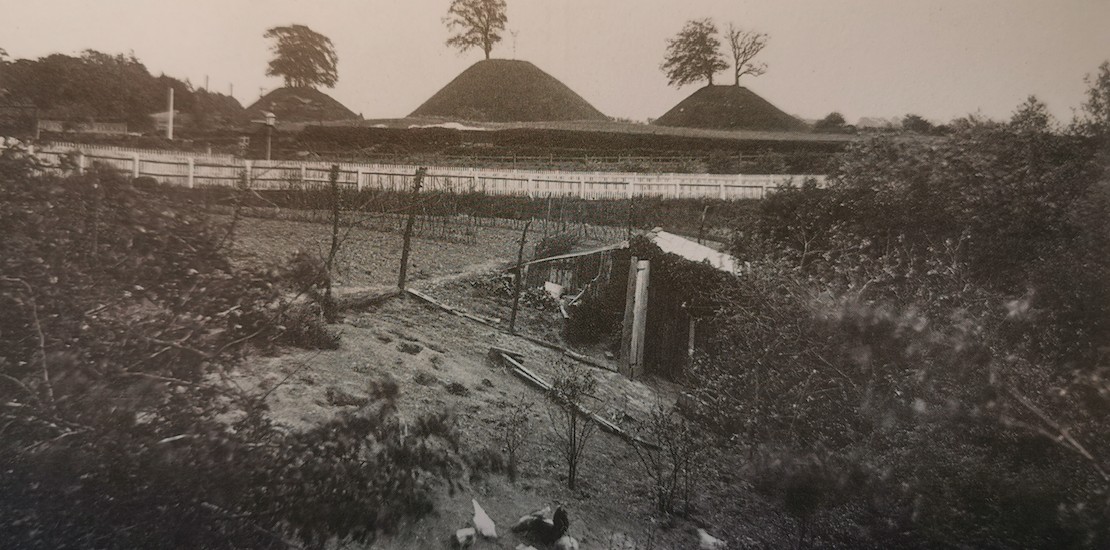 Bartlow Hills, 1905 (photo F J Allen) (Cambridgeshire Collection)
Bartlow Hills Roman barrow cemetery
History of the Bartlow Hills
Bartlow Hills Roman barrow cemetery includes some of the best preserved Roman barrows in Britain and on the continent. As part of a concentration of Roman barrows in East Anglia, they provide a unique insight into the social and economic development of south east England in the early days of the Roman occupation. Their association with contemporary features, such as a Roman villa and possibly a metal working area, reveals the multi-dimensional use of the Bartlow Hills site for domestic, funerary and industrial purposes and highlights its exceptional importance. As a result of investigation at the beginning of the 19th century, the remains are quite well understood, while significant archaeological deposits have been left intact.
Finds from the Bartlow site can be seen at Saffron Walden museum:
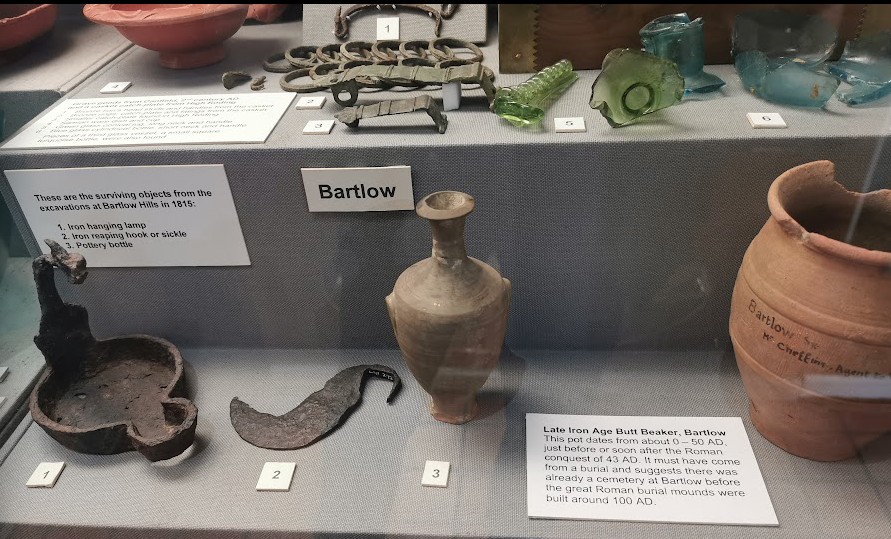
Bartlow finds at Saffron Walden museum
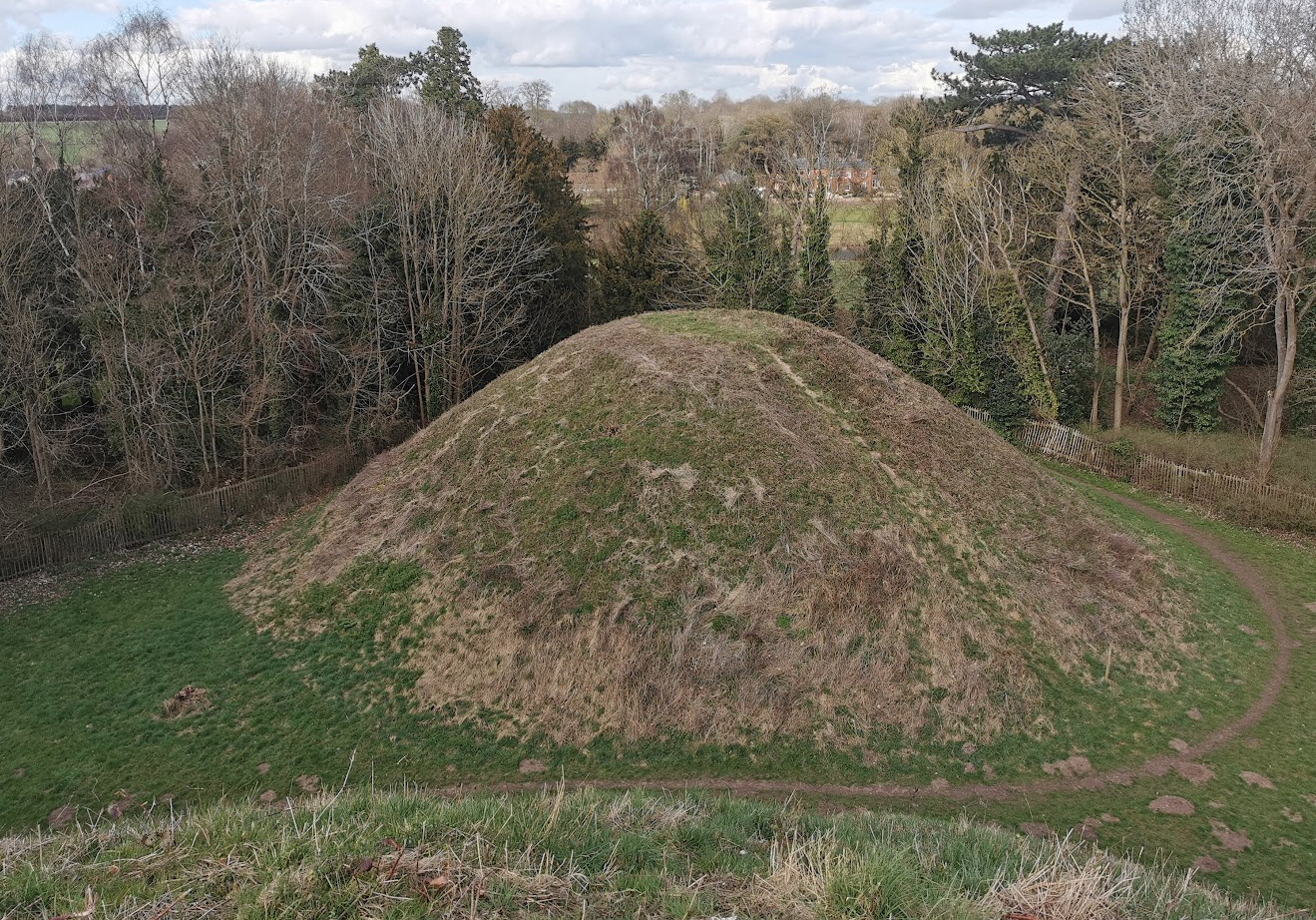
Roman barrows, Bartlow (RGL2025)
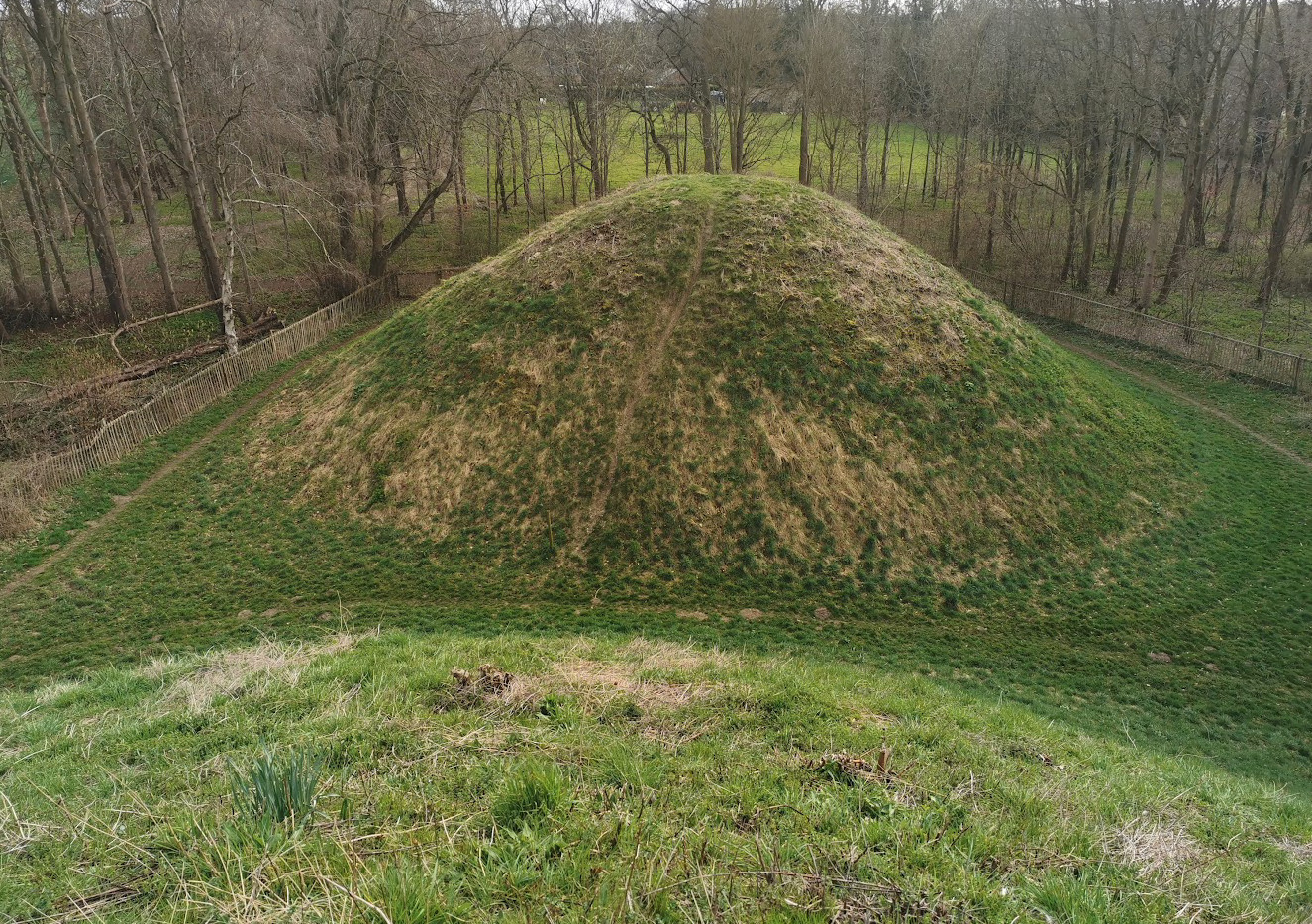
Roman barrows, Bartlow (RGL2025)
Further reading:
https://en.wikipedia.org/wiki/Bartlow_Hills
Projects
Contribute
Do you have any information about the people or places in this article? If so, then please let us know using the Contact page or by emailing capturingcambridge@
Licence
This work is licensed under CC BY-NC-SA 4.0