Search by topic
- archaeology
- Building of Local Interest
- chapel
- charity
- church
- crime
- dressmaker
- Great Eastern Railway
- Listed building
- Mapping Relief
- medieval
- oral history
- poverty
- Public House
- railway worker
- Religious House
- Roman
- scholar
- school
- Then and Now
- tudor
- women
- work
- world war one
- world war two
Search by text


St Philip’s (St Barnabas) Primary School (Junior Girls and Infants)
History of St Philips School
The school was founded in 1886 and was originally known as St Barnabas School because of the connection with St Barnabas Church. It was enlarged in 1887 and from 1888 to 1894. In 1894 a boys only school was opened in Ross Street. By the 1900s it was overcrowded. In 1911 it had 870 children compared with 430 in 1948. there is a log book, kept by the County Records Office. For a special recitation for 1888, the children learned great chunks of poetry by heart. one grade learned 100 lines of Scott’s “Lady of the Lake.” Another class committed 50 lines of Shakespeare’s “King John” to memory.
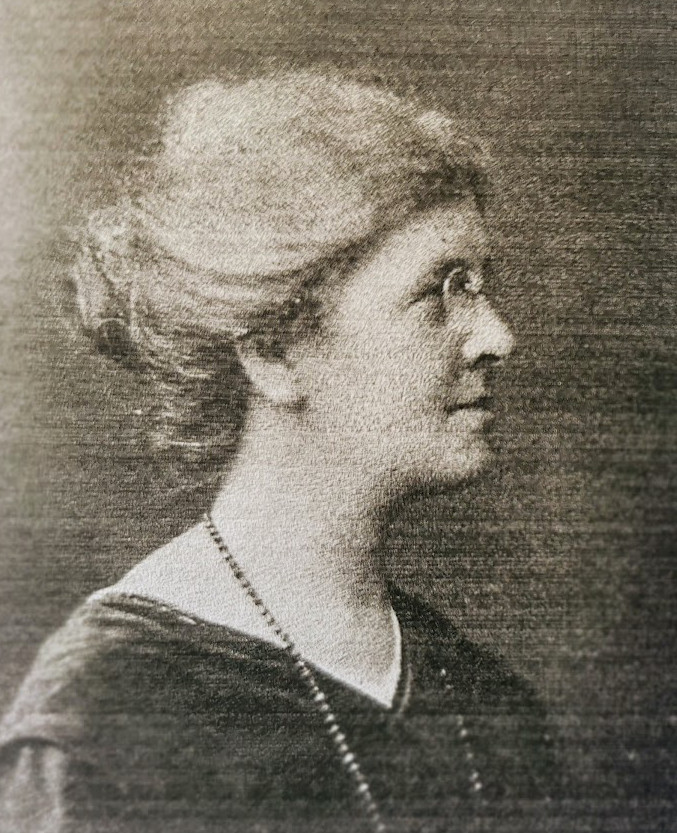
Miss A P Iliffe, headmistress St Barnabas Girls School, 1905 (courtesy C Tongue)
Constance Eva Pyle attended this school.
1921
On May 25th there was an Empire Day service.
On 31st May the children had a half day’s holiday to celebrate the visit of the Prince of Wales to Cambridge.
On October 14th there was a half day holiday because of the visit to Cambridge by the King and Queen.
1941
21st January: “A day much interrupted by the siren. Two periods were spent in the shelter in the morning and two periods in the afternoon.”
1942
In September 22 London evacuees were absorbed into the school.
1962
St Philip’s School
Projects
Contribute
Do you have any information about the people or places in this article? If so, then please let us know using the
Contact page or by emailing
capturingcambridge@
Licence
This work is licensed under
CC BY-NC-SA 4.0


 not including content on external links as indicated
by
not including content on external links as indicated
by .
.