Search by topic
- archaeology
- Building of Local Interest
- chapel
- charity
- church
- crime
- dressmaker
- Great Eastern Railway
- Listed building
- Mapping Relief
- medieval
- oral history
- poverty
- Public House
- railway worker
- Religious House
- Roman
- scholar
- school
- Then and Now
- tudor
- women
- work
- world war one
- world war two
Search by text


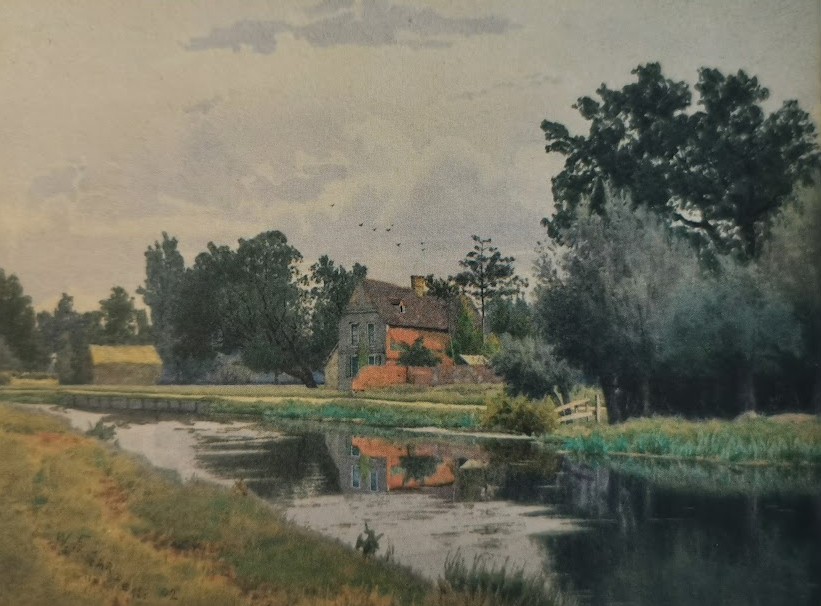 Manor House, Hemingford Grey, William Fraser Garden (1856-1921)
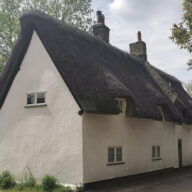
Hemingford Grey Manor
History of Hemingford Grey Manor
Listed Building:
The medieval moated site known as `The Manor’ is situated adjacent to the River Great Ouse on the west side of the village of Hemingford Grey. The manor derives from land first granted to Ramsey Abbey in 1041-42 by King Harthacnut and his mother Aelfgifu, the grant being confirmed by Edward the Confessor about 10 years later. Following the Norman Conquest the manor was enfoeffed by William I to Aubrey de Vere, ancestor of the Earls of Oxford, whose family remained tenants-in-chief until the end of the 14th century.
By 1086 the estate had been subinfeudated to Ralf, son of Osmond, and it was Ralf’s son, Payn de Hemingford who, in about 1130, built the Norman hall house which still stands on the moated island.
In 1937 the house and grounds were sold to the writer Lucy Boston who undertook extensive restoration works to the house and laid out the present gardens, both central to the themes of her childrens’ books.
https://historicengland.org.uk/listing/the-list/list-entry/1017361?section=official-listing
Royal Archaeological Institute 1967 p.15 notes that the main block of the Norman house was built c.1150 probably by Payn de Hemingford. The Norman hall is of first floor type and retains a fireplace. Lucy Boston carried out a complete restoration in 1939.
The two Gunning sisters were born here: Maria (1732-1760) who became Countess of Coventry, and Elizabeth (1733-1790) who became Duchess of Hamilton and then Argyll.
The American artist Aubrey W Hunt lived at the Manor House in 1903.
Projects
Contribute
Do you have any information about the people or places in this article? If so, then please let us know using the
Contact page or by emailing
capturingcambridge@
Licence
This work is licensed under
CC BY-NC-SA 4.0


 not including content on external links as indicated
by
not including content on external links as indicated
by .
.