Search by topic
- archaeology
- Building of Local Interest
- chapel
- charity
- church
- crime
- dressmaker
- Great Eastern Railway
- Listed building
- Mapping Relief
- medieval
- oral history
- poverty
- Public House
- railway worker
- Religious House
- Roman
- scholar
- school
- Then and Now
- tudor
- women
- work
- world war one
- world war two
Search by text


44 Thorleye Road
History of 44 Thorleye Road
1962
Charles R J Holmes
Edith Holmes reminisced about life in the area in ‘Memories of Abbey and East Barnwell’. She described how here family moved to Thorleye Road in April 1939. In the 1939 Register the Holmes family are living at 63 Ditton Fields, so it seems they moved soon afterwards.
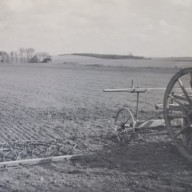
When my family and I came to live in Thorleye Road on 24 April 1939, only 4 houses were built; the rest was open land – with no road, just sand and mud. Peverel Road was already built up and families were moving in. The builders then started on Galfrid Road, building flats also in Whitehill Road. Nos 3 and 5 Galfrid Road were built for police housing, but were never used as such…. During the war the Germans dropped incendiary bombs in Ditton Fields and along Newmarket Road. They were targeting Marshall’s Airport. One bomb damaged my kitchen window, where I had been standing only a short time before the bombs fell. In Newmarket Road the bombs hit people and the road was damaged. One bomb fell right into a baby’s cot, but fortunately the baby was not in it at the time. … During the war the police came round to see if people had a spare room. If you did, you had to use it to house an airman. The airmen had to give you their ration cards. …. i remember the Corona factory. They used to deliver the drink and you got money back on the empty bottles. we sometimes went to Marshall’s Hotel to have a drink and watch the aeroplanes.
Projects
Contribute
Do you have any information about the people or places in this article? If so, then please let us know using the
Contact page or by emailing
capturingcambridge@
Licence
This work is licensed under
CC BY-NC-SA 4.0


 not including content on external links as indicated
by
not including content on external links as indicated
by .
.