Search by topic
- archaeology
- Building of Local Interest
- chapel
- charity
- church
- crime
- dressmaker
- Great Eastern Railway
- Listed building
- Mapping Relief
- medieval
- oral history
- poverty
- Public House
- railway worker
- Religious House
- Roman
- scholar
- school
- Then and Now
- tudor
- women
- work
- world war one
- world war two
Search by text


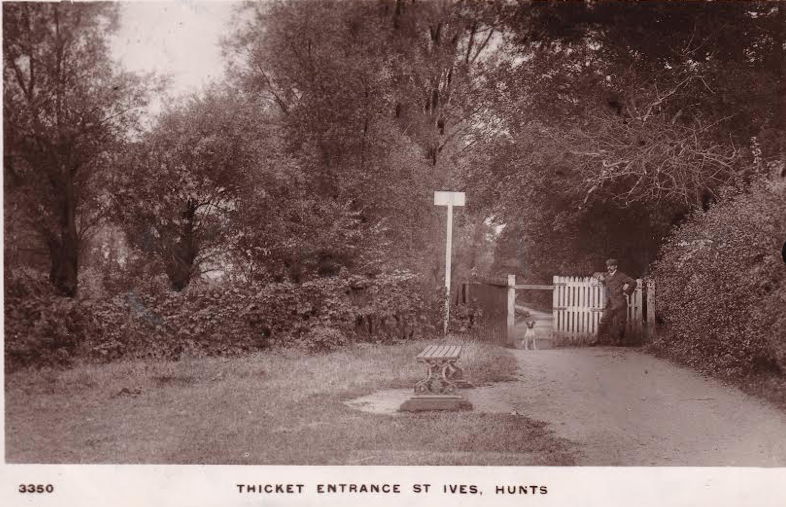 Thicket Path, St Ives c.1911
Thicket Path, St Ives
History of Thicket Path, St Ives
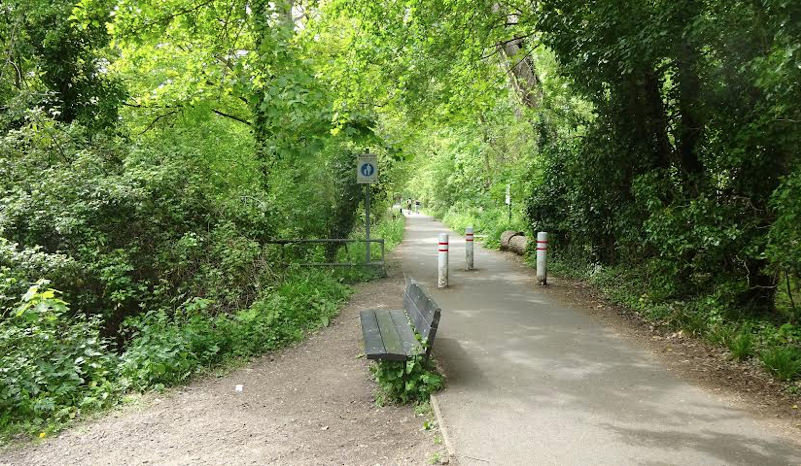
Thicket Path, St Ives, 2022
This path, linking St Ives with the village of Houghton, has possibly been in existence for over a thousand years. Now a tranquil walk though the woods, the area at the St Ives end was once a hive of activity. It was the location of the town’s brickworks and kilns. It is thought that the brickworks began in the late 17th century because older buildings and walls in the town have soft, red 2 inch bricks, made from local clay. These went out of use following an Act of Parliament in 1725 that standardised the thickness of bricks at 2.5 inches. Examples of the old 2 inch bricks can still be found in the town in a wall in Wellington Street near The Quay. To give some idea of the size of operation, in 1822 over a million bricks were made for the building of the New Bridges Causeway. The bricks would have been loaded onto barges and floated down stream to where they were needed. The brickyards closed in 1888.
(Thanks to David Gent: information from St Ives 100 Years Ago).
Projects
Contribute
Do you have any information about the people or places in this article? If so, then please let us know using the Contact page or by emailing capturingcambridge@
Licence
This work is licensed under CC BY-NC-SA 4.0