Search by topic
- archaeology
- Building of Local Interest
- chapel
- charity
- church
- crime
- dressmaker
- Great Eastern Railway
- Listed building
- Mapping Relief
- medieval
- oral history
- poverty
- Public House
- railway worker
- Religious House
- Roman
- scholar
- school
- Then and Now
- tudor
- women
- work
- world war one
- world war two
Search by text


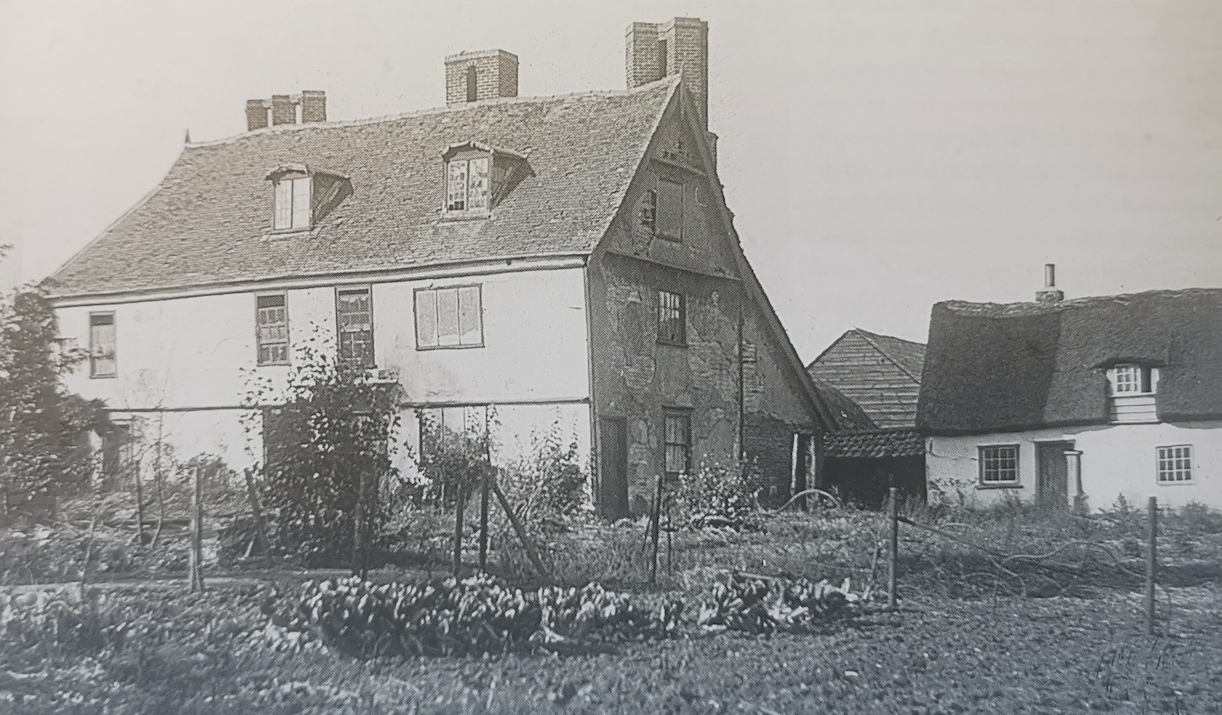 Lordship Manor, Cottenham, 1936 ( photo J H Bullock) (Cambridgeshire Collection)
Lordship Manor, Lambs Lane, Cottenham
History of Lordship Manor
The grandson of Thomas Hobson, the celebrated Cambridge carrier, also called Thomas Hobson, lived in Lordship House, the mansion house of the manor of Lyles which had been purchased by his grandfather in 1625.
In 1669, Thomas Hobson’s widow Katherin married John Pepys of Impington.
1728 Katherin’s granddaughter, Alice Rogers, died and Cottenham estates left to Roger Gale.
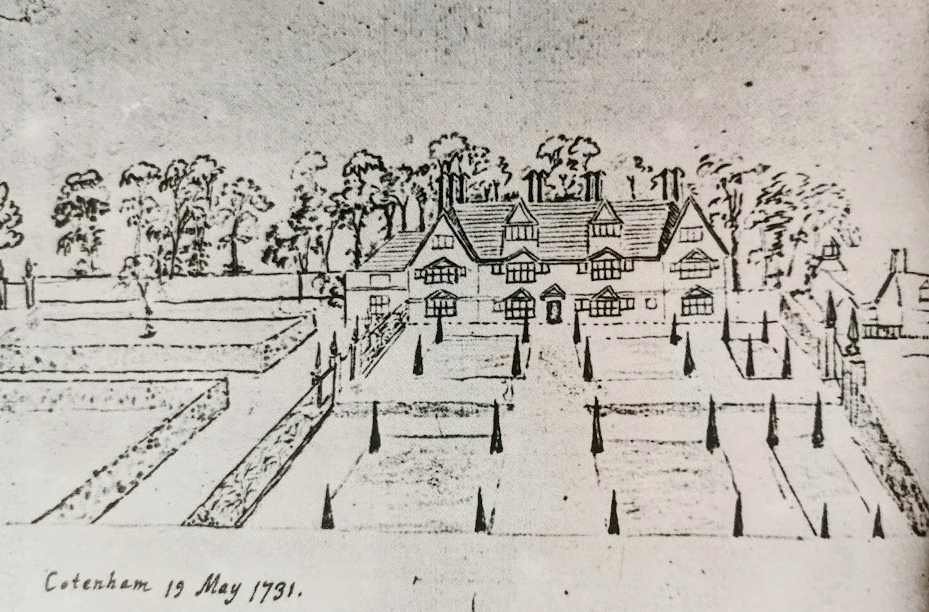
Lordship House, drawn by William Stukeley in 1731.
1737 estate sold to Edward Snagg
1770 Thomas Bacchus moves to Lordship House
1801 the Lordship estate sold as plots with access from Lordship Lane. The house, yard and land fronting Lambs Lane bought by Ellis Munsey, a Cottenham builder. He sold the dovehouse to the Baptists of Waterbeach where it was reerected and became the chapel where C H Spurgeon preached. Part of Lordship House was pulled down and several cottages built.
Later the remaining part of the house was divided into three tenements.
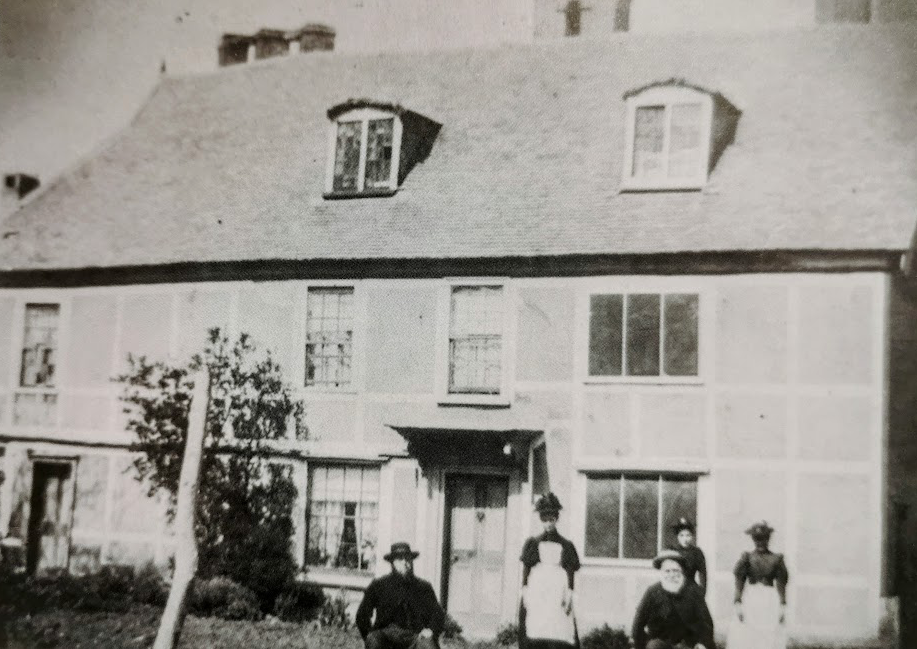
Lordship House, 1890s (photo E Smith): Thomas & Rose Saintey, Thomas Bowers & family.
1901 Lordship
Thomas Bowers, 72, ag. lab.,b Histon
Harriet Pierson, daughter, 42, housekeeper, b Cottenham
Alfred Pierson, 46, ag. lab., b Cottenham
Thomas Saintey, 60, school board clerk, b Cambridge
Rosina, sister, 58, housekeeper, b Cambridge
Herbert Scott, 33, basket maker, b Waterbeach
Eliza, 34, b Suffolk
Frederick H, 11, b Waterbeach
Ethel L, 10, b Waterbeach
Amy, 8, b Waterbeach
CIP 8/10/1937: A link with the historic past is being broken with the demolition of the 500 years old Lordship House – Lordship manor as it was called in the days of Samuel Pepys the diarist. It has monastic associations and remains of fishponds can be seen in the vicinity.
Projects
Contribute
Do you have any information about the people or places in this article? If so, then please let us know using the Contact page or by emailing capturingcambridge@
Licence
This work is licensed under CC BY-NC-SA 4.0