Search by topic
- archaeology
- Building of Local Interest
- chapel
- charity
- church
- crime
- dressmaker
- Great Eastern Railway
- Listed building
- Mapping Relief
- medieval
- oral history
- poverty
- Public House
- railway worker
- Religious House
- Roman
- scholar
- school
- Then and Now
- tudor
- women
- work
- world war one
- world war two
Search by text


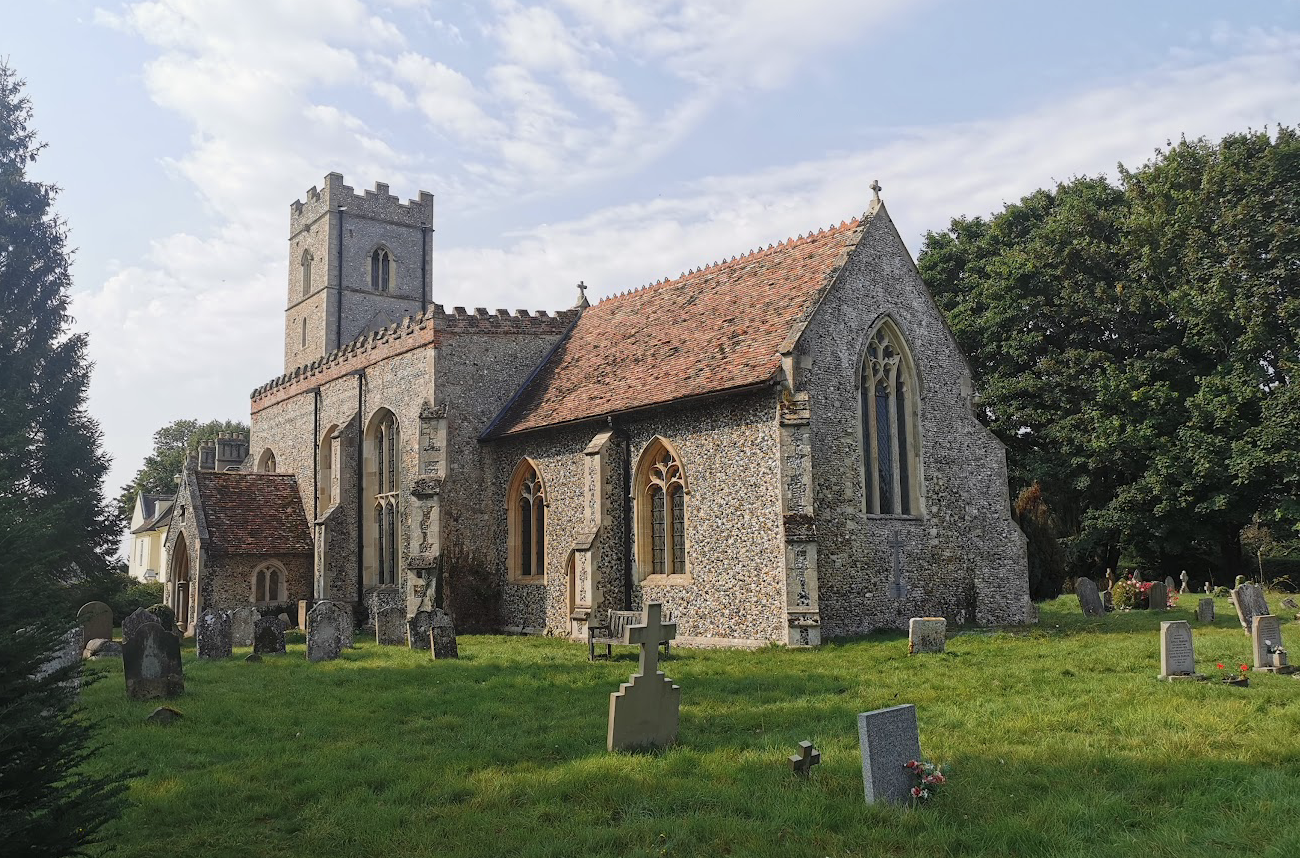 All Saints, Horseheath (RGL2024)
All Saints, Horseheath
History of All Saints Church
C14 and C15. Restored 1829 and 1883 and later. Flint, fieldstone and clunch and limestone dressings. Tiled roofs, leaded. West tower, nave, south porch and chancel. West tower of four stages with later stepped and embattled parapet. Main cornice with central gargoyles. Restored C14 west window of two cinquefoil lights in two centred arch with original moulded and head mask stops. Lancets to each side of first stage. Bell stage openings are of two cinquefoil openings in two centred arch with similar label. Aisleless nave, rebuilt later C15. … Monuments: in chancel on south side: Sir Giles Alinyton (d.1522) and his son Giles (d.1586). Stone and marble two tiers each with one recumbent effigy. Each tier is connected by short bulbous fluted columns. The superstructure has been removed. North side Sir Giles Alington (d.1613) and Lady Dorothy attributed to N. Johnson. Alabaster tomb chest with recumbent effigies and reliefs of the children kneeling to the front. Intact back architecture. North side of chancel: stone wall monument Dorothy Wakefield (d.1622); William Elder 1709, marble wall monument.
Base of Churchyard cross. Medieval. Limestone with site for shaft.
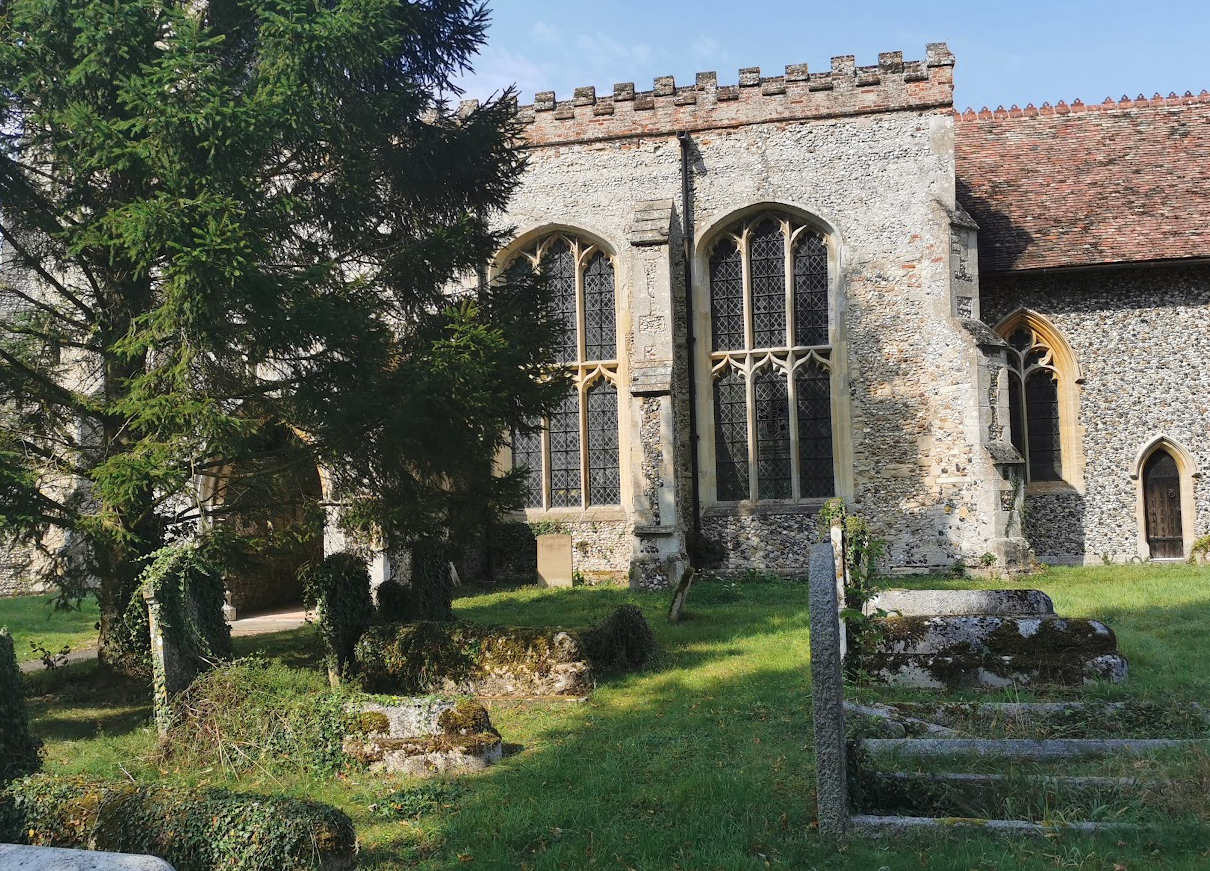
All Saints, Horseheath (RGL2024)
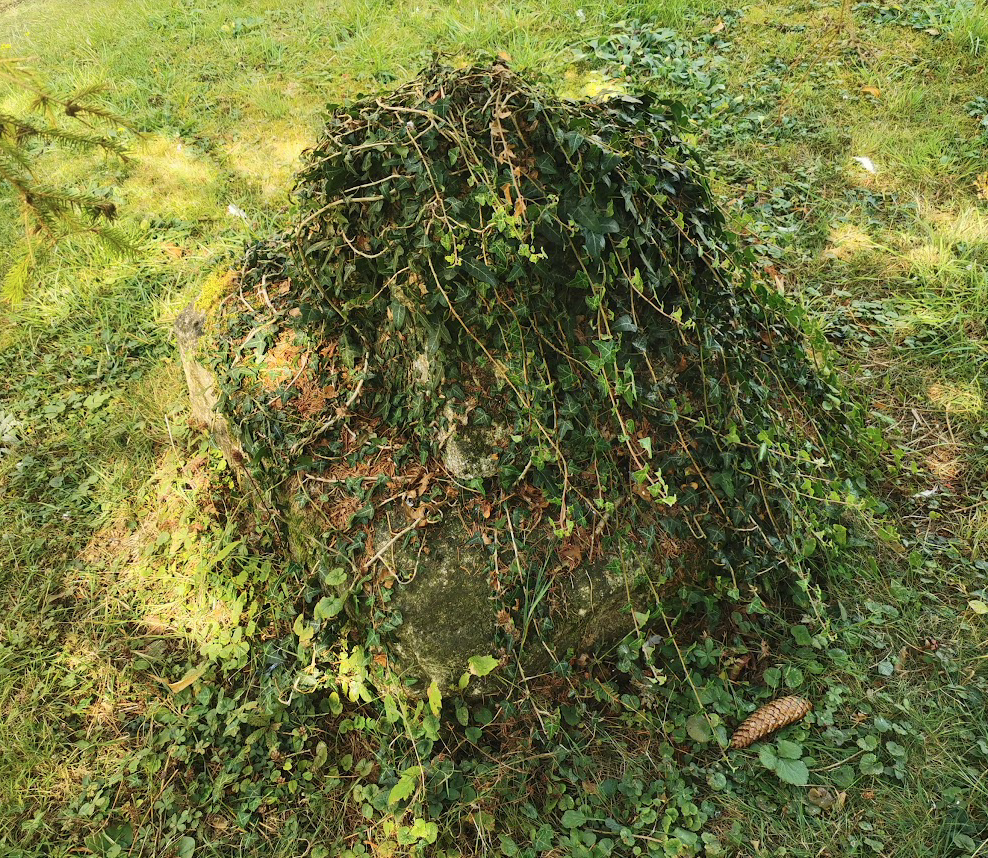
All Saints, Horseheath (RGL2024)
Base of medieval cross
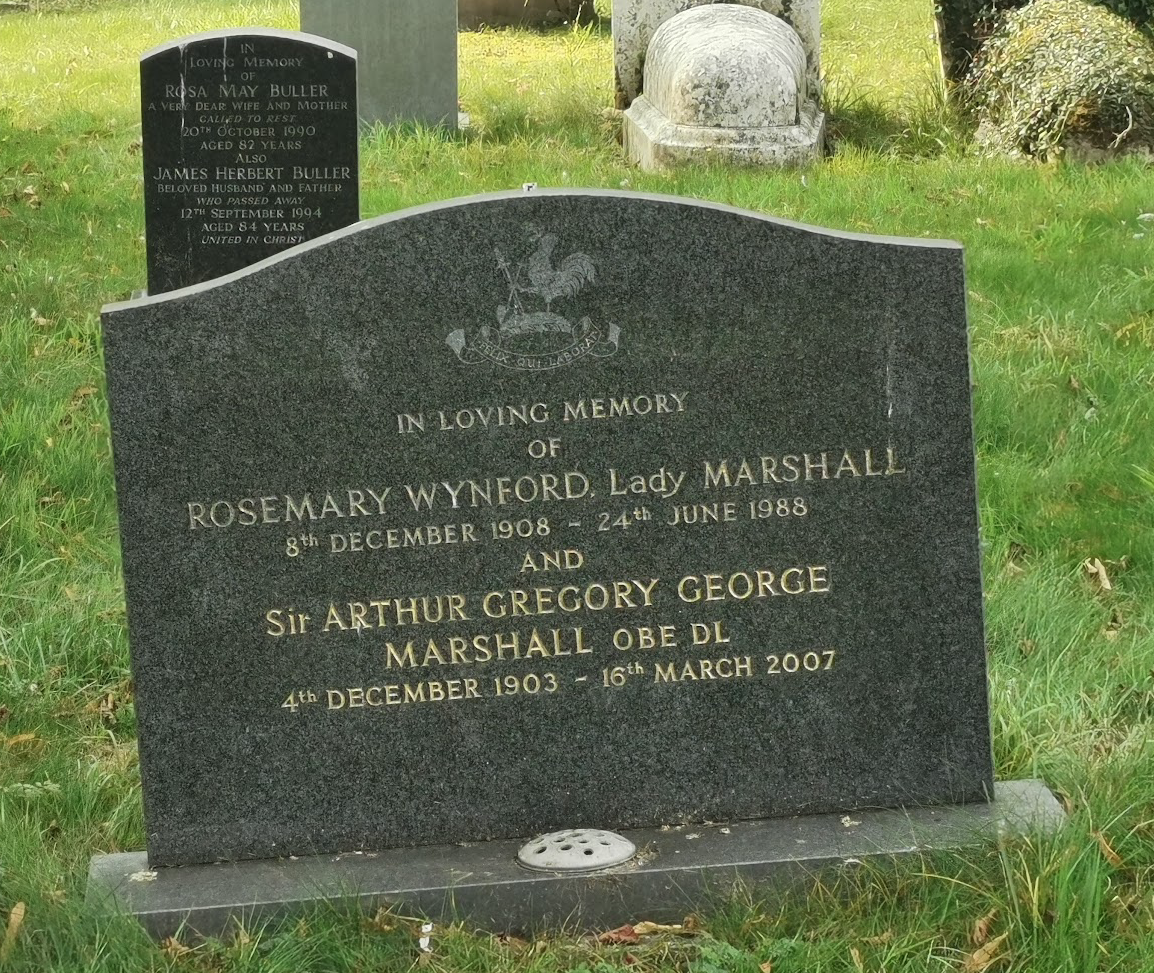
All Saints, Horseheath (RGL2024)
Marshall Grace
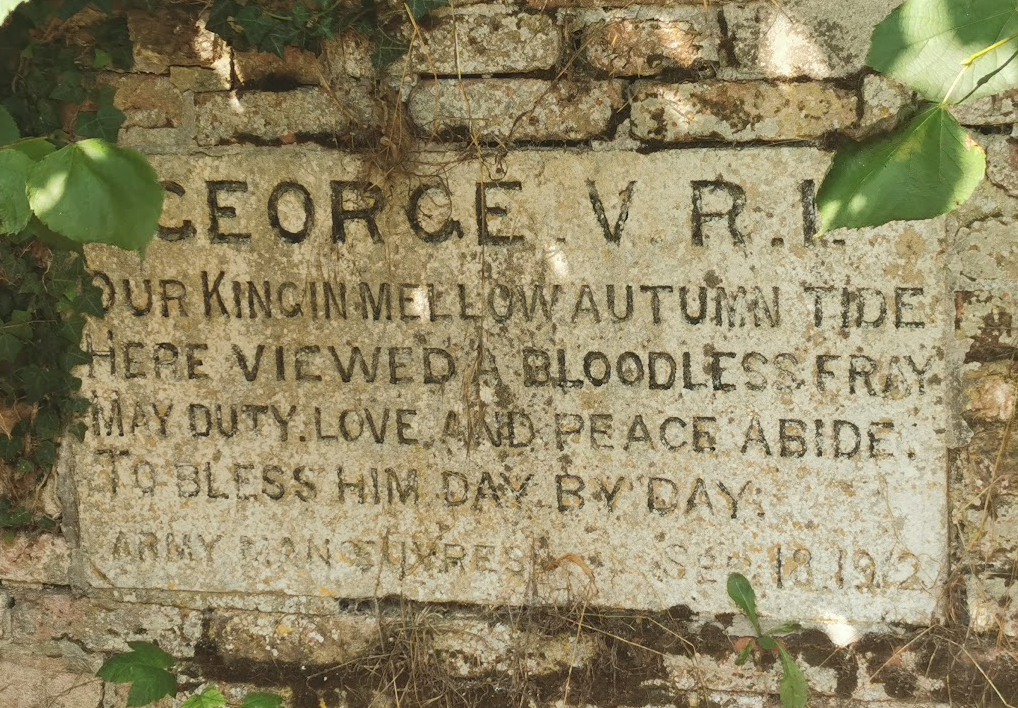
All Saints, Horseheath (RGL2024)
Memorial of 1912 visit by George V
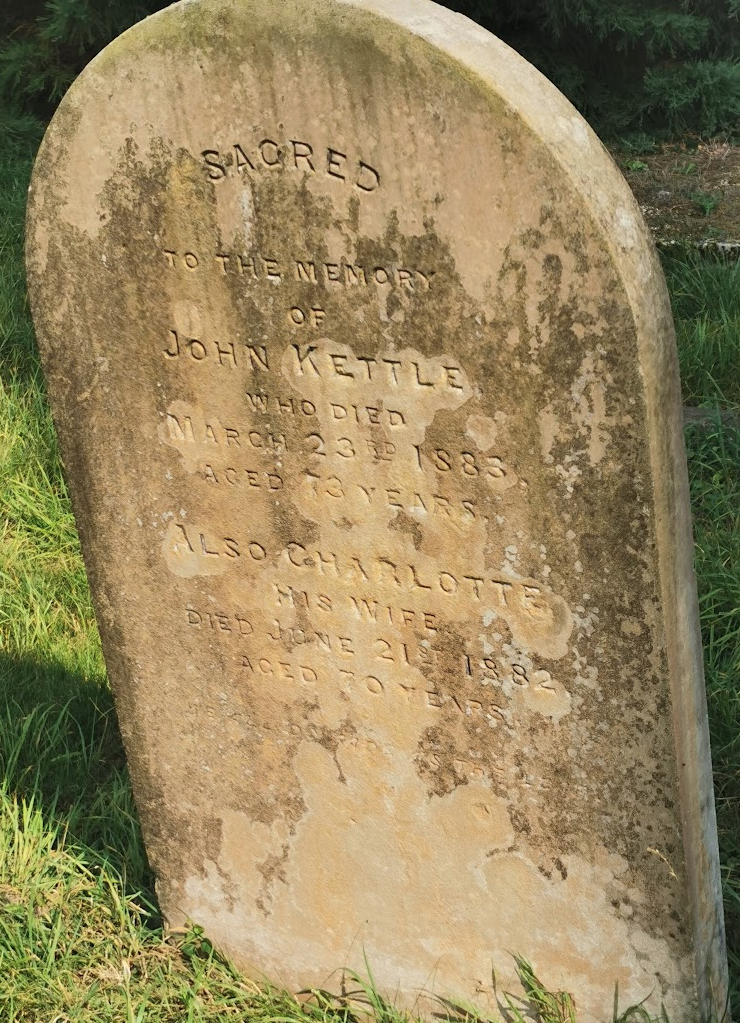
All Saints, Horseheath (RGL2024)
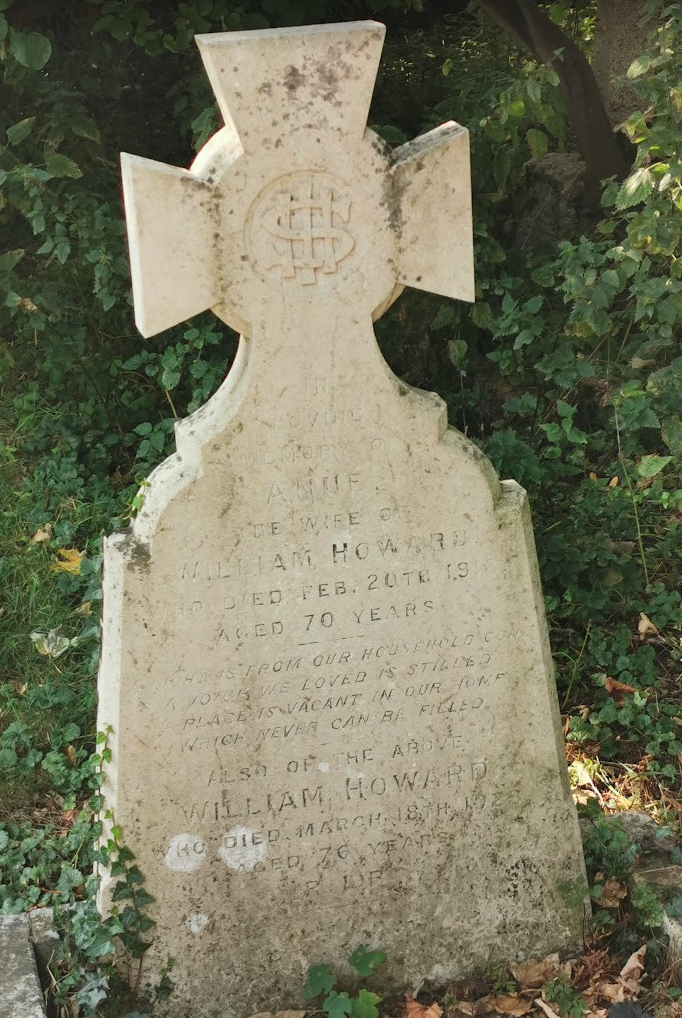
All Saints, Horseheath (RGL2024)
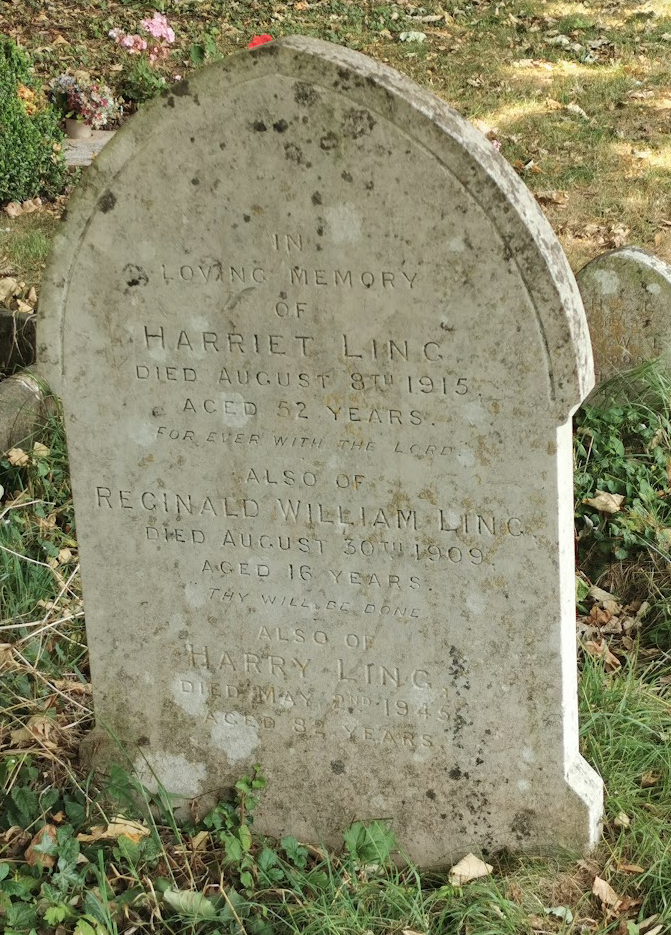
All Saints, Horseheath (RGL2024)
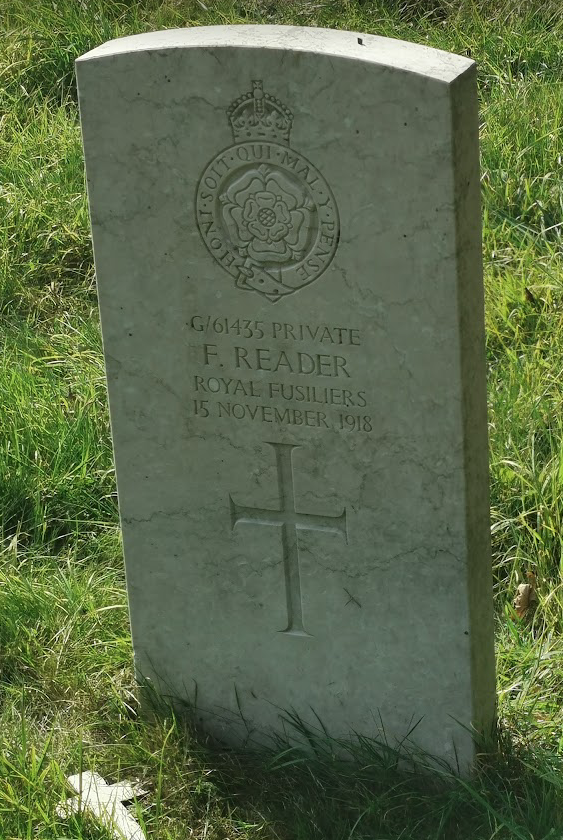
All Saints, Horseheath (RGL2024)
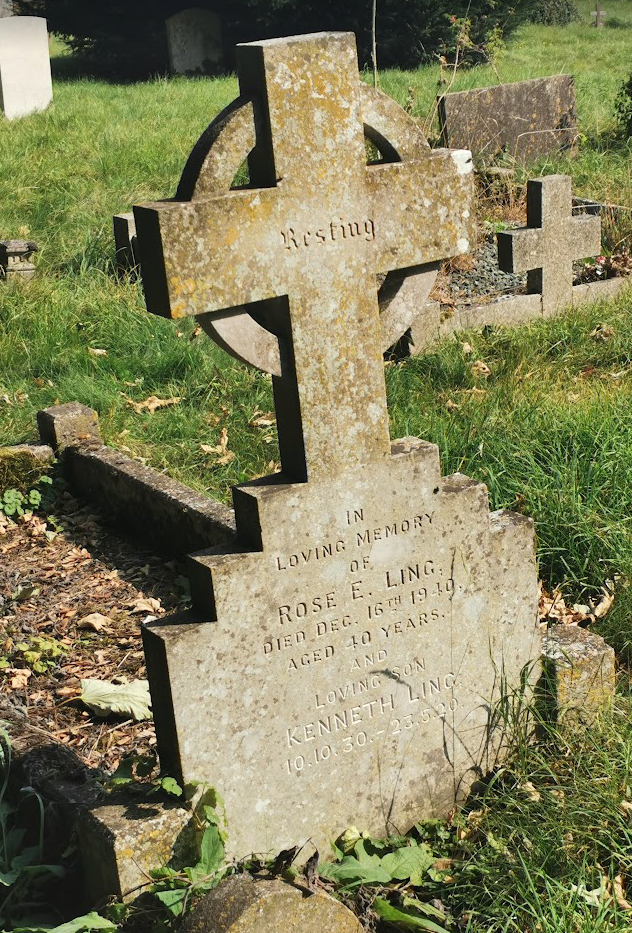
All Saints, Horseheath (RGL2024)
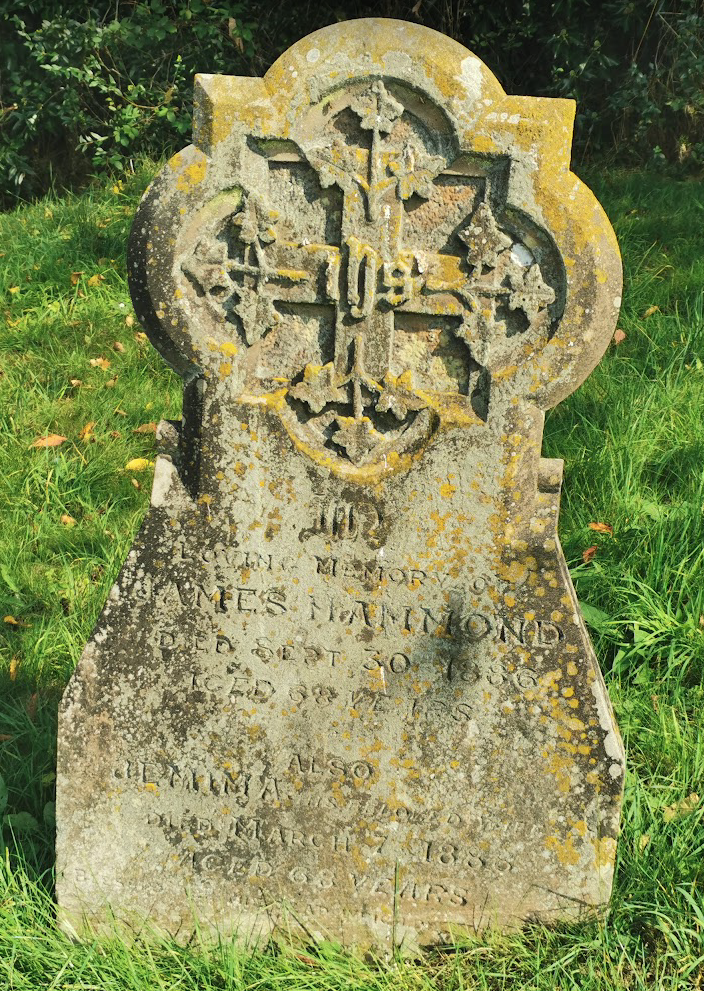
All Saints, Horseheath (RGL2024)
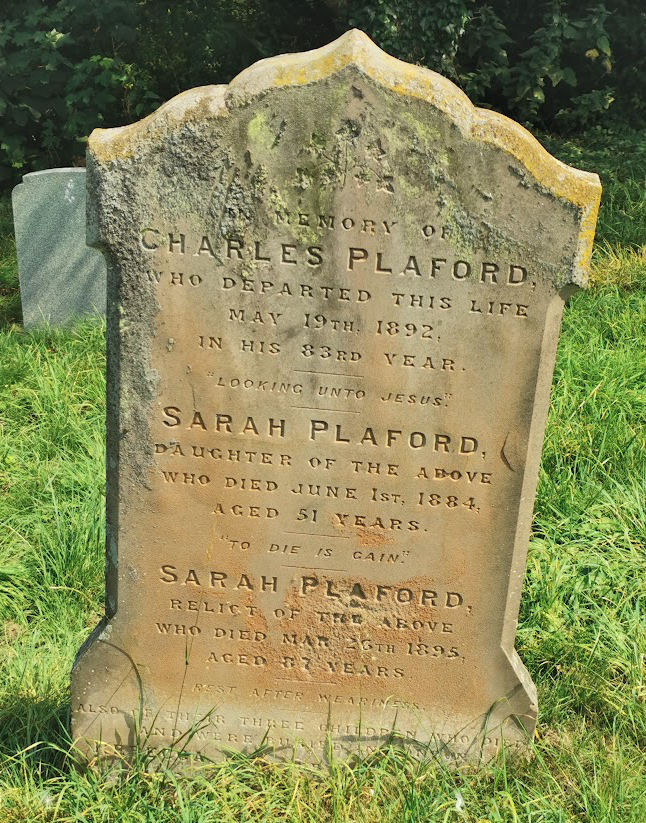
All Saints, Horseheath (RGL2024)
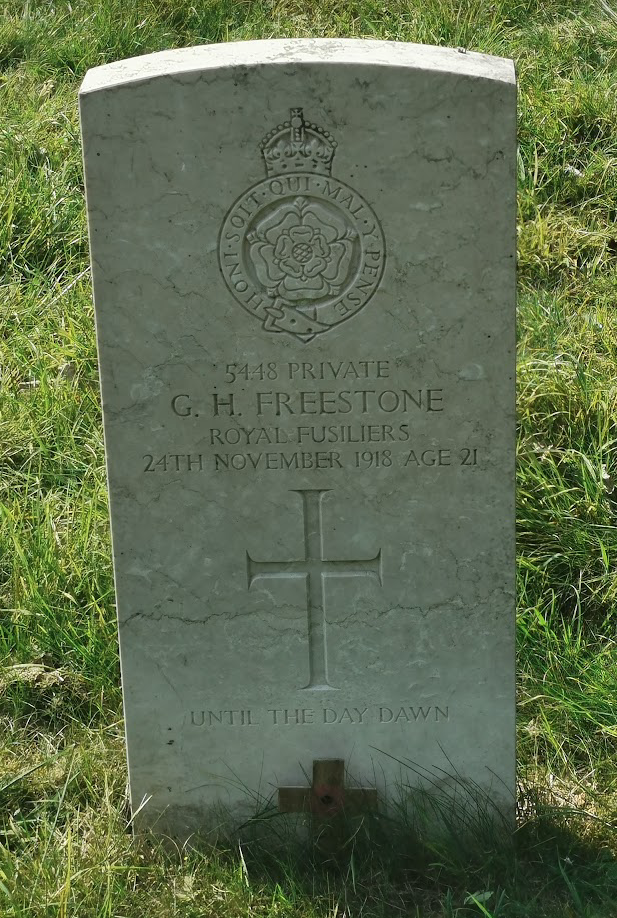
All Saints, Horseheath (RGL2024)
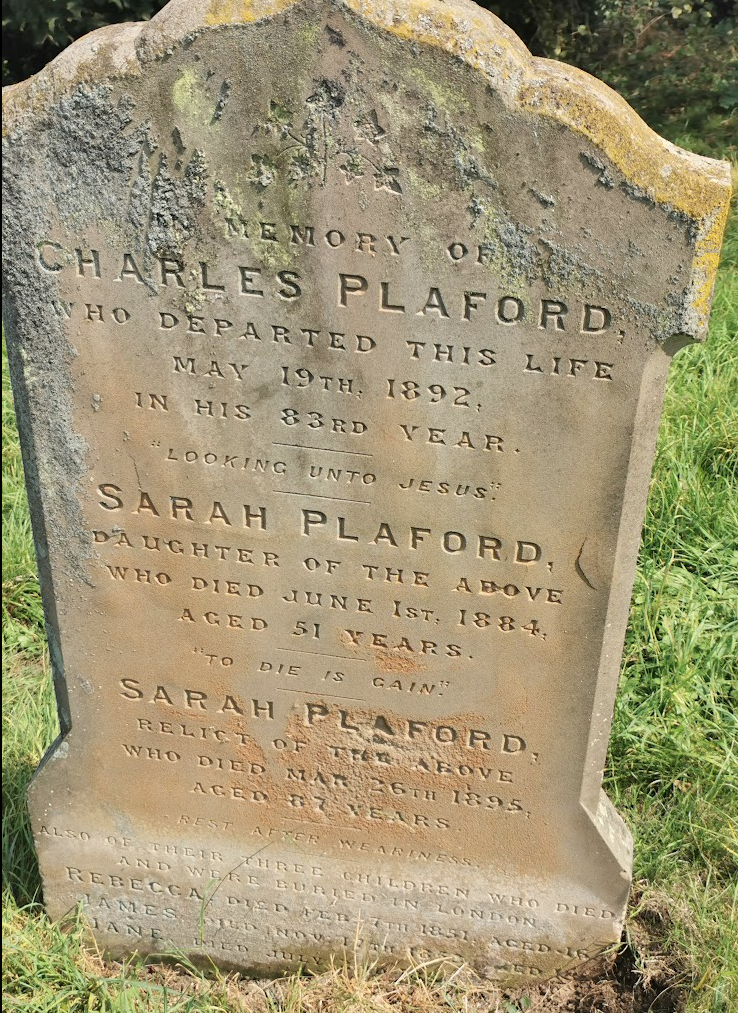
All Saints, Horseheath (RGL2024)
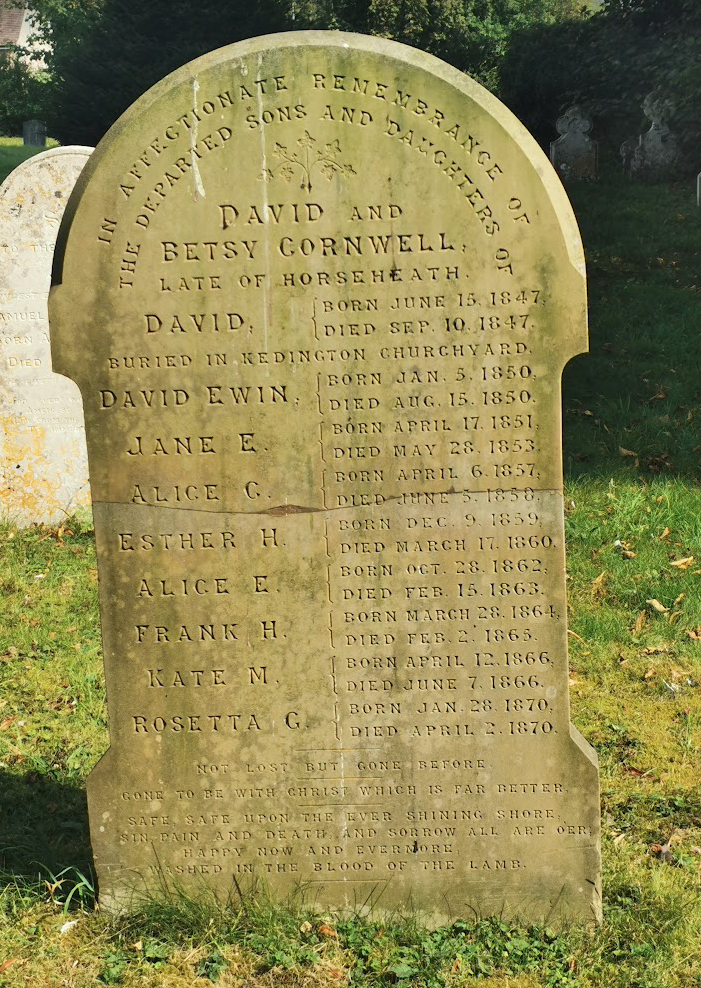
All Saints, Horseheath (RGL2024)
Cornwell family memorial
Projects
Contribute
Do you have any information about the people or places in this article? If so, then please let us know using the Contact page or by emailing capturingcambridge@
Licence
This work is licensed under CC BY-NC-SA 4.0