Search by topic
- archaeology
- Building of Local Interest
- chapel
- charity
- church
- crime
- dressmaker
- fire
- Great Eastern Railway
- Listed building
- Mapping Relief
- medieval
- oral history
- poverty
- Public House
- Religious House
- Roman
- scholar
- school
- Then and Now
- tudor
- women
- work
- world war one
- world war two
Search by text
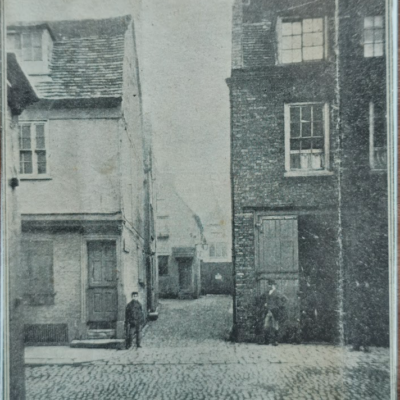
 Free Library, Wheeler Street
Free Library & Reading Room, Wheeler Street
History of Free Library Wheeler Street
According to 1959 Royal Commission on Historical Monuments Survey of Cambridge this library was a late 19th century building. It originally held fireplaces, one from the house of John Veysy and another from the same place as Madingley Hall and dated 1538.
Free Library, Wheeler Street
1862
TheFree Library was moved from Jesus Lane, to Wheeler Street. It remained under the management of John Pink.
16/6/1904 Cambridge Library committee referred to the recent fire on Peas Hill and the destruction of the premises adjacent to the library. But for the skill of the fire brigade the reading room must have been destroyed and the contents lost. The accumulation of books, pictures and scarce literature could never be replaced. Now the old dilapidated buildings should be cleared away and a more appropriate building erected. Next year they would celebrate the jubilee of the opening of the library and the appointment of Mr Pink as Librarian. The Library Association should be invited to hold their annual meeting at Cambridge, free of charge. (Cam. News)
1913
Free Library and Reading Room
Hours: Daily 10-12 am; Monday and Thursday 6-7.30
Miss C L Digby and Miss Whitehouse, joint hon secs.
1930
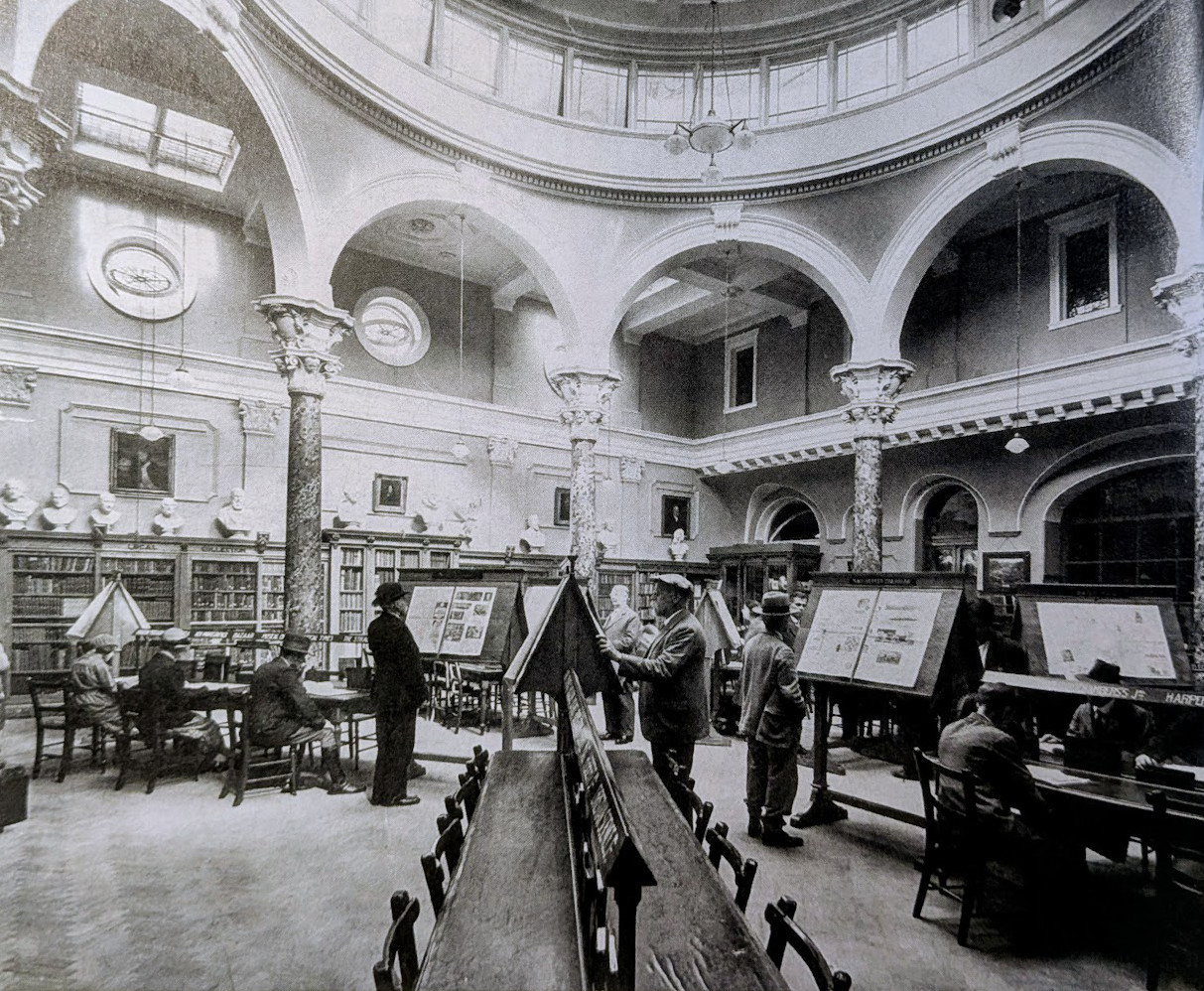
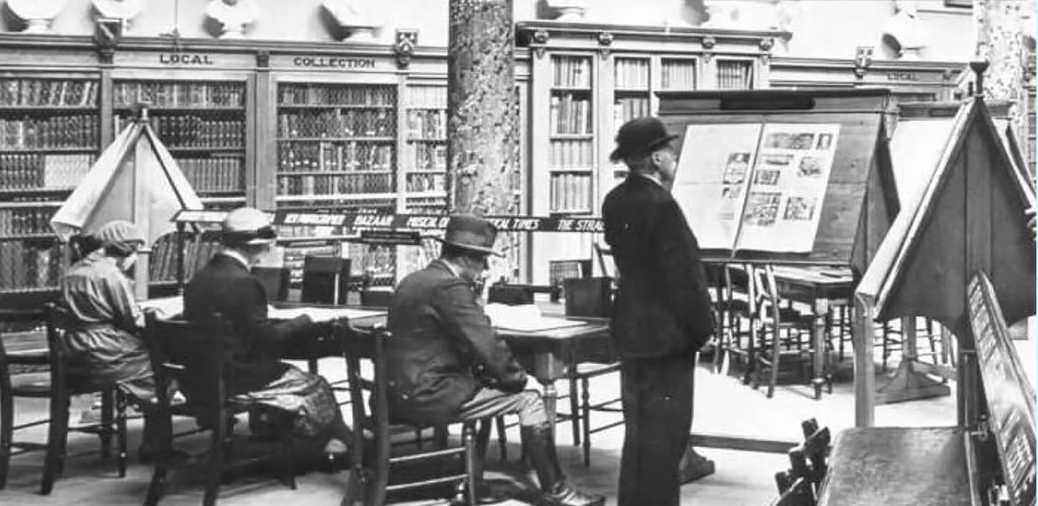
Central Library Cambridge Reading Room c1930
13/10/1936 The Central Library Lending Department is housed in the oldest and most unhygienic part of the building in Wheeler Street. The room is badly provided with natural lighting and artificial light has to be used. When ‘open access’ was installed in 1921 the annual circulation was 141,968 books and now it is over 309,000. It should move into the present domed Reading Room. Most of the bookcases have been in use since 1862 and would be unsightly; they should be replaced by steel shelving. (Cam.News)
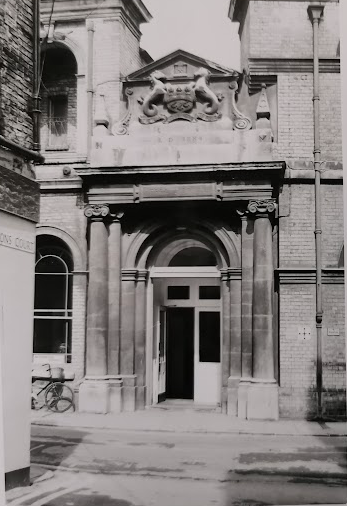
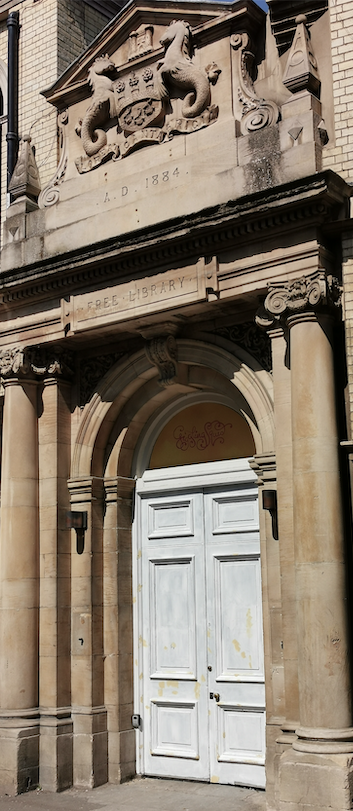
Doorway of city library, Wheeler Street (MoC119.72)
1992
The Cambridge Ghost Book, Halliday and Murdie, 2000, describes how the BBC in 1998 were contacted by a former employee of the library service who claimed to have seen John Pink’s ghost in what was then the Tourist Information office in 1992. Apparently there had been a long tradition of objects being mysteriously moved about overnight.
Projects
Contribute
Do you have any information about the people or places in this article? If so, then please let us know using the Contact page or by emailing capturingcambridge@
Licence
This work is licensed under CC BY-NC-SA 4.0