Bottisham Airfield Site 1 – Runways
History of Bottisham Airfield - runways
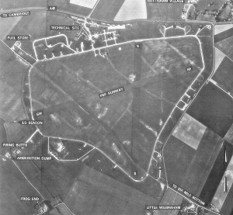
Runways
The original grass runways were laid in early 1940. Three runways were established in an ‘A’ layout to allow for use in different wind directions. The main runway was 1,200 yds long and faced SW to NE into the normal prevailing wind. The other, shorter, reserve runways faced N to S and NW to SE to cope with different wind conditions. The Grass runways were reinforced in October 1941 with Army Track surfaces, but as these proved insubstantial, they were replaced by Sommerfield steel mesh tracking the following summer.
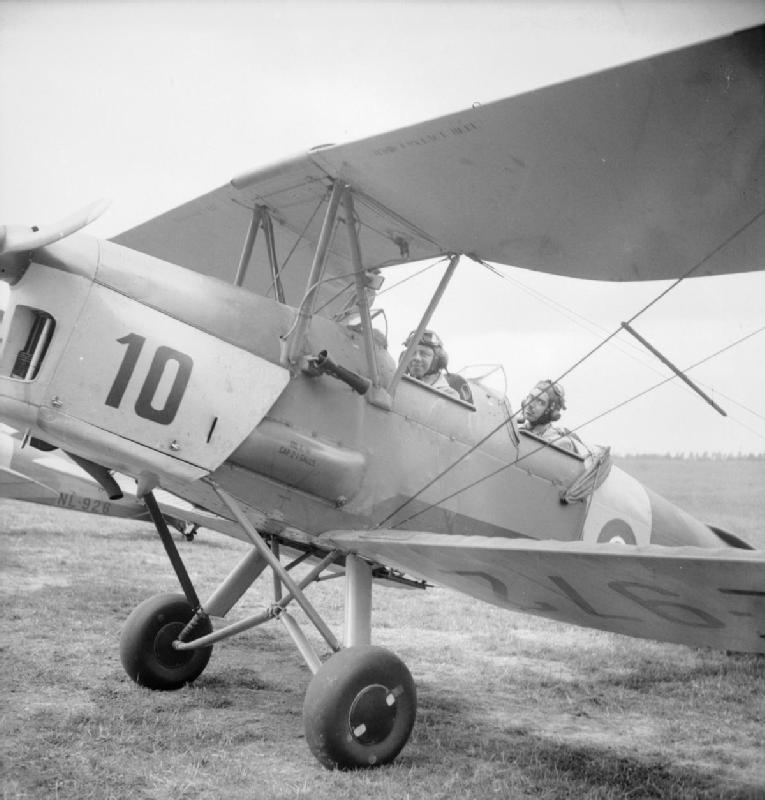
RAF Tiger Moth
The aircraft flown by the RAF from the site included Tiger Moths which were light aircraft, ideal for grass runways.
A Tiger Moth is preserved at the Bottisham Airfield Museum.
The grass runways were not cable of supporting the heavy P47 Thunderbolts that arrived in December 1943 so the main runway was widened and relayed in Perforated Steel Planking(PSP) in January 1944. This was done in a record three days. Some of PSP has been preserved in Bottisham Airfield Museum.
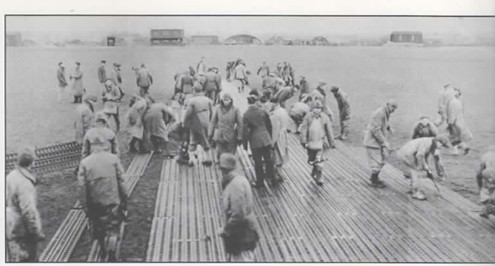
The main runway is relayed in PSP January 1944.
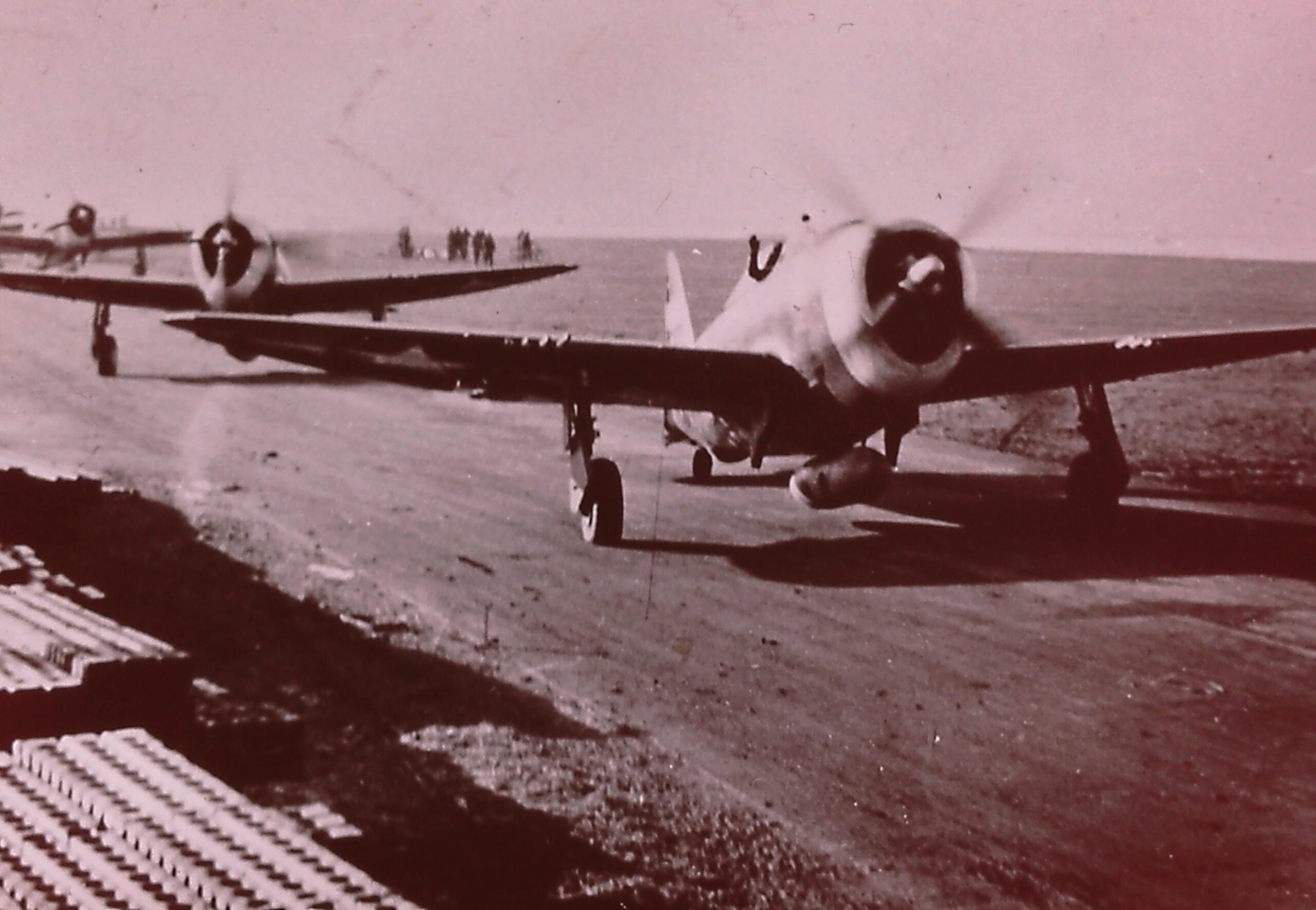
The P47 Thunderbolts were heavy aircraft, especially with a full fuel load.
The runway, widened with Pierced Steel Planking allowed four aircraft to take off simultaneously.
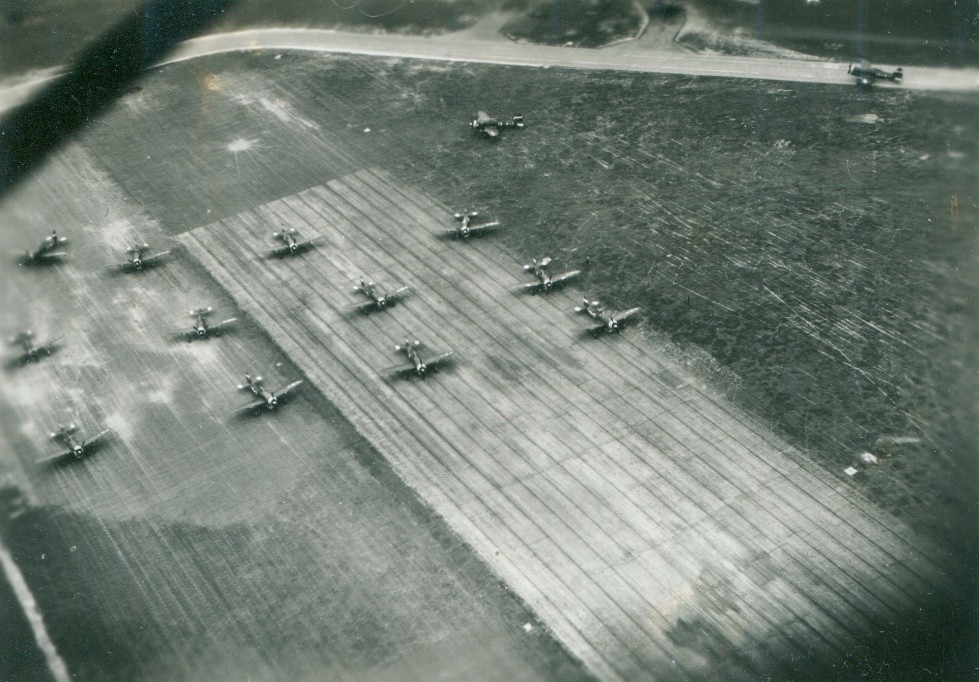
A Squadron P47s prepares for takeoff on the widened PSP runway
The runway continued to cause problems as it had dips which damaged the aircraft on take-off with full fuel loads. In late September 1944 the 361st moved to Little Walden which had reliable concrete runways.
The Bottisham runways were taken up when the airfield returned to farmland in 1958.
The A14 dissected the site when it was built in 1976/77.
Whilst the Summerfield track and the PSP could be removed the spikes which secured the PSP proved difficult to remove and were a hazard to farm machinery. This is the reason that much of the line of the old main runway is covered by a broad, straight line of trees.
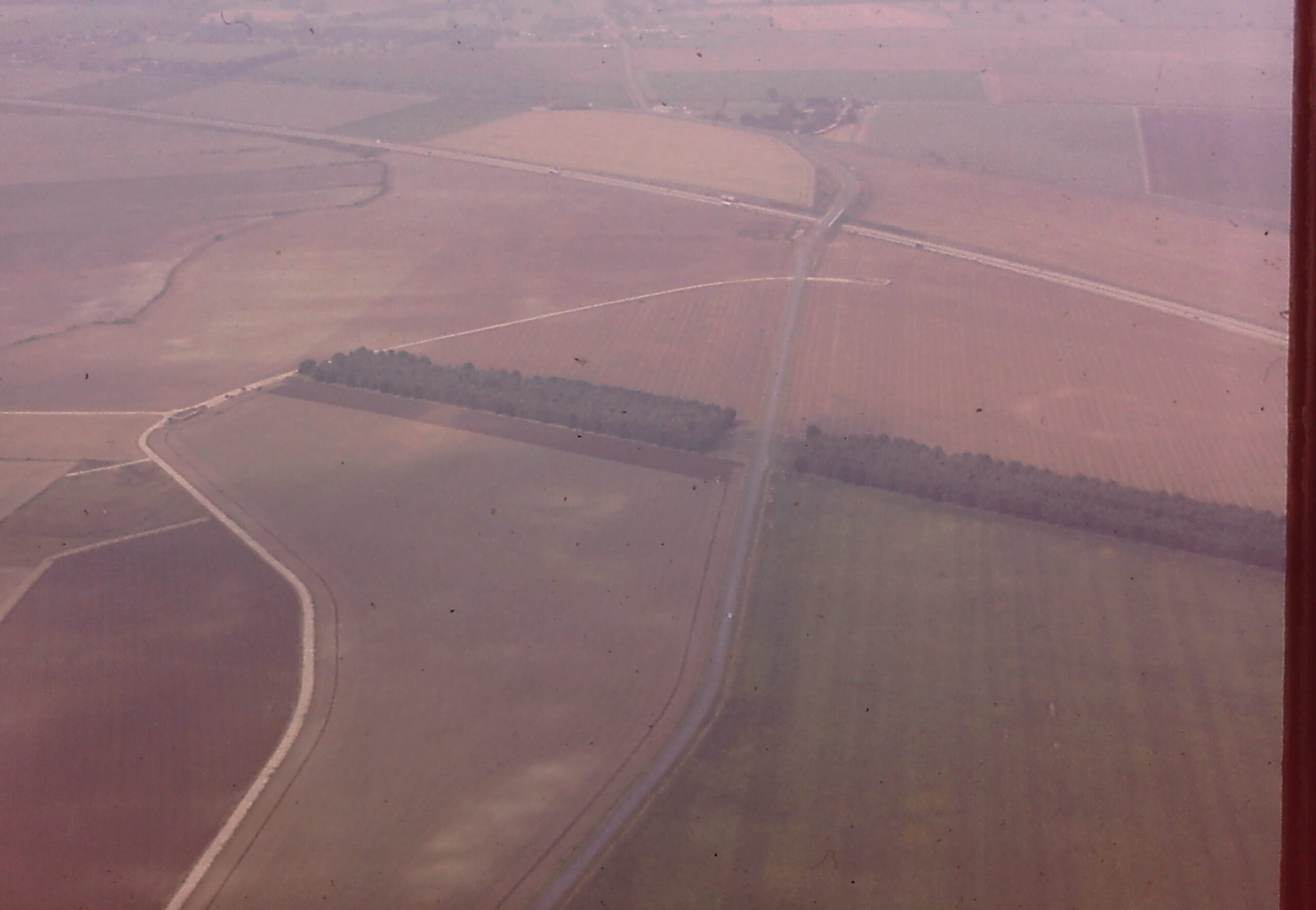
The perimeter track today, with the runway tree line and the A14 in the distance
Projects
Contribute
Do you have any information about the people or places in this article? If so, then please
let us know using the Contact page or by
emailing capturingcambridge@
Licence
The text on this page is licensed under CC BY-NC-SA 4.0


 .