Search by topic
- archaeology
- Building of Local Interest
- chapel
- charity
- church
- crime
- dressmaker
- fire
- Great Eastern Railway
- Listed building
- Mapping Relief
- medieval
- oral history
- poverty
- Public House
- Religious House
- Roman
- scholar
- school
- Then and Now
- tudor
- women
- work
- world war one
- world war two
Search by text
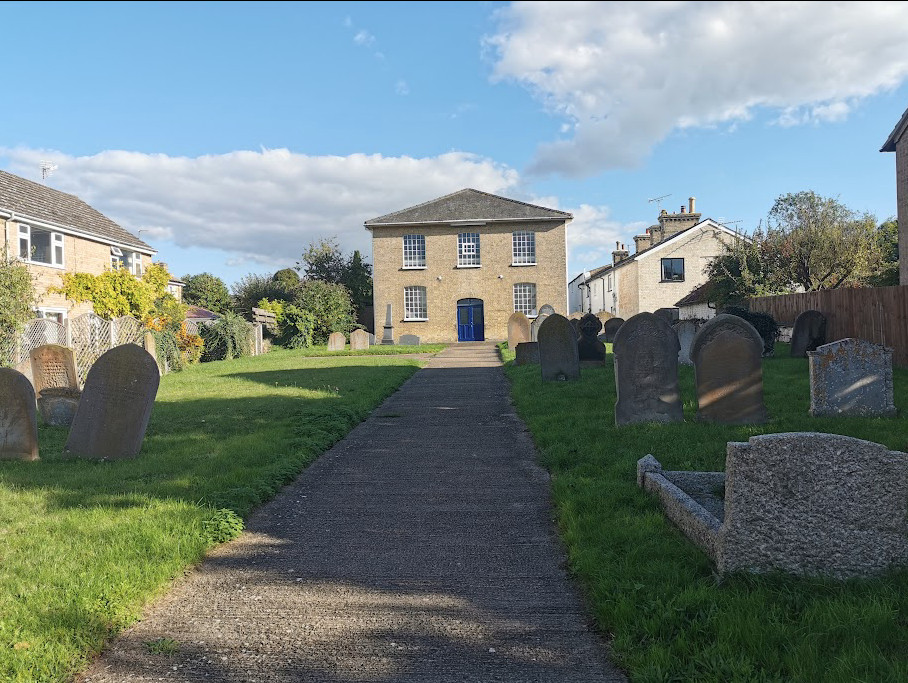 Burwell Baptist Chapel (RGL2024)
Burwell Baptist Chapel
History of Burwell Baptist Chapel
Listed Building
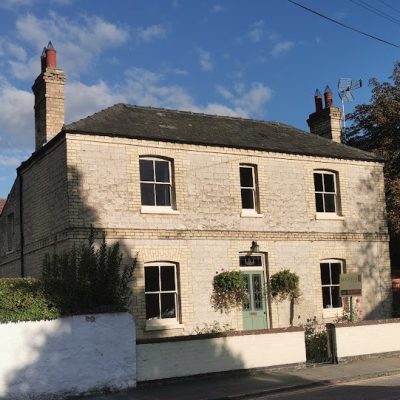
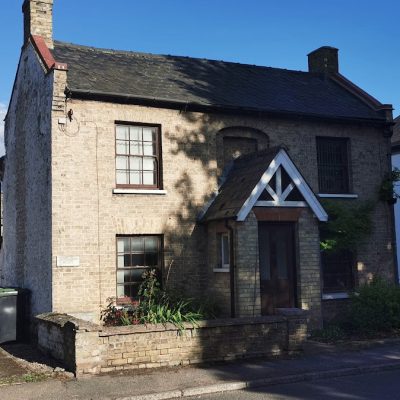
Chapel built after 1842. Gault brick entrance facade with painted clunch side walls. Hipped slate roof. Boarded eaves
Burwell Baptist Church 165 years – a social history by David Martin, 2016, contains a very detailed account of the founding and development of the church. The following observations are drawn from this publication.
Although the Baptist church was technically founded in 1851, gravestones in the chapel yard demonstrate that members of the Baptist community were active at least ten years before this and were even buried in the yard over a year before the chapel opened. Jonathan Shaw was deacon in Burwell by 1847, and Jonathan Jennings is described as a member since 1841.
The Baptists in Burwell started a Mission station in 1839. Before their seven lease ran out William Pratt bought a site – the ruins of the Shelverton house – in February 1846, which was placed in Trust for the use of the Baptists.
Cambridge Independent Press 10/10/1846: Burwell – On Wednesday week [7th October 1846} a new Baptist Chapel was opened in the thriving village of Burwell. Three services were performed by the Rev Samuel Thoday and the Rev R Roff of Cambridge, and the Rev Cornelius Elven of Bury. The collections amounted to £20 … Unfortunately, on the return of the two former gentlemen to Cambridge, while coming down Swaffham hill – a very gangerous one where accidents are not uncommon from its steepness – their horses fell, the shafts of the gig were quite broken off, and the Rev. gentlemen thrown from the vehicle; both sustained injuries, but Mr Roff received the severest bruises.
On Tuesday 7th January, the Soham pastor, Mr Cooper, read the dismissal letter that signified the end of the Burwell Twenty-Five’s membership of the Soham Baptist Church. William Charles Ellis was invited to become pastor; he came from the Burwell Independent Chapel and had preached there for 18 months previously.
Projects
Contribute
Do you have any information about the people or places in this article? If so, then please let us know using the Contact page or by emailing capturingcambridge@
Licence
This work is licensed under CC BY-NC-SA 4.0