Search by topic
- archaeology
- Building of Local Interest
- chapel
- charity
- church
- crime
- dressmaker
- fire
- Great Eastern Railway
- Listed building
- Mapping Relief
- medieval
- oral history
- poverty
- Public House
- Religious House
- Roman
- scholar
- school
- Then and Now
- tudor
- women
- work
- world war one
- world war two
Search by text
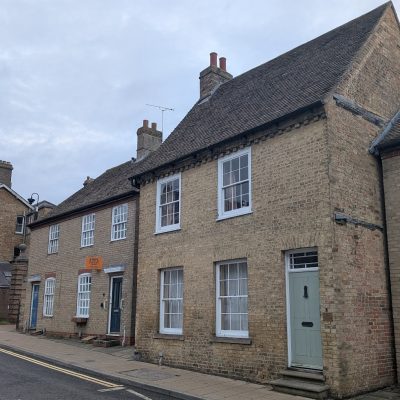
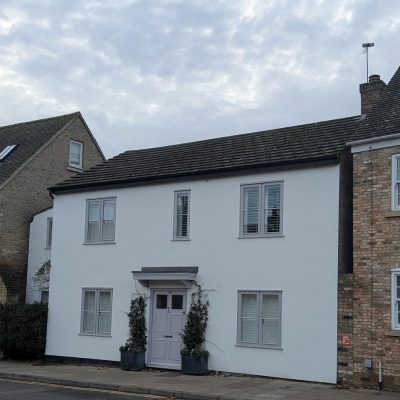
34 (6) Cambridge Road, Ely
History of 34 Cambridge Road
1906 house built as no.6
1908 Mallyan Thompson came to live
Mallyan Thompson’s reminiscences of life in Ely can be found in Ely Memories, 1998.
1911
Sidney Cooke Thompson, 37, pharmaceutical chemist, b Norfolk
Annie Chadwick, 36, b Worcs
Hilda Mallyan, 6, b Yors
Amy Piper, 27, servant, b Lincs
Sidney Cooke had trained as a botanist. He came to work at Sturton and Howard’s the chemists. Within a few years he bought the firm from Miss Howard.
1921
Hilda Mallyan was at school in Southampton. Before this she went to school at Bedford House, St Mary’s Street.
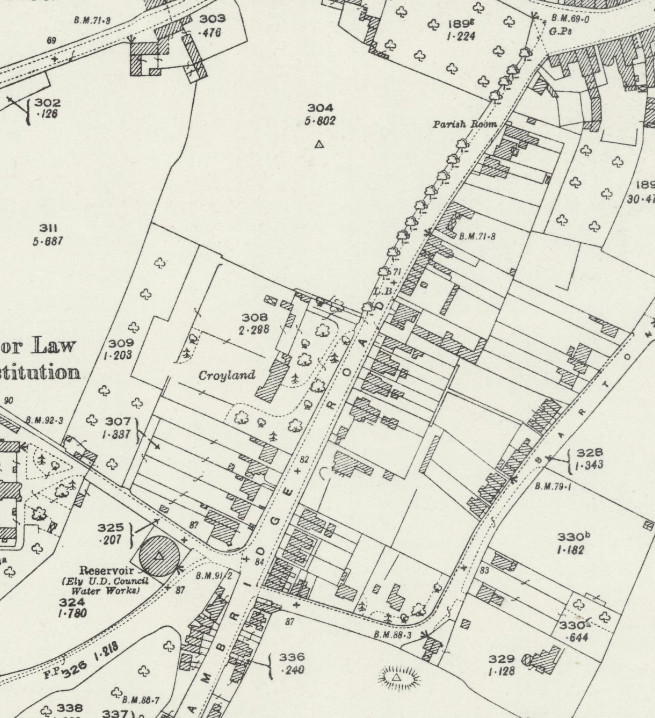
Cambridge Road, Ely OS 1925
Houses in Cambridge Road were renumbered in the 1930s. Mallyan Thompson states: In the 1930s they built more houses and started to number them. We were number 6 but then you see, we ended up number 34! There was Mr Coy’s field; on the corner you see was the Lamb Hotel garden where they had fruit trees. Mt Coy’s field was from the Lamb Hotel garden up to Croylands. And then Mr Coy died and and they talked about building there. Cutlacks the brewers lived at Croylands and Mrs Cutlack said, ‘What! Houses there, and me having to look over houses. Indeed I’ll have no such thing.’ She went and bought the field for £1000, so we were alright.
1939 (34):
Sidney C Thompson, b 1873, pharmaceutical chemist
Annie C, b 1874,
Hilda Mallyan, b 1905, school teacher
Joan M Wallace, b 1914
?
WWII
Mallyan worked as Home Guard secretary for Colonel Cutlack.
Projects
Contribute
Do you have any information about the people or places in this article? If so, then please let us know using the Contact page or by emailing capturingcambridge@
Licence
This work is licensed under CC BY-NC-SA 4.0