Search by topic
- archaeology
- Building of Local Interest
- chapel
- charity
- church
- crime
- dressmaker
- fire
- Great Eastern Railway
- Listed building
- Mapping Relief
- medieval
- oral history
- poverty
- Public House
- Religious House
- Roman
- scholar
- school
- Then and Now
- tudor
- women
- work
- world war one
- world war two
Search by text
(4) Potter’s Lane, Ely
History of 4 Potter's Lane
In The Way We Remember It, Ann Powell née Harding and Michael Rouse, 2002, the story of the Harding family of Potter’s Lane can be found, p7ff.
It seems likely that the street has been renumbered since WWII. From the description he seems that no.4 was opposite the end of Gas Lane and part of a row of houses that were demolished at some point.
1939
Harry Harding, b 1914, lorry driver heavy goods
Florence Harding, b 1915
Ann Harding, b 1937
In 1921 Harry had been living on the Barton Road Ely with his family, father William b.1870.
The family in Potter’s Lane lived behind a gas works. Local health was poor; their neighbours lost a daughter, marine to meningitis aged 2; the father died of TB a few months later.
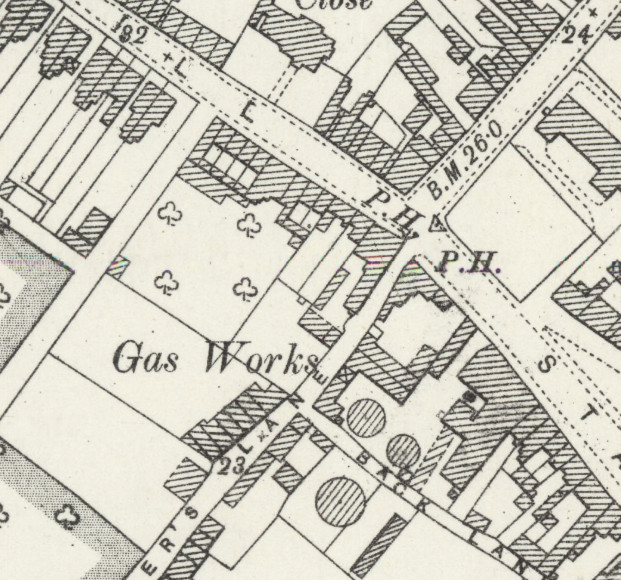
Ely OS 1901
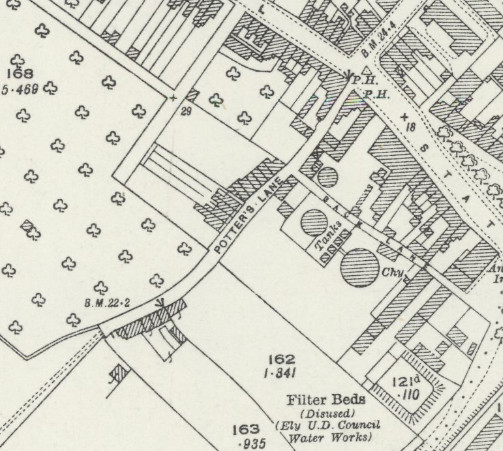
Ely OS 1925
Harry Harding paid club money at the Black Swan each week. 6d a week generated a few shillings if the wage earner fell sick. It was common practice to pay in for a friend as well. He in turn paid in for you in another pub. …. the amount paid out was about 3/6d a week. each club had to close at Christmas and the remaining monies shared out among the members. … the man [next door] who died of TB dragged himself to work until he was too weak to turn the steering wheel of his lorry.
The family then moved to 116 Broad Street.
Projects
Contribute
Do you have any information about the people or places in this article? If so, then please let us know using the Contact page or by emailing capturingcambridge@
Licence
This work is licensed under CC BY-NC-SA 4.0