Search by topic
- archaeology
- Building of Local Interest
- chapel
- charity
- church
- crime
- dressmaker
- fire
- Great Eastern Railway
- Listed building
- Mapping Relief
- medieval
- oral history
- poverty
- Public House
- Religious House
- Roman
- scholar
- school
- Then and Now
- tudor
- women
- work
- world war one
- world war two
Search by text
Royston Cave
History of Royston Cave
Scheduled Monument
The Royston Cave is a remarkable man-made feature without parallel, in structural terms, either in England or in Western Europe. … Although used in the medieval period, the cave was evidently sealed up and its existence remained unknown until 1742 when workmen erecting a bench for the butter market in the Mercat House (since demolished) discovered a millstone closing the entrance to a narrow vertical shaft.
https://historicengland.org.uk/listing/the-list/list-entry/1015594?section=official-list-entry
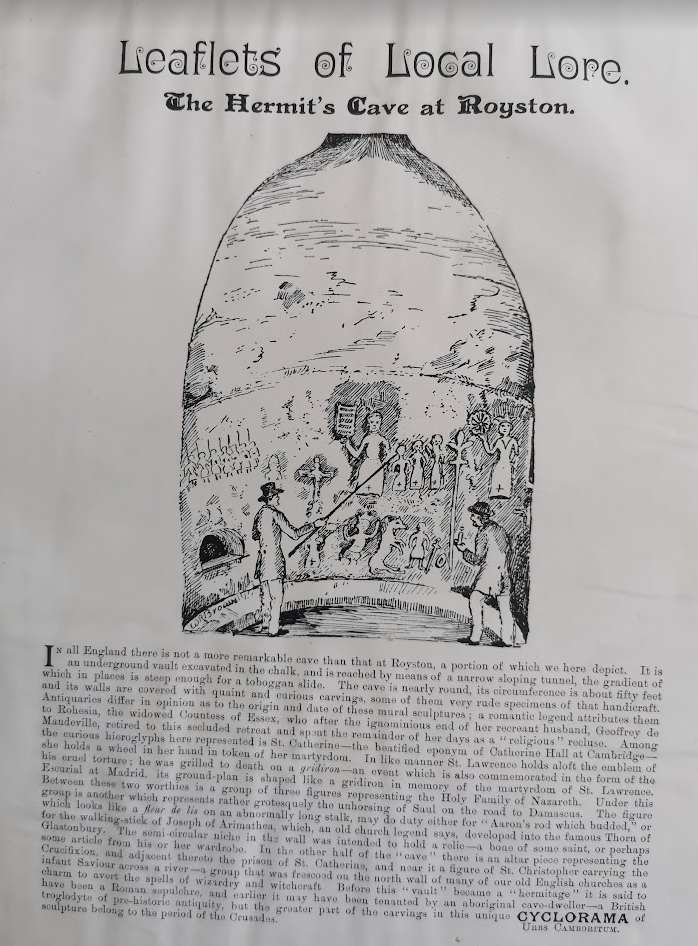
Urbs Camboritum, Royston Cave
Projects
Contribute
Do you have any information about the people or places in this article? If so, then please let us know using the Contact page or by emailing capturingcambridge@
Licence
This work is licensed under CC BY-NC-SA 4.0