Search by topic
- archaeology
- Building of Local Interest
- chapel
- charity
- church
- crime
- dressmaker
- fire
- Great Eastern Railway
- Listed building
- Mapping Relief
- medieval
- oral history
- poverty
- Public House
- Religious House
- Roman
- scholar
- school
- Then and Now
- tudor
- women
- work
- world war one
- world war two
Search by text
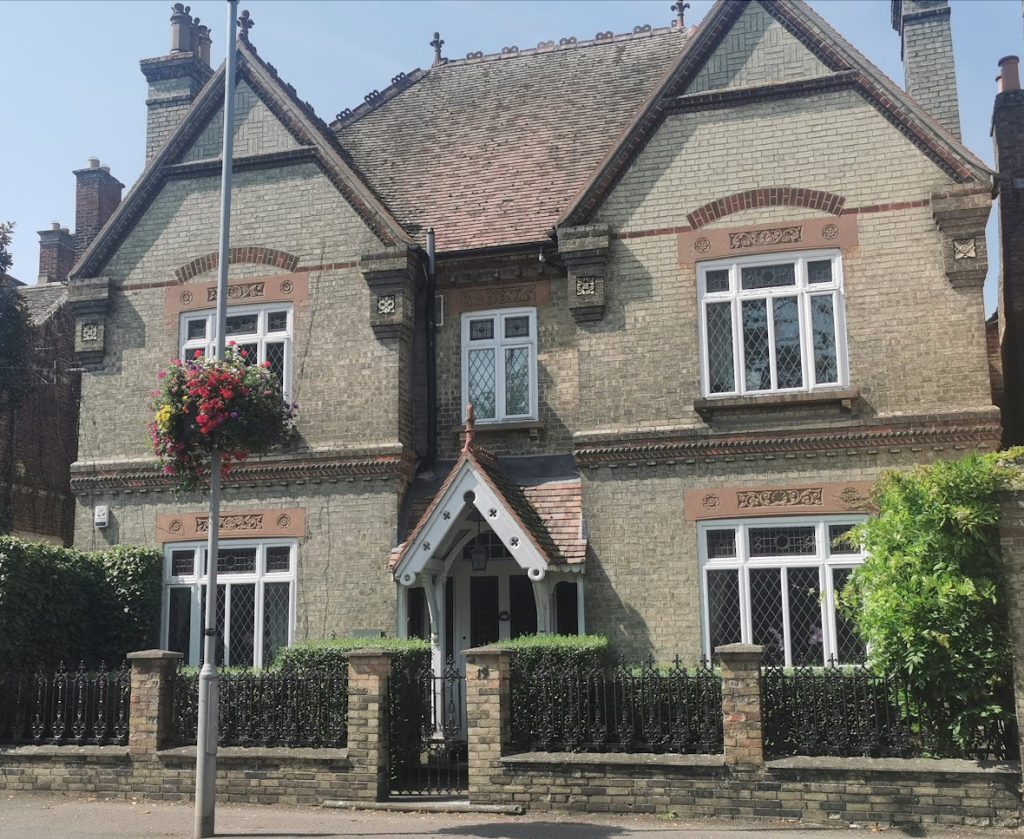 19 Post Street, Godmanchester (RGL2025)
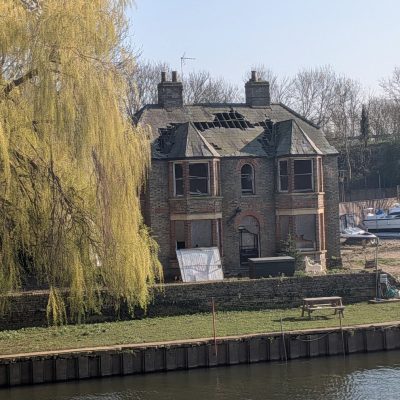
Island Hall, 18 Post Street, Godmanchester
History of Island Hall
Listed Building
Mid C18, altered mid C19.
Mid C18. Contemporary with house. High red brick garden wall extending down to the river
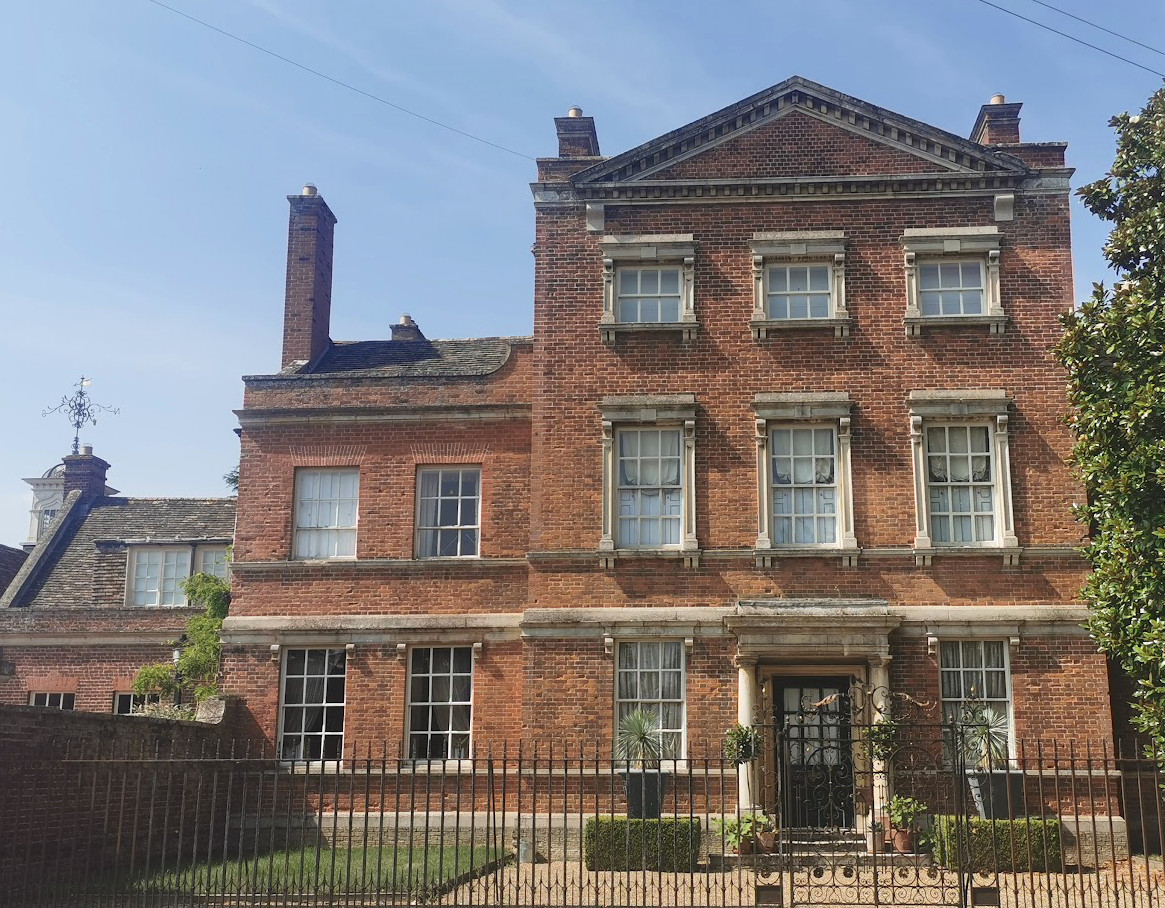
Island Hall, Post Street, Godmanchester (RGL2025)
Built on the site of a former tannery. It was built by ‘Original’ Jackson for his son, John. ‘Original’ Jackson was a merchant who was elected as one of the two bailiffs governing Godmanchester five times.
In 1803 the Kackson family were in debt and sold the house. It was bought by the Baumgartners, originally from Switzerland. Jacob Julian Baumgartner had married the heiress Tryce Parrat in the mid 18th cent. Tryce was a well established Godmanchester name; John Tryce was the earliest recorded bailiff of Godmanchester in 1606. One Tryce in the 16th cent. married the daughter of Richard Robins who had endowed the Queen Elizabeth Grammar School.
1816 Dr John Baumgartner inherited the house.
1859 detailed description of house written by Octavia Hill. She wrote: the loveliest, dearest old house, I never was in such a one.
1874 General Robert Baumgartner
Violet Baumgartner.
1891 Violet married Major Frederick Beart of the Chestnuts in 1891. He died in 1895.
1905 Water Carnival held in ground to which more than 1,000 came.
1914 Baumgartner name changed to Percy.
1915 Violet married Cyril Bevan. He died in 1916.
1943 House requisitioned by WAAF
1945 Used as airmen’s mess by Pathfinder Squadron. The house was taken over under the Emergency Housing Act at the end of the war
1950s Primary School built on kitchen garden
1958 Hall sold to local authority and converted to flats
1977 Following a fire the south wing restored by Simon Herrtage.
1983 Purchased by Christopher Vane Percy
Numerous records of the Baumgartner/Percy family link them to colonial India, the Crimean War and the transport of convicts to Australia.
See Godmanchester (Sneath 2011)
Projects
Contribute
Do you have any information about the people or places in this article? If so, then please let us know using the Contact page or by emailing capturingcambridge@
Licence
This work is licensed under CC BY-NC-SA 4.0