Search by topic
- archaeology
- Building of Local Interest
- chapel
- charity
- church
- crime
- dressmaker
- fire
- Great Eastern Railway
- Listed building
- Mapping Relief
- medieval
- oral history
- poverty
- Public House
- Religious House
- Roman
- scholar
- school
- Then and Now
- tudor
- women
- work
- world war one
- world war two
Search by text
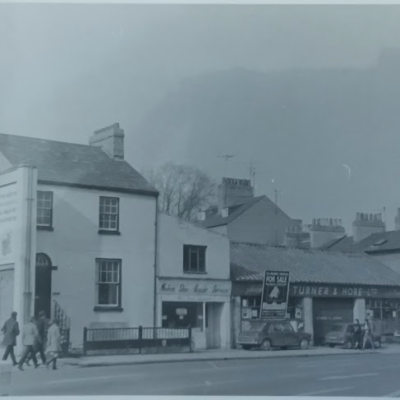
8 Queen Anne Terrace
History of 8 Queen Anne Terrace
1901
Crossley William Corsty Barlow, 38, correspondence tutor, b Warwicks
Elizabeth Sophia, 41, b Surrey
Elizabeth Williams, wife’s mother, 65, b Surrey
Emma Alberta Williams, wife’s sister, 28, b Surrey
Maud Mary Walker, 19, servant, b London
In 1891 the family were living at 3 Shaftesbury Villas, Carlyle Road
Crossley William Crosby Barlow was born on 24 March 1863 in Stratford on Avon, Warwickshire, the son of the Swedenborgian minister William Crosby. His schooling was at George Watson’s College in Edinburgh, Scotland, then Edinburgh University. He continued his studies at Peterhouse, Cambridge, becoming sixth Wrangler in the Mathematical Tripos in 1886. G H Bryan was fifth Wrangler in the same examinations. Barlow, like Bryan, was 1st Class in Part II of the tripos in the following year. He became a tutor at the University Correspondence College in London.
1911
James Anderson Shawyer, 31, inspector of schools, b Cumberland
Enid Gertrude, 29, b London
Winifred Mary, 5, b Gloucs
Nicolete Margaret, 1, b Stapleford
Emma Poulter, servant, 40, cook, b Harston
Mary Selina Willsher, 23, nurse, b Beds
Charlotte Marriott, 19, housemaid, b Toft
1913
Stephen E Goggin
In 1911 the Goggin family were living at 13 Chesterton Hall Crescent
1962
National Industrial Fuel Efficiency Service
Projects
Contribute
Do you have any information about the people or places in this article? If so, then please let us know using the Contact page or by emailing capturingcambridge@
Licence
This work is licensed under CC BY-NC-SA 4.0