Search by topic
- archaeology
- Building of Local Interest
- chapel
- charity
- church
- crime
- dressmaker
- Great Eastern Railway
- Listed building
- Mapping Relief
- medieval
- oral history
- poverty
- Public House
- railway worker
- Religious House
- Roman
- scholar
- school
- Then and Now
- tudor
- women
- work
- world war one
- world war two
Search by text
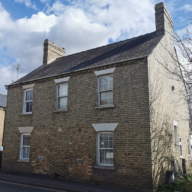
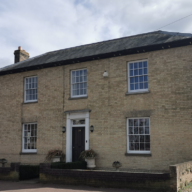
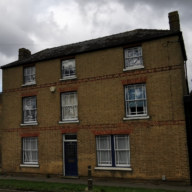
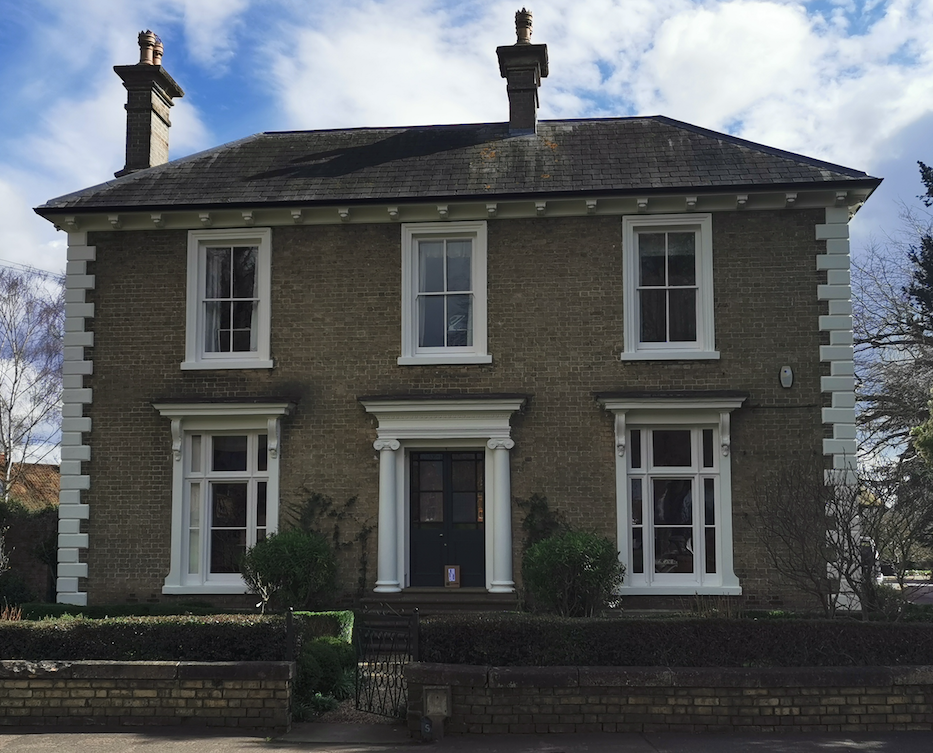 343 High Street, Cottenham
343 (235) High Street, Cottenham
History of 343 High Street
Listed building: rear of house
Two adjoining barns, C17. Timber framed, weatherboarded.
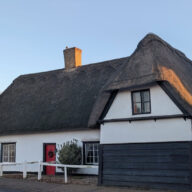
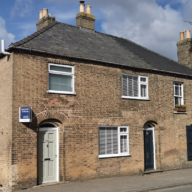
Cottenham in Focus (2002) states that this house was called The Elms, rather than the house next door, also lived in by the Ivatt family.
1841
William Ivatt, 28, farmer
1851
William Ivatt, 34, farm of 270 acres employing 10 men and 3 boys, b Cottenham
The house was built in 1851 for £600. The Ivatt family claimed to have lived on the site for 400 years.
1861
William Ivatt, 49, farm 460 acres employing 13 men and 7 boys, b Cottenham
1871
William Ivatt, 59, farmer of 270 acres employing 11 men and 2 boys, b Cottenham
Sarah Wilkin, 59, b Shelford
1881
George Ivatt, 43, farmer of 225 acres employing 7 labourers and 4 boys, b Cottenham
1891
William Coxall, 54, farmer
Emma Holmes, widow, 64, b Hunts
1901
William Coxall, 60, farmer, b Waterbeach
1911
William Coxall, 74, farmer, b Waterbeach
Esther Smith, 56, housekeeper, b Willingham
Jane Pierson, 16, servant, b Cottenham
1939
Sidney Smith, b 1893, general farm worker
1970s
The artist John Hutton lived here and worked on engraved glass panels for Coventry Cathedral.
Projects
Contribute
Do you have any information about the people or places in this article? If so, then please let us know using the Contact page or by emailing capturingcambridge@
Licence
This work is licensed under CC BY-NC-SA 4.0