Search by topic
- archaeology
- Building of Local Interest
- chapel
- charity
- church
- crime
- dressmaker
- fire
- Great Eastern Railway
- Listed building
- Mapping Relief
- medieval
- oral history
- poverty
- Public House
- Religious House
- Roman
- scholar
- school
- Then and Now
- tudor
- women
- work
- world war one
- world war two
Search by text
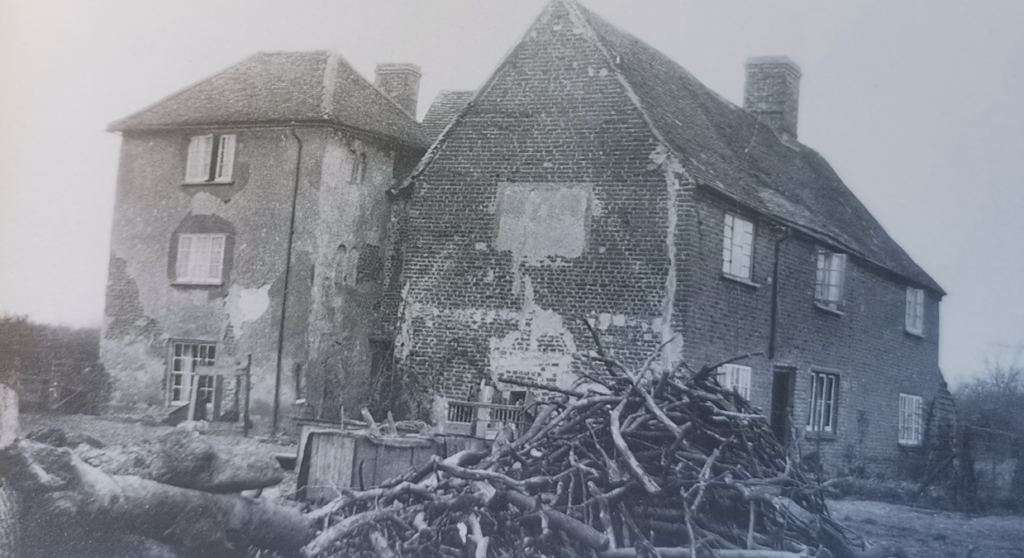 Croydon Wilds, 1928 (photo E S Palmer) (Cambridgeshire Collection)
Croydon Wilds
History of Croydon Wilds
Croydon Wilds was a 17th cent. moated manor house with a brick tower in the middle. It was demolished in the 1950s. It featured in an advertisement in 1897 (CDN 14.7.1897):
Croydon Wilds, aptly so called, is one of the most remote parts of England. Its few inhabitants are housed in a couple of roomy cottages and it was to one of these cottages that a representative of the ‘Cambridge Independent Press’ penetrated, and had a talk with the most respected and intelligent of the inhabitants, Mr Smith, who has lived there for thirty-four years. His daughter, as the reported passed through the cottage garden, stood bright and blooming beneath the lintel. But she had not always been so fit. ‘I was weakly and unwell since childhood … a doctor said I was in a consumption and I should never get better … I went into the Hospital in Cambridge, but I had given myself up’. Then came the miracle cure. ‘I happened to read of ‘Dr Williams Pink Pills for Pale People’ … I had taken nearly one box when I began to feel better. Now I can walk easily, am strong and well, and quite able to get though my work without the slightest fatigue.’
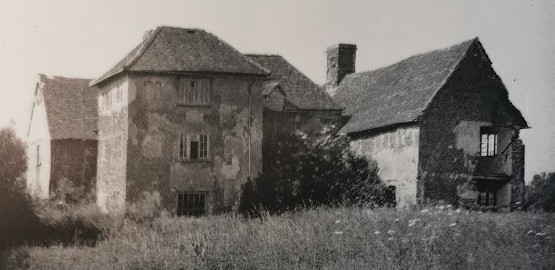
Croydon Wilds 17th cent. (RCHM)
Projects
Contribute
Do you have any information about the people or places in this article? If so, then please let us know using the Contact page or by emailing capturingcambridge@
Licence
This work is licensed under CC BY-NC-SA 4.0