Search by topic
- archaeology
- Building of Local Interest
- chapel
- charity
- church
- crime
- dressmaker
- Great Eastern Railway
- Listed building
- Mapping Relief
- medieval
- oral history
- poverty
- Public House
- railway worker
- Religious House
- Roman
- scholar
- school
- Then and Now
- tudor
- women
- work
- world war one
- world war two
Search by text


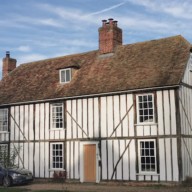
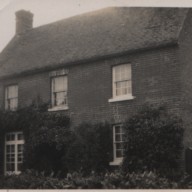
Building rear of Bwthyn Bach, Knapwell
History of timber framed building at rear of Bwthyn Bach
The timber-framed building, to the rear of Bwthyn Bach, probably built in the late C16/early C17 as an agricultural or ancillary building, remodelled as a cottage in the later C17 and converted to a doctor’s surgery in around 1953 … Little is subsequently known about the cottage until it was purchased, along with the surrounding plot, by Dr Thomas Meurig Owen (1918-2002). In 1950, Dr Owen had become the physician in charge of the neighbouring Papworth Village Settlement, a centre for the treatment and aftercare of people with tuberculosis, with the work being part general practice, part occupational and rehabilitative health. In 1953, Dr Owen extended the general practice part of his work by joining with a single-handed doctor in Knapwell. In the same year, he built a house, which he called Bwthyn Bach (Welsh for Small Cottage), immediately to the south of the existing timber-framed cottage. The cottage itself was subsequently converted into a doctor’s surgery and used as such until Dr Owen retired in 1979. (Historic England)
Projects
Contribute
Do you have any information about the people or places in this article? If so, then please let us know using the
Contact page or by emailing
capturingcambridge@
Licence
This work is licensed under
CC BY-NC-SA 4.0


 not including content on external links as indicated
by
not including content on external links as indicated
by .
.