Search by topic
- archaeology
- Building of Local Interest
- chapel
- charity
- church
- crime
- dressmaker
- fire
- Great Eastern Railway
- Listed building
- Mapping Relief
- medieval
- oral history
- poverty
- Public House
- Religious House
- Roman
- scholar
- school
- Then and Now
- tudor
- women
- work
- world war one
- world war two
Search by text
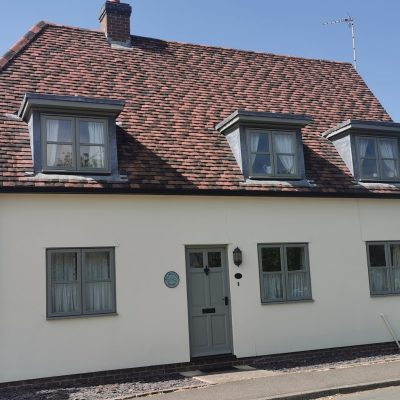
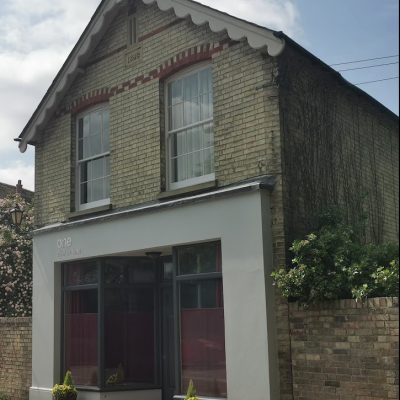
Mill, Mill Lane, Whittlesford
History of Mill
Listed Building
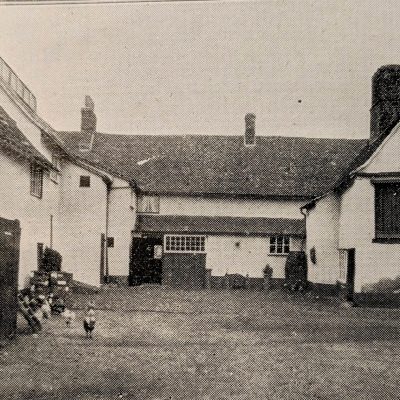
House, by Ebenezer Hollick, miller (d.1828) dated brick near entrance E.H.1763. C19 and c.1970 additions and alterations. (Historic England)
1700s (from ‘History of Baptism’ by Robert Robinson – 1790)
Not many years ago [in late 1700s] at Whittlesford 48 persons were baptised in the ford of the river from which the village takes its name. At ten o’clock of a very fine May morning, about 1,500 people of different ranks assembled together. At half [past 10 in the morning Dr Andrew Clifford, fellow of the Society of Antiquarians and teacher of a Baptist congregation in Eagle Street, London, ascended a moveable pulpit in a large open courtyard near the river Granta and adjoining to the Mill House of the Lord of the Manor Ebenezer Hollick, esquire.
Round him stood the congregation, people on horseback, and in coaches and carts forming the outside semicircle, many people sitting in rooms in the house, the windows being open. All were bareheaded and there was a profound silence. Then followed the Address from the speaker … About half an house afterwards the Administrator (who that day was a nephew of Dr Clifford) in a large black gown of fine baize, and without a hat, with a small Testament in his had, came down to the river side, accompanied by several Baptist ministers and deacons, and the persons to be baptized. The men came first, two and two, without hats, and dressed as usual, except that instead of coats, they each had on a long white baize gown, tied around the middle with a sash. Those who had no hair wore white cotton or linen caps. The women followed the men, two by two, all dressed neat and clean, their gowns white linen or dimity. It is said the garments had knobs of lead at the bottom to make them sink. Each had on a long silk cloak hanging loosely over her shoulders, a broad ribbon tied over her gown beneath her breasts, and a hat on her head. For about ten minutes the Administrator stood expounding the verses Acts 9 – from the 26 – 39 verses, and then taking one of the men by the hand he led him into the water. When he came to sufficient depth he stopped, and placing himself on the left side of the man he put his right hand between his shoulders behind, gathering into it a little of the gown to hold. His left hand fingers he thrust under the sash in front, and the man putting his two thumbs into that hand, he locked everything together by closing his hand, then saying “I baptise thee etc” he gently leaned him backward, and dipped him once.
As soon as he raised him, a person in a boat took hold of the man’s hand, wiped his face, and he was led into the house, and assisted to dress. After the men the women were baptised, a female friend taking off their hat and cloak at the water side ….
Projects
Contribute
Do you have any information about the people or places in this article? If so, then please let us know using the Contact page or by emailing capturingcambridge@
Licence
This work is licensed under CC BY-NC-SA 4.0