Search by topic
- archaeology
- Building of Local Interest
- chapel
- charity
- church
- crime
- dressmaker
- fire
- Great Eastern Railway
- Listed building
- Mapping Relief
- medieval
- oral history
- poverty
- Public House
- Religious House
- Roman
- scholar
- school
- Then and Now
- tudor
- women
- work
- world war one
- world war two
Search by text
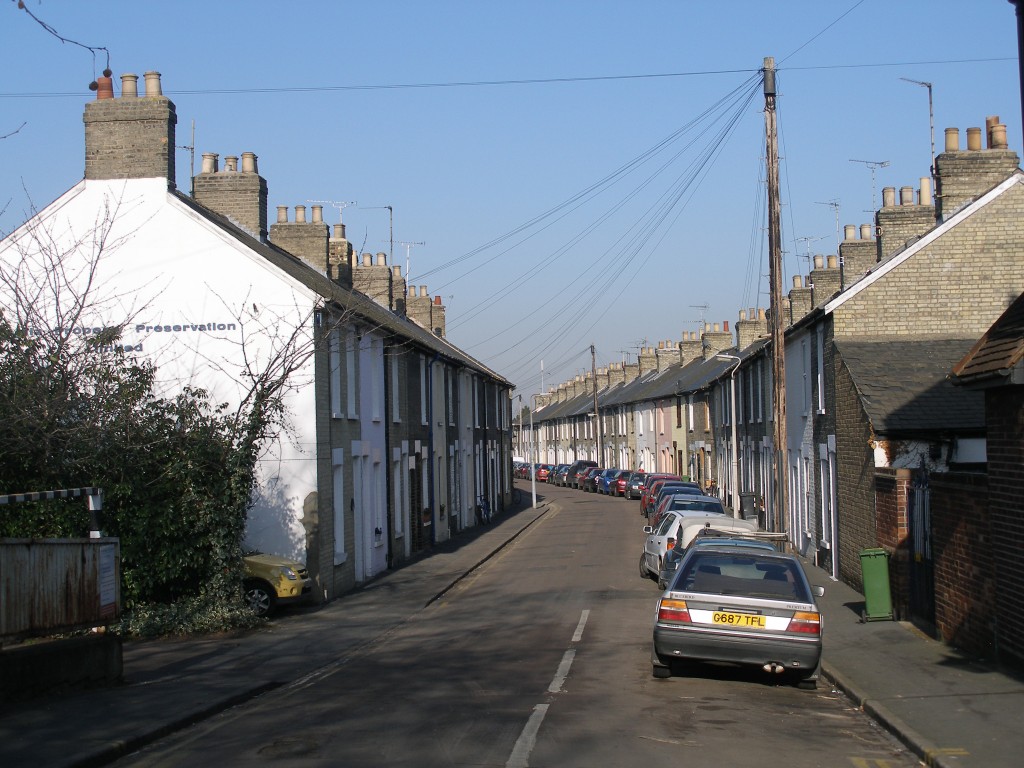
Alison McGannon, Great Eastern Street, Cambridge
Interview with Alison McGannon by Allan Brigham 2006
Romsey Town was built between 1880 and 1900. Although it is now part of inner Cambridge, at the time it would have been in the language of a century later an ‘urban extension’ on a ‘greenfield site’. The development of the township was plagued by disputes about basic infrastructure, but despite both the area and the inhabitants being seen as beyond the pale by those living in central Cambridge within a generation it had developed into a strong, vibrant and independent community of 7,000 people.
Alison’s childhood memories are part of this story and give a flavour of life in Romsey in the 1960s. Children still played on the streets (despite the flasher), neighbours were neighbourly, wives stayed at home bound to childcare, cooking and housework, while husbands came home for lunch. The interview captures the decade when The Bath House at Gwydir Street was still used for baths, the side streets were empty of cars, phones were luxuries, there was a bowling alley on Mill Road, and Tesco’s had only recently opened its first local store in Regent Street. There was trust and ‘good times’, but as Alison says ‘they can say it was happier, but I’m sure it must have been much harder.’
Read the full interview with Alison McGannon as a PDF.
Sources
- Oral / Unpublished Sources
Projects
Contribute
Do you have any information about the people or places in this article? If so, then please let us know using the Contact page or by emailing capturingcambridge@
Licence
This work is licensed under CC BY-NC-SA 4.0