Search by topic
- archaeology
- Building of Local Interest
- chapel
- charity
- church
- crime
- dressmaker
- fire
- Great Eastern Railway
- Listed building
- Mapping Relief
- medieval
- oral history
- poverty
- Public House
- Religious House
- Roman
- scholar
- school
- Then and Now
- tudor
- women
- work
- world war one
- world war two
Search by text
21 Milford Street
A retired grocer, and a clerk for Cambridge University Officers' Training Corps
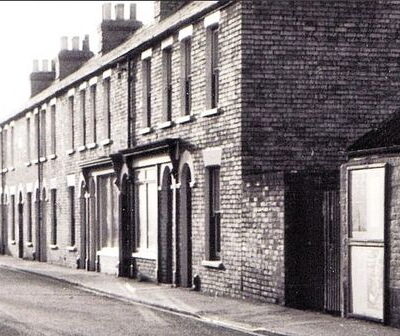
21 Milford Street is one of a terrace of three houses on the north side of the street, built in the early 1900s.
1911 census
Herbert J Watson, head, 67, retired grocer, b. Cambridge
Louisa C Watson, wife, 68, b. Cambridge
Sydney H Watson, son, 36, grocer, b. Cambridge
John D Senior, boarder, 17, grocer’s assistant, b. Haslingfield, Cambridgeshire
Bryda S Drever, servant, 20, domestic servant, b. Stretham, Cambridgeshire
Married 40 years, 4 children of which 1 died
Herbert Watson had run several grocer’s shops in the neighbourhood over the years, including a large shop at 144 Gwydir Street from at least 1891.
1921 census
William Hedley Plumtree, head, 33, clerk in holy orders, curate, St Matthew’s Church, b. Woolwich
Jessie Caroline Plumtree, wife, 40, home duties, b. Wandsworth, London
Ethel Francis Baldwin, great niece, 8, b. East Ham, Essex
Edward Griffith, boarder, 32, clerk in holy orders, curate, St Barnabas Church, b. Glasgow, Scotland
1939 England and Wales register
Morgan J Lewis, 24 Sep 1894, married, chief clerk CUOTC & CU board [military?]
Doris G Lewis, 27 Dec 1898, married, unpaid domestic duties
Gwynneth M Lewis, 23 May 1920, single, clerk Cambridge instruments
Richard M Lewis, 28 July 1930, single
Three more children [closed records]
Morgan James Lewis, who is described as chief clerk for Cambridge University Officers’ Training Corps, was from Llandaff, Cardiff. His wife Doris, née Oakman, was from Cambridge. Her grandmother Elizabeth Oakman was living at 18 Hooper Street in 1939.
Morgan and Doris Lewis were still at 21 Milford Street in 1966.
Sources
UK census records (1841 to 1921), General Register Office birth, marriage and death indexes (1837 onwards), the 1939 England and Wales Register, and electoral registers.
Projects
Contribute
Do you have any information about the people or places in this article? If so, then please let us know using the Contact page or by emailing capturingcambridge@
Licence
This work is licensed under CC BY-NC-SA 4.0