Search by topic
- archaeology
- Building of Local Interest
- chapel
- charity
- church
- crime
- dressmaker
- fire
- Great Eastern Railway
- Listed building
- Mapping Relief
- medieval
- oral history
- poverty
- Public House
- Religious House
- Roman
- scholar
- school
- Then and Now
- tudor
- women
- work
- world war one
- world war two
Search by text
111 Sturton Street, Cambridge
The Family of a Tailor
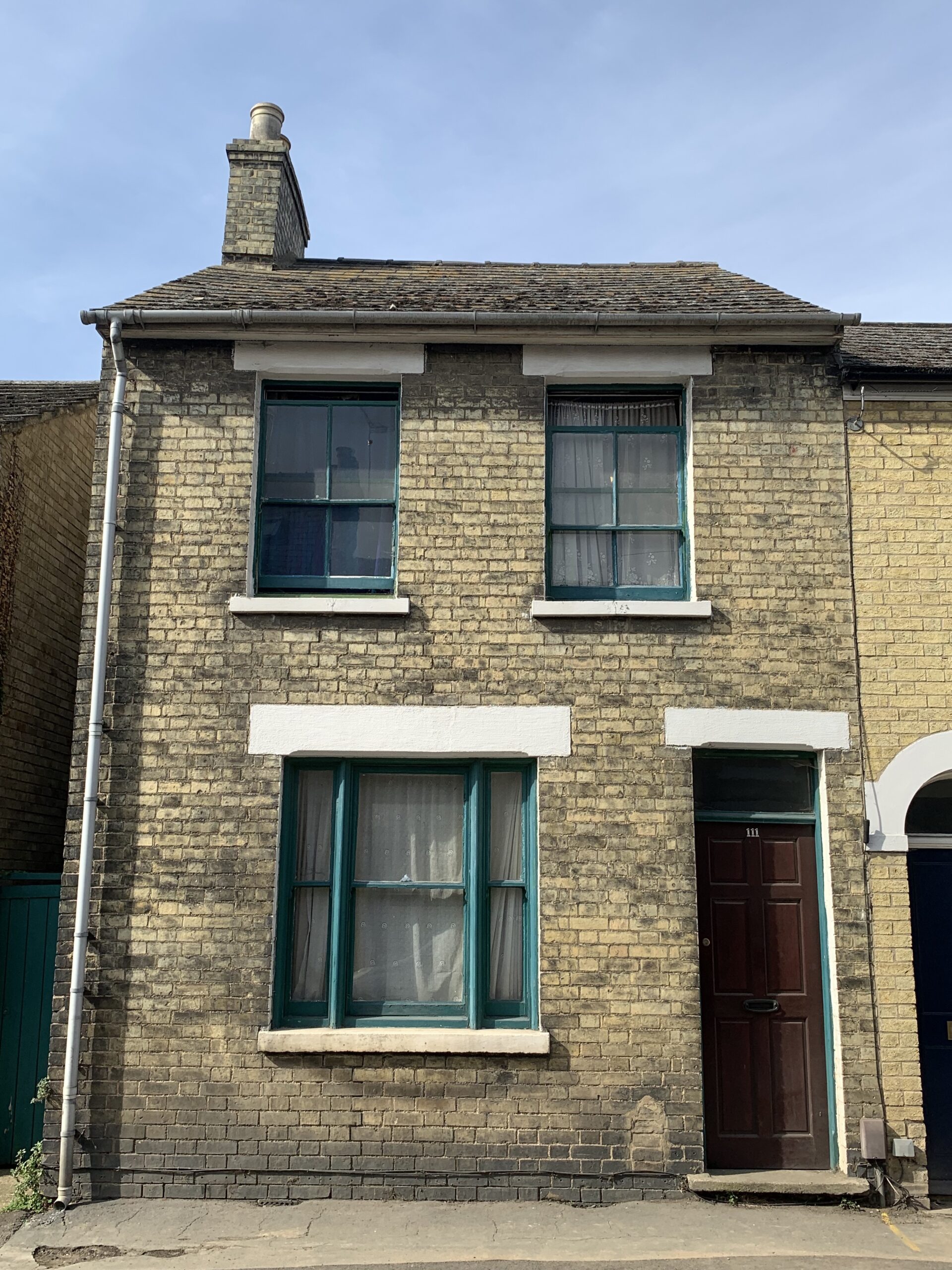
This property doesn’t appear on the 1881 Census, but it does appear on the Ordnance Survey 1888 Town Plan. Electoral Registers show Robert Elijah Beales moving from James Street to 111 Sturton Street between 1882 and 1883. He lives here until 1923.
1891
Robert Beales, 36, Tailor, b. Cambridge
Harriet Beales, 36, b. Cambridge
Robert Beales, 16 Errand Boy, b. Cambridge
Elizabeth Beales, 13, Scholar, b. Cambridge
George Beales, 10, Scholar, b. Cambridge
Arthur Beales, 8, Scholar, b. Cambridge
Thomas Beales, 6, Scholar, b. Cambridge
1901
Robert Beales, 46, Tailor, b. Cambridge
Elizabeth Beales, 44, b. Cambridge – Robert’s second wife, married in 1893. Elizabeth Pate is from 63 Ainsworth Street.
George Beales, 20, tailor, b. Cambridge
Thomas Beales, 15, tailor’s apprentice, b. Cambridge
Ethel Beales, 3, b. Cambridge
Dorothy Beales, 1, b. Cambridge
Ellen Phillips, 18, stepdaughter, assistant cashier, b. Cambridge
1911
Robert Elijah Beales, head, 55, married, tailor maker, at home, b. Cambridge
Elizabeth Ann Beales, wife, 54, married, b. Cambridge
Ellen Mabel Beales, step daughter, 27, cashier, Universal Stores, b. Cambridge
Ethel Beales, daughter, 14, school girl, b. Cambridge
Dorothy Beales, daughter, 11, school girl, b. Cambridge
Married 18 years, 3 children
Sources – 1881, 1891, 1901, 1911 UK Census, Cambridgeshire, England, Electoral Registers, Burgess Rolls and Poll Books (1722-1966), Ordnance Survey 1888 Town Plan,
Projects
Contribute
Do you have any information about the people or places in this article? If so, then please let us know using the Contact page or by emailing capturingcambridge@
Licence
This work is licensed under CC BY-NC-SA 4.0