Search by topic
- archaeology
- Building of Local Interest
- chapel
- charity
- church
- crime
- dressmaker
- fire
- Great Eastern Railway
- Listed building
- Mapping Relief
- medieval
- oral history
- poverty
- Public House
- Religious House
- Roman
- scholar
- school
- Then and Now
- tudor
- women
- work
- world war one
- world war two
Search by text
63 Sturton Street, Cambridge
A Tailor and a Shoemaker
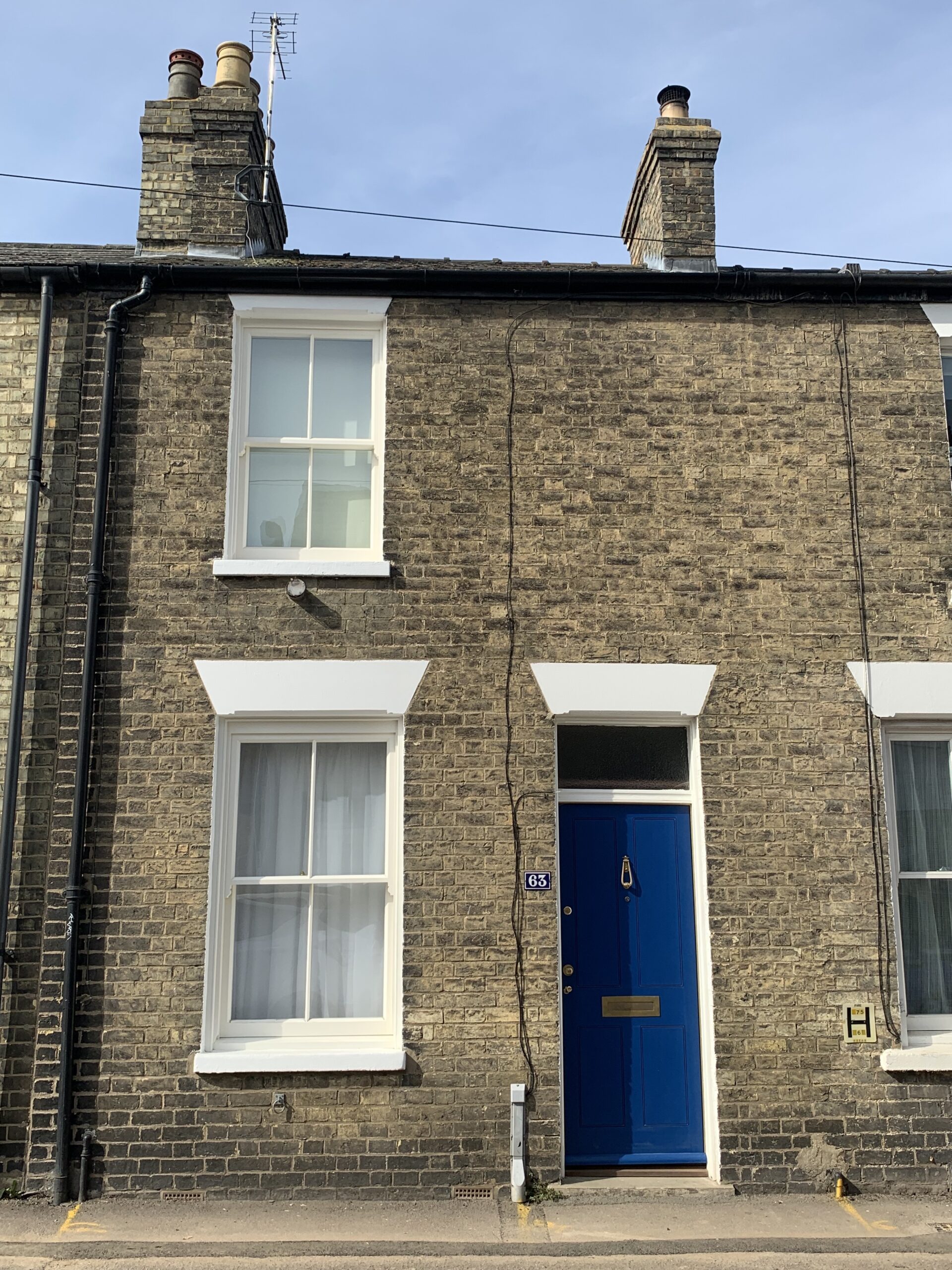
In Down Your Street, 1984, Sara Payne notes that no.63 was once a blacksmith’s and no.63a was built into the actual smithy.
1873
According to The History of Methodism in Cambridge by F Tice, 1966, services were held in a loft above no.64 Sturton Street during the period 1873-1874. Worship moved to the new chapel in 1875.
1881
William R. Pilgrim, head, married, 31, engine driver at coprolite works, b. Cambridge
Sarah E. Pilgrim, wife, married, 29, b. Cambridge
Agnes Mary Pilgrim, daughter, 9, scholar, b. St Andrew the Less parish, Cambridge
William R. Pilgrim, son, 7, scholar, b. St Andrew the Less parish, Cambridge
Edith L. Pilgrim, daughter, 3, scholar, b. St Andrew the Less parish, Cambridge
In 1925 a handbook of the Primitive Methodist Chapel gave an account of the early days quoting Robert Pilgrim: My earliest recollections of Sturton Street are that the roads were not made up and I had to step on stones and bricks to keep clear of the mud and pools of water. My father and mother then occupied the house no.63, opposite the chapel, and no.63a was at that time a gateway with a loft above…. Rev Tongue and Rev Bell used to preach here. While this place was used, the people who attended brought their chairs and hymn books and some kind friend brought a small harmonium to lead the singing.
William and his family move to number 3 Ainsworth Street.
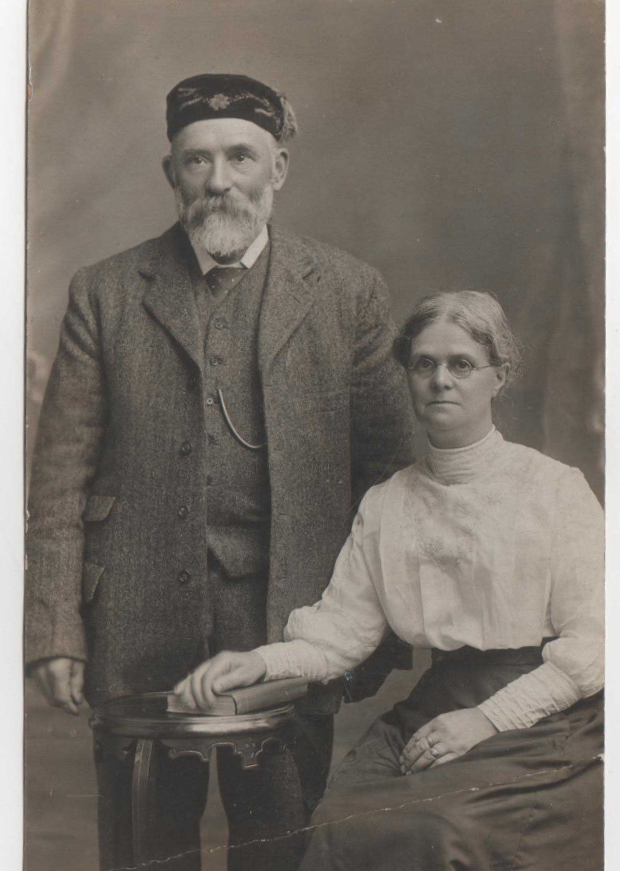
William PILGRIM and an unknown lady, possibly his wife Sarah. Used with permission of descendants.
1891
George A Watson, 49, Tailor, b. Cambridge
1901
Albert E Miller, 28, shoemaker, b. Cambridge
Elizabeth Miller, 28, b. Cambridge
1911
Joseph Tucker, head, 30, married, railway servant (porter), b. New Lakenham [?], Norwich
Harriet Tucker, wife, 29, married, b. Cambridge
Joseph E Tucker, son, 2, b. Cambridge
William J Tucker, son, 7 months, b. Cambridge
Married 8 years, 2 children
Source – 1881, 1891, 1901, 1911 UK Census
Projects
Contribute
Do you have any information about the people or places in this article? If so, then please let us know using the Contact page or by emailing capturingcambridge@
Licence
This work is licensed under CC BY-NC-SA 4.0