Search by topic
- archaeology
- Building of Local Interest
- chapel
- charity
- church
- crime
- dressmaker
- fire
- Great Eastern Railway
- Listed building
- Mapping Relief
- medieval
- oral history
- poverty
- Public House
- Religious House
- Roman
- scholar
- school
- Then and Now
- tudor
- women
- work
- world war one
- world war two
Search by text
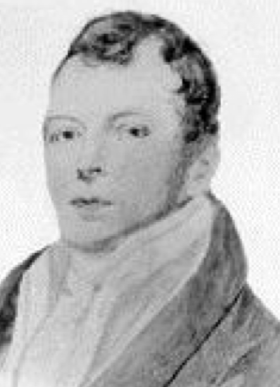 Charles Humfrey
Clarendon House
History of Clarendon House
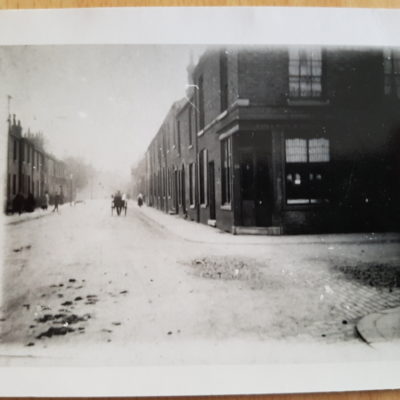
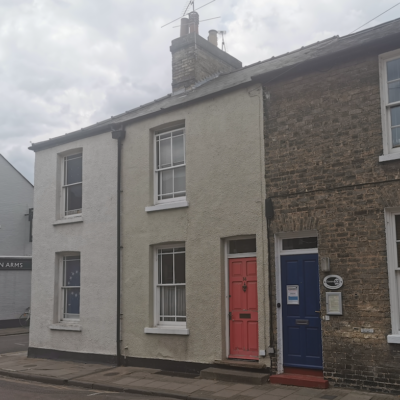
This is the former site of Charles Humfrey’s house, Clarendon House, which stood between Clarendon Street, Victoria Street and Earl Street.
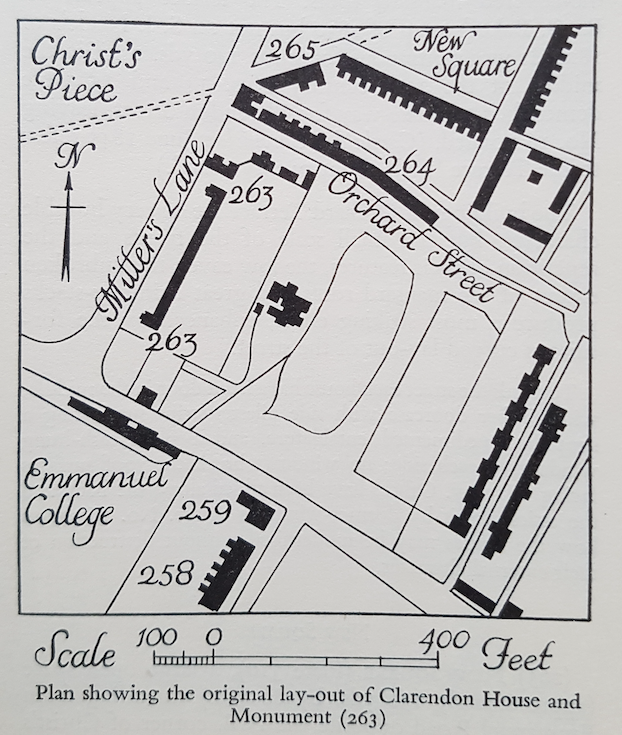
Clarendon House map
The entry on Cambridge City website listing past mayors of the city says: J. Burleigh was one of those who received an allotment under the 1811 Barnwell Inclosure Award. He sold a plot to Charles Humfrey for a mansion: much of this area is now bordered by Clarendon Street, Elm Street, Emmanuel Road and Parker Street. The mansion, Clarendon House, was designed by William Wilkins. Humfrey, an architect, went on to acquire more property in the area. By 1845 he was in debt and he and his executors had to sell his bank and his Cambridge property over the next few years. The mansion was demolished later in the century and its site is now Parkside Community College. However a gazebo still exists in the garden of no. 2 Emmanuel Road and was restored in 1997 by the current owners, the city council and English Heritage. Humfrey designedthe steeple of St. Clement’s Church in 1821. Queen Victoria’s coronation dinner on Parker’s Piece took place during Mr Humfrey’s year as mayor.
For information about Charles Humfrey see:
http://www.cambridgeblueplaques.org.uk/Bios/charles_humphrey.html
1845 Romilly notes in his diary for 1st November 1845:
M and I called on Miss Humfrey: it is quite mournful to see the grounds cut up by a brick wall and all appearance of many tenements springing up on the spot: a very sad reverse of life for my poor friends.
Her father Charles Humfrey’s financial affairs were becoming increasingly embarrassed and he had lately been obliged to allow terraced housing on the land round his mansion near Emmanuel College.
1846 Romilly (22nd October)
Lucy went to see the furniture etc of my poor friend Humfrey at St Andrew’s Close: I would not go as I think it most melancholy to under such circumstances into a house where I have for so many years been a visitor and where I have always experienced the greatest kindness.
Ed. note: The contents of Humfrey’s home from silver and paintings to coals and garden tools were sold by auction on 23 and 24 September. Baker’s mangle seems to be what Lucy wanted. The house and the grounds attracted thousands of sightseers and it was reported that good prices were reached and purchases made by locals and as well as London dealers. Three paintings of the house by John Ince in 1845 are reproduced in D E Chaffin ‘Charles Humfrey and Early Nineteenth Century Buildings in Cambridge (1963), a dissertation in the Cambridge Fac. of Architecture.
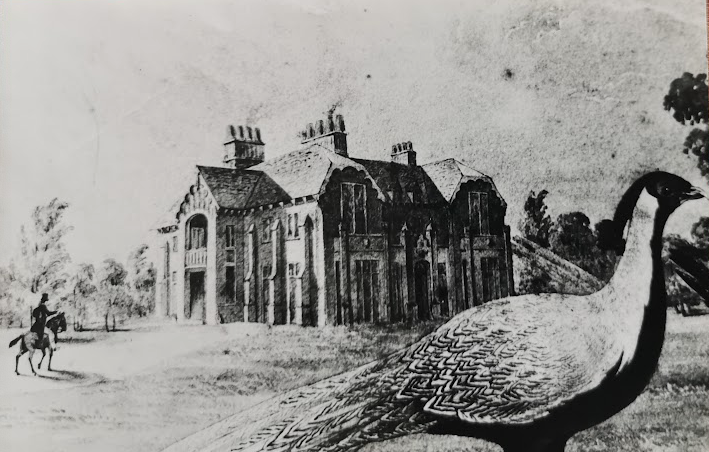
House, St Andrew’s Close, built in 1828 by Charles Hunfrey. Photo of watercolour by J Ince.
Projects
Contribute
Do you have any information about the people or places in this article? If so, then please let us know using the Contact page or by emailing capturingcambridge@
Licence
This work is licensed under CC BY-NC-SA 4.0