Search by topic
- archaeology
- Building of Local Interest
- chapel
- charity
- church
- crime
- dressmaker
- fire
- Great Eastern Railway
- Listed building
- Mapping Relief
- medieval
- oral history
- poverty
- Public House
- Religious House
- Roman
- scholar
- school
- Then and Now
- tudor
- women
- work
- world war one
- world war two
Search by text
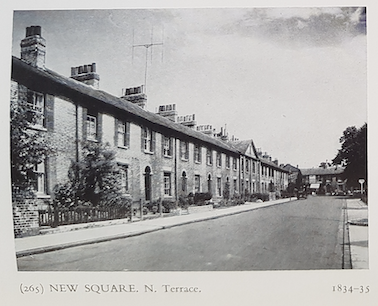 New Square, north terrace, Cambridge
New Square
History of New Square
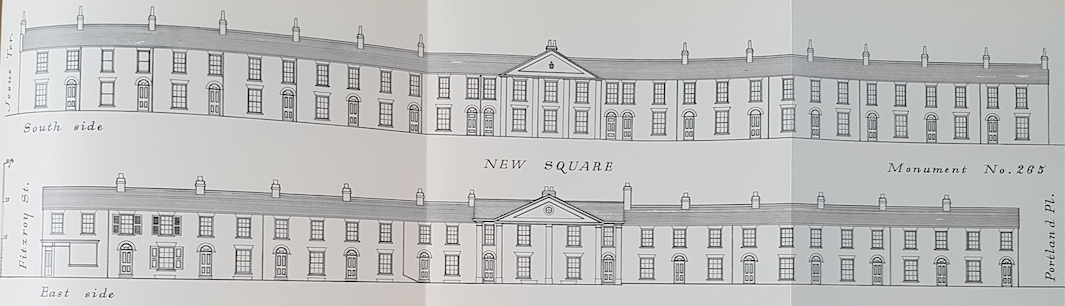
New Square
Royal Commission Survey of Cambridge 1959: New Square, a large open space extending from Emmanuel Road opposite the NE corner of Christ’s Piece, bounded on the E andante greater part of the N and S by terrace-houses, Nos. 1 to 47 and Not. 2 Fitzroy Street, was an entirely new development, to a single coherent design, the second quarter of the 19th century. Only two houses, Nos. 34 and 35, have since been rebuilt….
The first notice of a resident in New Square appears in 1825 (Camb. Chronicle 1 April) although the earliest leases in the books of Jesus College, the landlords, are of 1829 and 1830….. Though generally uniform except for the pedimented centrepiece to each terrace, the houses have minor variations on plan for they were evidently built by different persons on building leases from Jesus College and some by the Society itself.
New Square is a spacious urban development of the first half of the 19th century given coherence by the control of the external appearance of the house and distinction by the application of architectural principles, though the simplest, to the project.
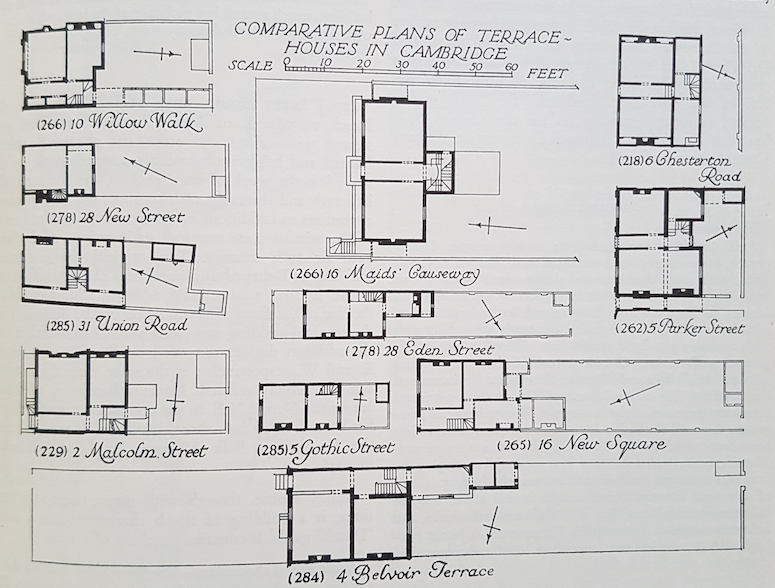
Terraced Houses in Cambridge plans
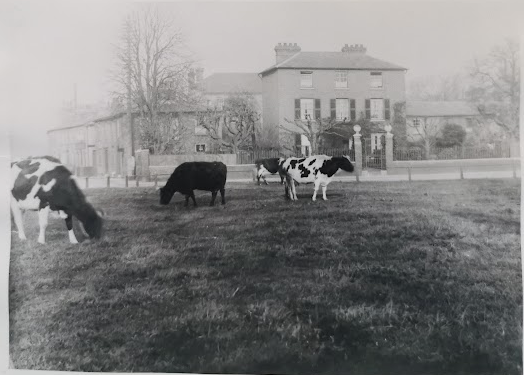
New Square, 1929 (MoC141/51, PB124.82)

New Square, 1930 (photo K Cooke)(Cambridgeshire Collection)
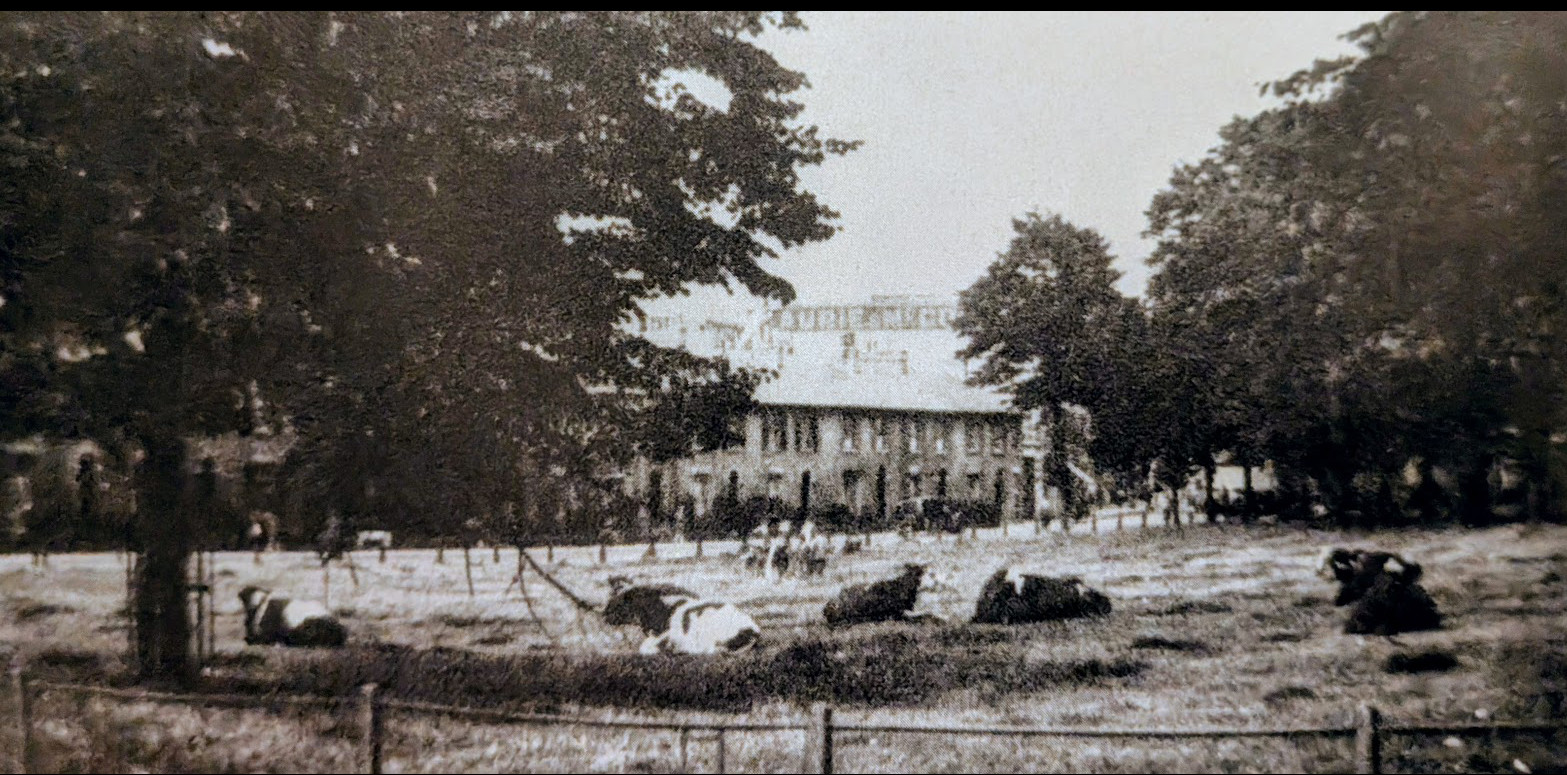
New Square Cambridge c1930s
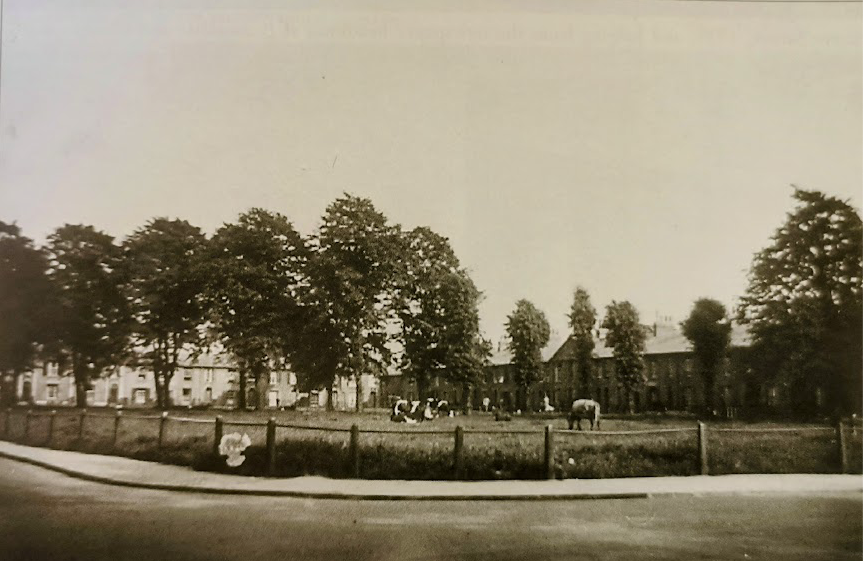
New Square 1930 (Cambridgeshire Collection)
In 1932 New Square was converted into a car park. By 1950 over 43,000 vehicles a years were using it. New Square reverted to grass following the redevelopment of the Kite area and the construction of the Grafton centre car parks.
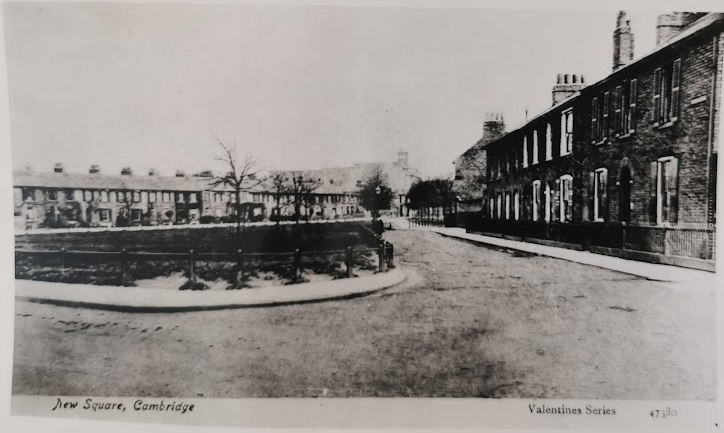
New Square, (MoC115/55)
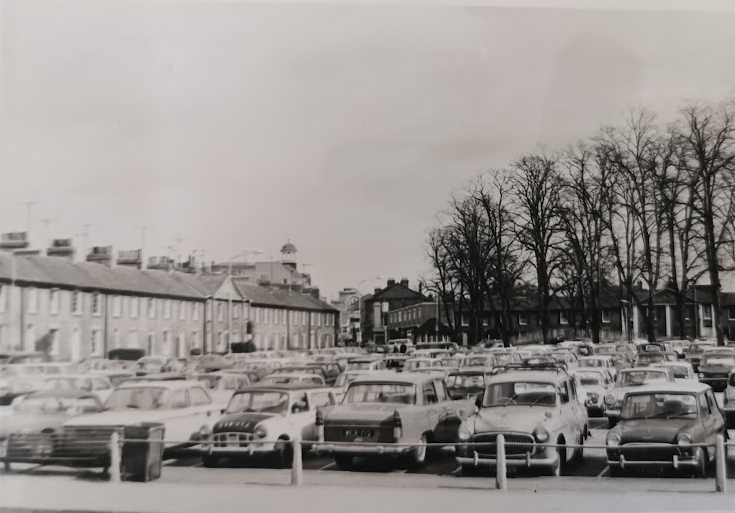
New Square, (MoC22/89/70)
Projects
Contribute
Do you have any information about the people or places in this article? If so, then please let us know using the Contact page or by emailing capturingcambridge@
Licence
This work is licensed under CC BY-NC-SA 4.0