Search by topic
- archaeology
- Building of Local Interest
- chapel
- charity
- church
- crime
- dressmaker
- fire
- Great Eastern Railway
- Listed building
- Mapping Relief
- medieval
- oral history
- poverty
- Public House
- Religious House
- Roman
- scholar
- school
- Then and Now
- tudor
- women
- work
- world war one
- world war two
Search by text
Talk: Beyond Elections
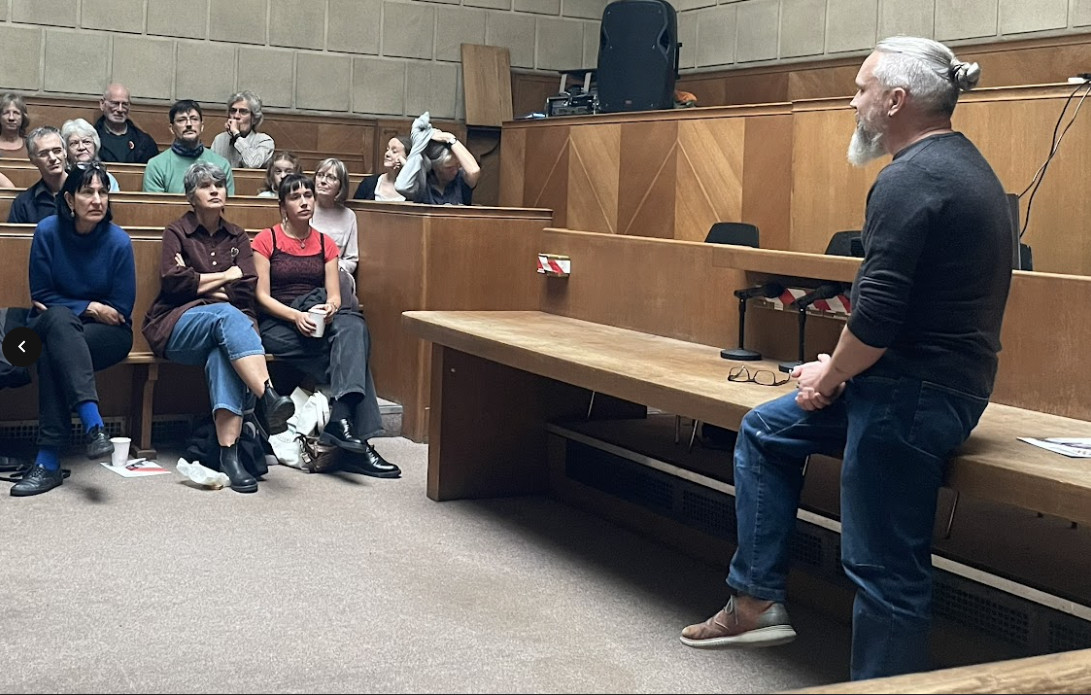
Guest event: Democracy Beyond Elections by Rich Rippin from The Sortition Foundation
The call for deliberative democracy, citizens assemblies and sortition came up time and time again throughout The Trials of Democracy project, so we were delighted that we could include a talk by Rich Rippin from the Sortition Foundation as part of the If You’re Not At The Table You’re On The Menu event at Cambridge Guildhall.
“We believe that for politics to work for people like us, it has to include people like us, so we help people from all walks of life make informed decisions about how we live together. Decisions we trust”
The Sortition Foundation
‘Democracy Beyond Elections’ mostly delved into the efficacy, inspiration and challenges of citizens’ assemblies, exploring different examples and outcomes. Much of the content was generously given over to questions and comments from the attendees.
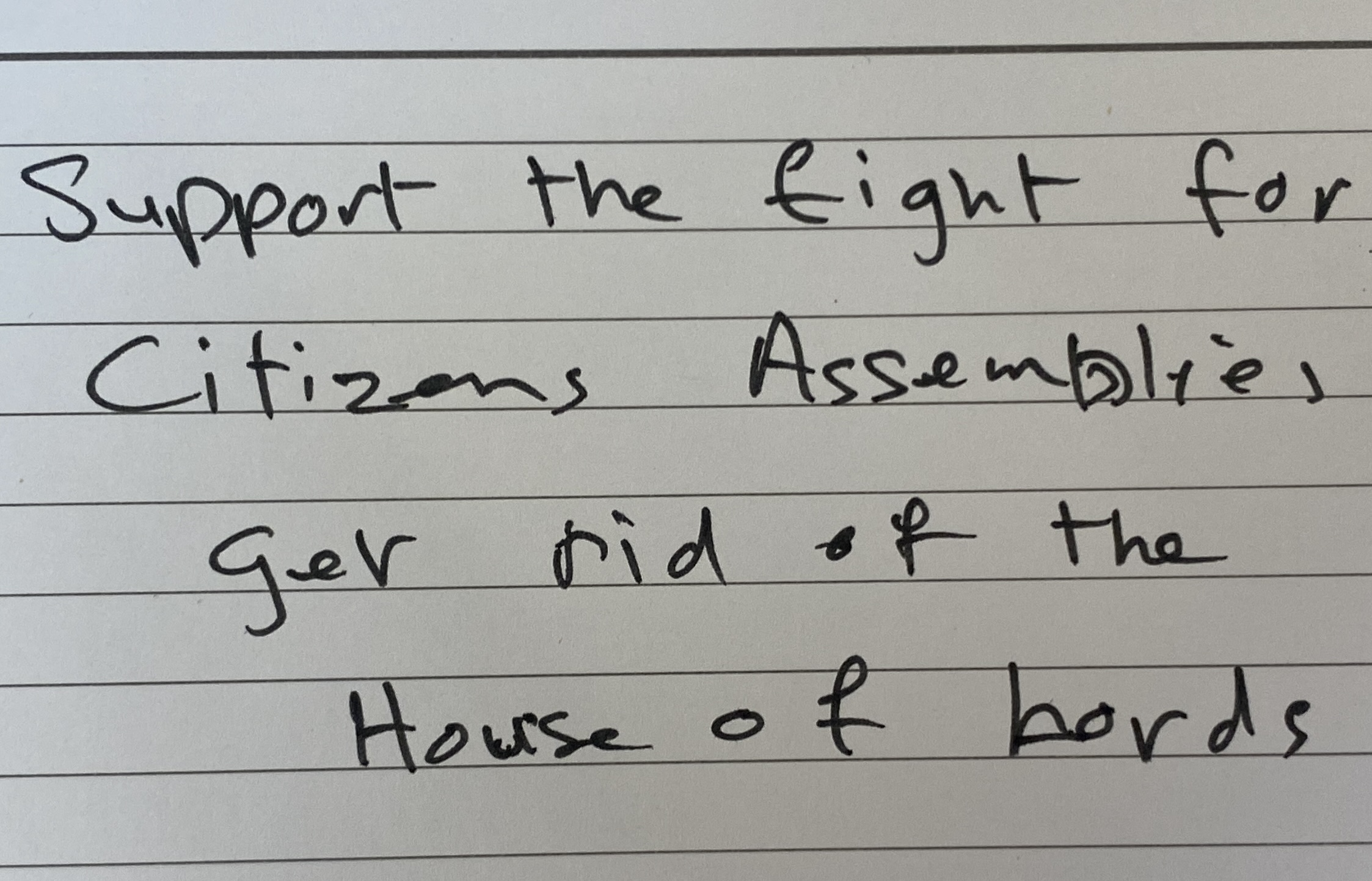
‘It’s been over 858 years since King Henry II shook things up by introducing juries. They’ve proven their worth as the backbone of our legal system. It’s time to put ordinary people at the helm in politics too. Let’s replace the House of Lords with a House of Citizens’
The 858 Project
What if we replaced politicians with randomly selected people?
This TedX talk by Rich’s colleague, Brett Hennig, presents a compelling case for sortition democracy, or random selection of government officials — a system with roots in ancient Athens that taps into the wisdom of the crowd and entrusts ordinary people with making balanced decisions for the greater good of everyone.
Find out more about The Trials of Democracy
More about public involvement
More of the Exhibition
About the Performance
And listen to the Democracy Podcasts
This project has been supported by S-106 grant funding from Cambridge City Council
Projects
Contribute
Do you have any information about the people or places in this article? If so, then please let us know using the Contact page or by emailing capturingcambridge@
Licence
This work is licensed under CC BY-NC-SA 4.0