Search by topic
- archaeology
- Building of Local Interest
- chapel
- charity
- church
- crime
- dressmaker
- fire
- Great Eastern Railway
- Listed building
- Mapping Relief
- medieval
- oral history
- poverty
- Public House
- Religious House
- Roman
- scholar
- school
- Then and Now
- tudor
- women
- work
- world war one
- world war two
Search by text
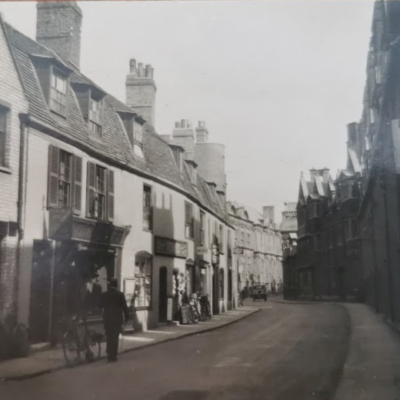
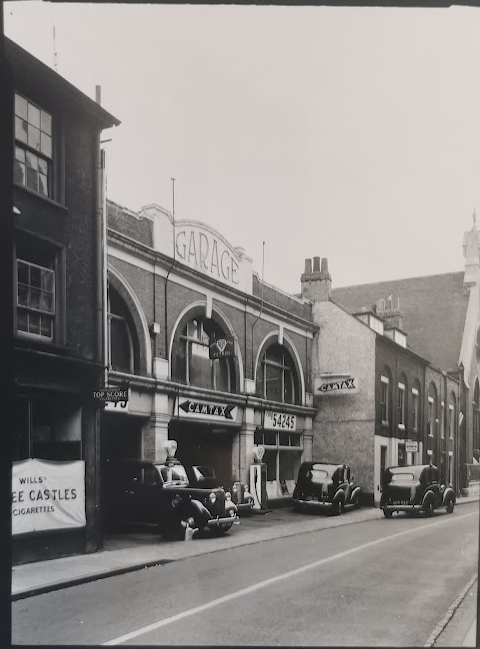 2 - 7 Downing Street, c 1948 (MoC)
7 Downing Street
History of 7 Downing Street
1861
Henry Haulden, 39, general clerk in solicitor’s office
1913
Peters, Elworthy and Moore, accountant and auditors
1937
Douglas L January, auctioneer
Cole Dickin Lewis, accountants
West Cambs Growers Ass.
Ouse and cam Fisheries Board
Cambridgeshire Crematorium Ltd
This was the home of Januarys, the estate agents set up in 1937 by Douglas L January, auctioneer and estate agent. At this time Douglas was living in Mowbray Road.
After WWII his younger brother Desmond joined the firm. The firm operated all over East Anglia. In 2017 Desmond remembered his days working for Januarys.
Before this he had served in the regular army during WWII and continued in the Army Education Corps afterwards.
One of the most significant contracts that Desmond worked on was the redevelopment of the Grafton Centre. He described in detail the role Januarys played in the negotiations between City Council and developers.
Better Wear Company
In 1938, 7 Downing Street was also the Cambridge offices of the Better Wear Company, founded in 1928 in East London, and later known as Betterware to reflect their wider range of products.
1962 (7/8)
Douglas L January and partners
Projects
Contribute
Do you have any information about the people or places in this article? If so, then please let us know using the Contact page or by emailing capturingcambridge@
Licence
This work is licensed under CC BY-NC-SA 4.0