Search by topic
- archaeology
- Building of Local Interest
- chapel
- charity
- church
- crime
- dressmaker
- Great Eastern Railway
- Listed building
- Mapping Relief
- medieval
- oral history
- poverty
- Public House
- railway worker
- Religious House
- Roman
- scholar
- school
- Then and Now
- tudor
- women
- work
- world war one
- world war two
Search by text


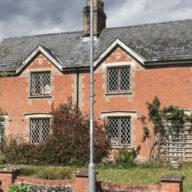
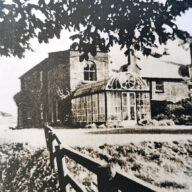
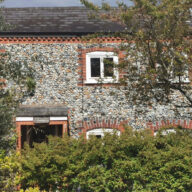
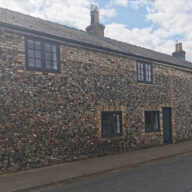
The School and Cottages, Woodditton
History of the School and Cottages
The cottages burned down in 1942. Some bank notes were found in a tin in Frank Woollard’s bedroom. They were charred but the numbers could be read so the bank replaced them.
Situated halfway between Wood Ditton and its neighbouring hamlet of Saxon Street, the village school served both.
Miss Ellen Marsh – “Nellie”, the infants’ teacher – looked after “the littl’uns” in the small class-room…
In the junior or middle class-room Mrs Grace Hatley ruled.”Coursey” (her maiden name had been Course) was a kindly and well respected middle-aged married lady with a gravelly voice ….
Miss Jane Louise Taylor came to the school in 1937 as headmistress when she replaced the long-serving Mrs Smith…..
Frank Woollard’s hives stood near the road by the school. he understood the ways of bees and they rarely stung him, but they seemed to sense when anyone was in fear of them. (p57)
(R H Vincent, A Tanner Will Do)
1939 School Cottage
Arthur Jaggard, b 1897, painter and decorator
Dorothy, b 1897
Harry, b 1892, ag. lab.
Florence, b 1892
Frank R Woollard, b 1901, carpenter foreman, ARP warden
Grace E, b 1894
?
?
School House:
Jane L Taylor, b 1900, school teacher
Evelyn Taylor, b 1895
On the day war was declared, Sunday September 3rd 1939, the skies began clearing by midday leaving puffy cotton-wool clouds. Suddenly the roar of gunfire from above struck fear into our hearts … Frank Woollard, one of the newly appointed ARP wardens, probably with memories of the Zeppelins used in the previous war, pronounced: “The devils are in the clouds!” It cam as something of an anticlimax when the noise turned out to be a Spitfire shooting down a stray barrage balloon that had broken away from its mooring cable in the gales. We had received our first taste of war!
In 1983 the village school finally closed, its pupils down to five. The old building converted to a private residence still stands but like Hamelin the children have left. (p94)
(R H Vincent, A Tanner Will Do)
Projects
Contribute
Do you have any information about the people or places in this article? If so, then please let us know using the Contact page or by emailing capturingcambridge@
Licence
This work is licensed under CC BY-NC-SA 4.0