Search by topic
- archaeology
- Building of Local Interest
- chapel
- charity
- church
- crime
- dressmaker
- Great Eastern Railway
- Listed building
- Mapping Relief
- medieval
- oral history
- poverty
- Public House
- railway worker
- Religious House
- Roman
- scholar
- school
- Then and Now
- tudor
- women
- work
- world war one
- world war two
Search by text


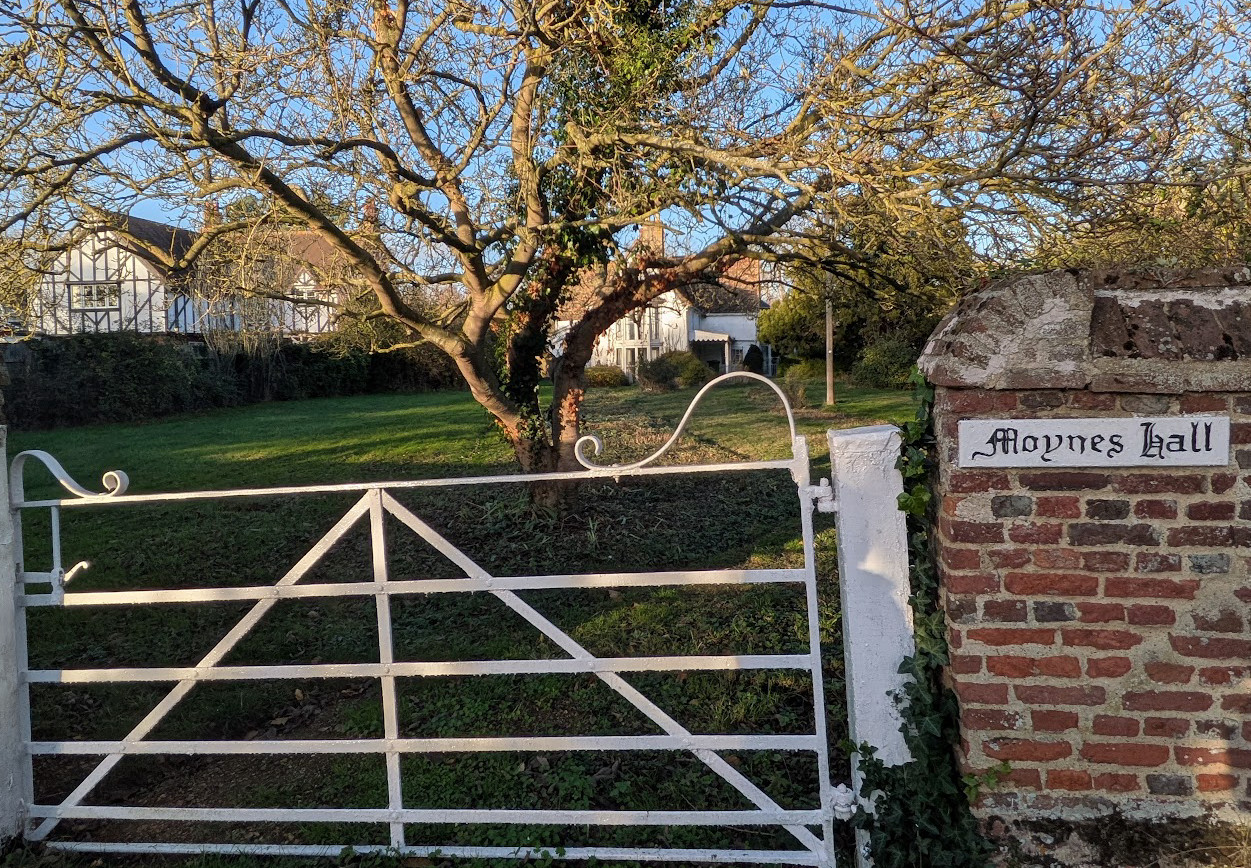 Moynes Hall Holywell (RGL2025)
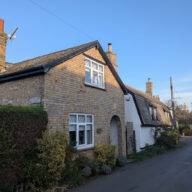
Moynes Hall, Holywell
History of Moynes Hall
Listed Building
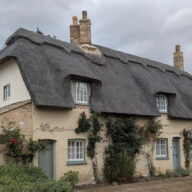
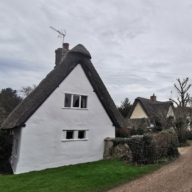
C17 farmhouse. T-plan of two-storeys with later extension to south wing. Main range. Rendered timber-frame and colour-washed brick. Old plain tile roofs with pantile roof to C19 dairy and wash-house.
The Holywell Story by Joe Newell has a chapter about this property. It is described as the oldest substantial house in the village whose owners Mrs and Mrs Owen Morton can trace the history back to the Domesday Survey of 1086. Of 9 hides in the village, one was held by Aluuold, fore-runner to one of the owners of Moynes Hall. In 1252 the holding of Berenger Le Moyne in Holywell was assessed as one hide, approx. 120 acres.
1276 bought by Abbot William de Godmanchester
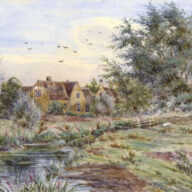
1580 acquired by William Chaderton, rector of Holywell and President of Queen’s College, from Thomas, son of Alexander East. Chaderton built the present house. Part of a moat survives and three fish ponds.
1911
John Arthur Butcher, 58, single, farmer, b Needingworth
1921
John Arthur Butcher, 68, farmer
1920s Butcher family. Johnny Butcher had had the fingers on his right hand bitten off by a horse. In WWI he bred horses for the Army. He was once paid twice for a congignment of horses but the Army refused to accept the payment back on the grounds that such mistakes were impossible.
Moynes Hall sold to Egbert Athelstone Jennings.
1939 Moynes Hall
Egbert Jennings, b 1871, cattle dealer employer
Rosa, b 1867,
Projects
Contribute
Do you have any information about the people or places in this article? If so, then please let us know using the Contact page or by emailing capturingcambridge@
Licence
This work is licensed under CC BY-NC-SA 4.0