Search by topic
- archaeology
- Building of Local Interest
- chapel
- charity
- church
- crime
- dressmaker
- Great Eastern Railway
- Listed building
- Mapping Relief
- medieval
- oral history
- poverty
- Public House
- railway worker
- Religious House
- Roman
- scholar
- school
- Then and Now
- tudor
- women
- work
- world war one
- world war two
Search by text


Brook End Cottages, Steeple Morden
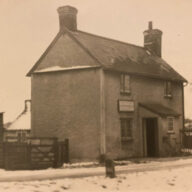
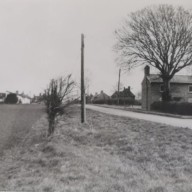
History of Brook End Cottages
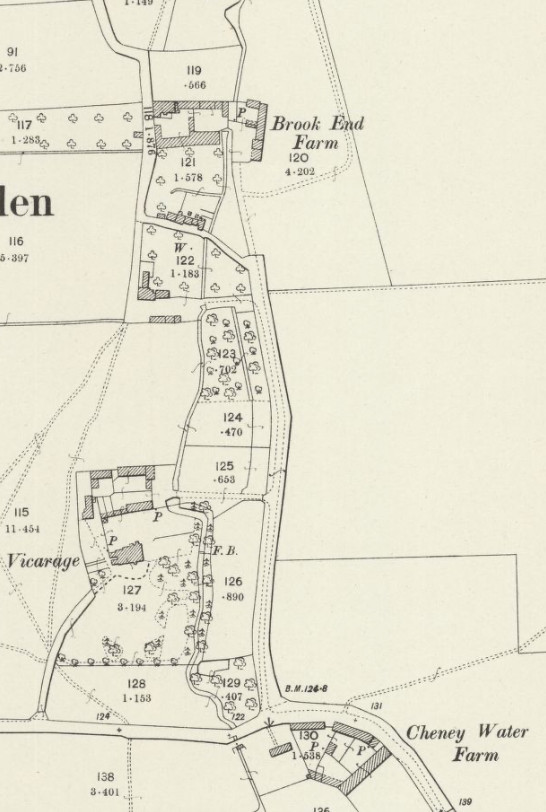
Brook End OS 1901
Herbert Godfrey Ilett was born in these cottages in 1914. He describes his life and the community in detail in “A Villager’s Life” (1993).
Herbert starts his account by saying that they were surrounded by orchards, apples, plums and pears. The trees were full of owls. Their neighbours were the Scotts and the Covingtons. He would go to the Covington to get their pint of skimmed milk each day for 1d. The cottages were all rent-free as the they were tied to the farm for their labourers.
Herbert’s father was called up in 1916 to serve in France. He used to send silk cards home to his wife. He was wounded in 1918 and placed in hospital in Shrewsbury.
1921
Nathan Scott, 55, b Steeple Morden, farm labourer
Annie Scott, 54, b Steeple Morden
Reginald Scott, 18, b Steeple Morden, farm labourer
Percy Albert Ilett, 30, b Steeple Morden, farm labourer
Annie Ilett, 29, b Guilden Morden
Herbery Godfrey Ill, 7, b Steeple Morden
(Brook End Farm)
Arthur James Covington, 35, b Steeple Morden, farm bailiff
Florence Victoria, 33, b Steeple Morden
Arthur William, 7, b Steeple Morden
Leslie Clifford, 1, b Steeple Morden
Ralph, brother, 20, b Guilden Morden
1937 Herbert married Gladys Daniels at Ashwell church. The couple lived first with Gladys’s mother for three months before moving to a railway cottage at Ashwell Station. In December 1939 they moved to 2 Bogs Gap Lane.
Projects
Contribute
Do you have any information about the people or places in this article? If so, then please let us know using the
Contact page or by emailing
capturingcambridge@
Licence
This work is licensed under
CC BY-NC-SA 4.0


 not including content on external links as indicated
by
not including content on external links as indicated
by .
.