Search by topic
- archaeology
- Building of Local Interest
- chapel
- charity
- church
- crime
- dressmaker
- Great Eastern Railway
- Listed building
- Mapping Relief
- medieval
- oral history
- poverty
- Public House
- railway worker
- Religious House
- Roman
- scholar
- school
- Then and Now
- tudor
- women
- work
- world war one
- world war two
Search by text


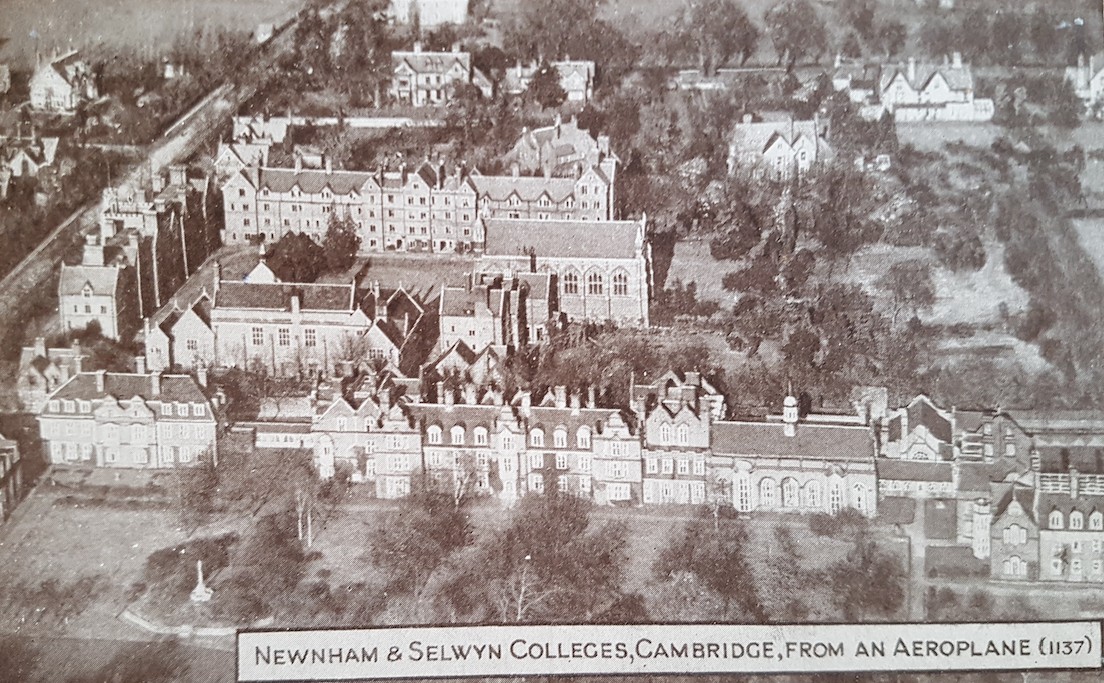 Newnham & Selwyn Colleges from the air circa 1910
Newnham College
History of Newnham College Cambridge
General information about Newnham College can be found on Wikipedia.
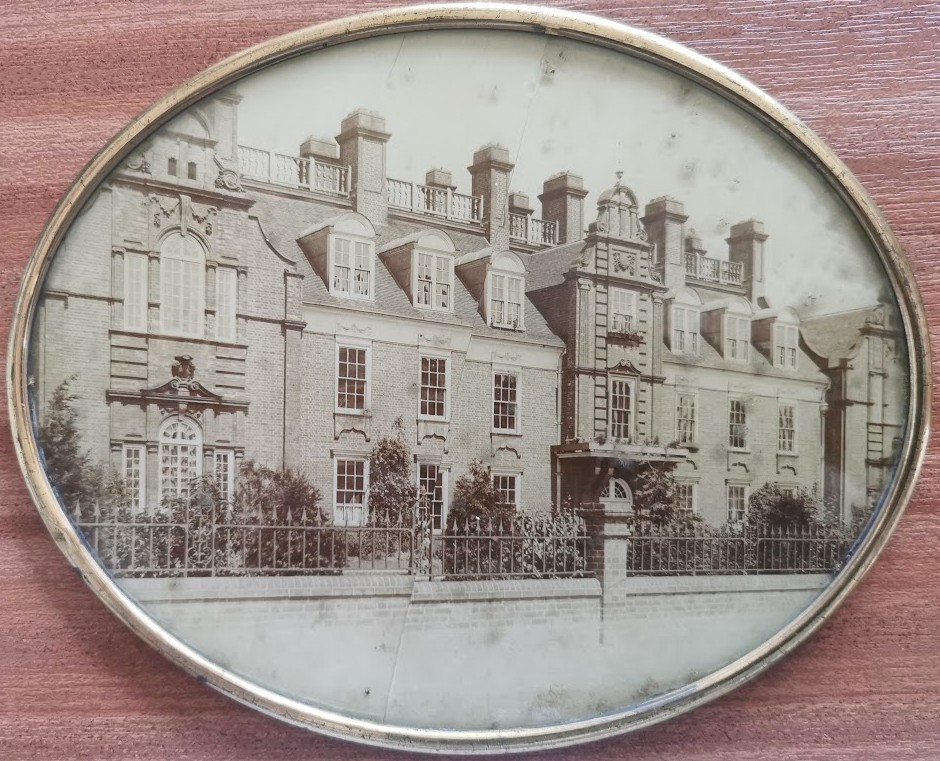
Newnham College, 1886 (MoC270/57)
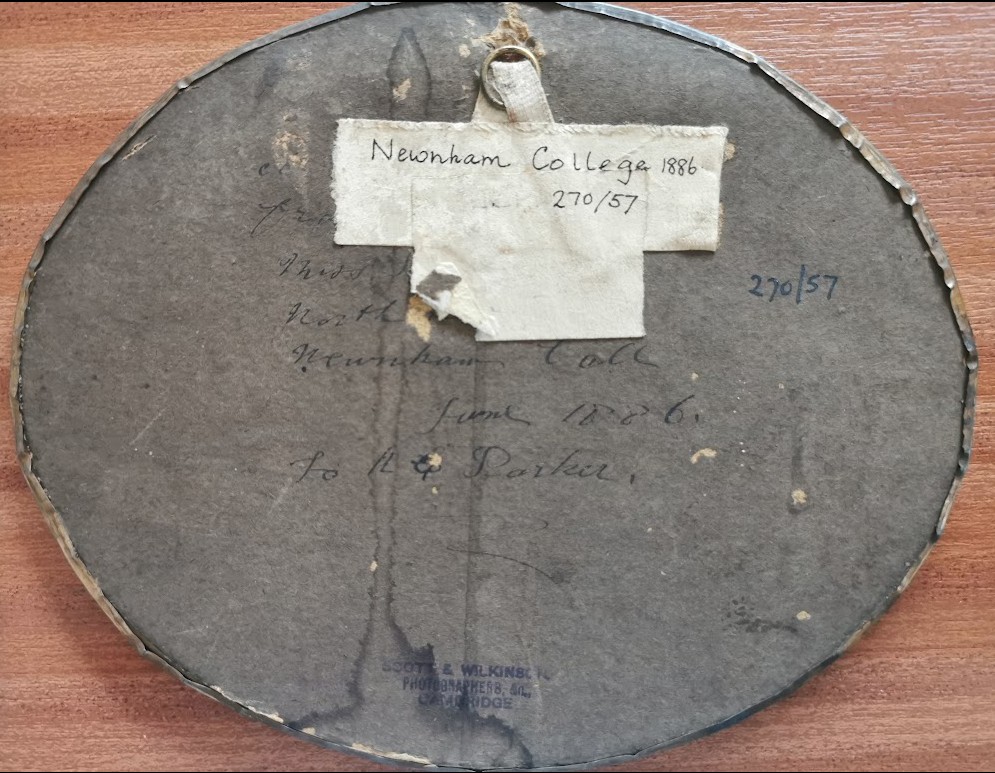
Newnham College, 1886 (MoC270/57)
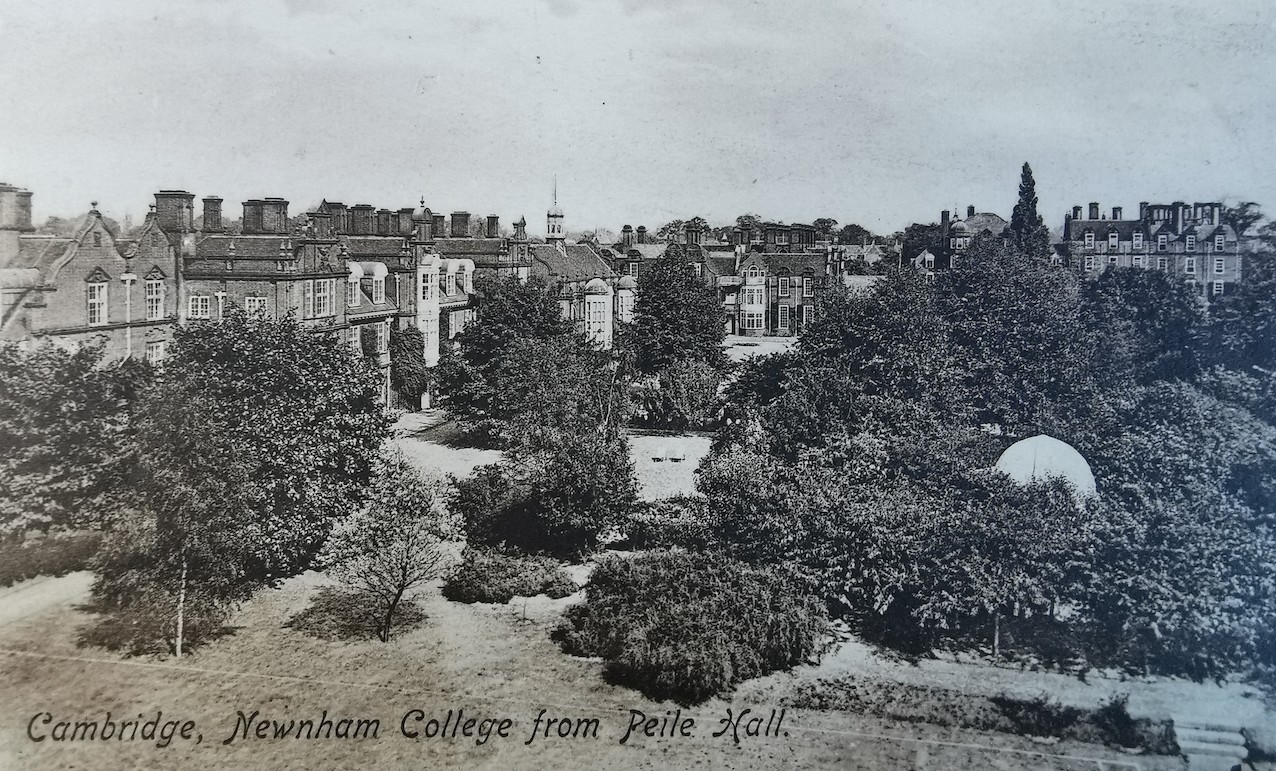
Newnham College from Peile Hall
Of particular interest are The Clough Gates. Anne Jemima Clough is commemorated in these bronze gates. It was she who was invited by Henry Sidgwick in 1871 to take charge of a house in town for a group of young women who attended his lectures. Four years later this group settled at Newnham Hall, now Old Hall, and Newnham College was founded.
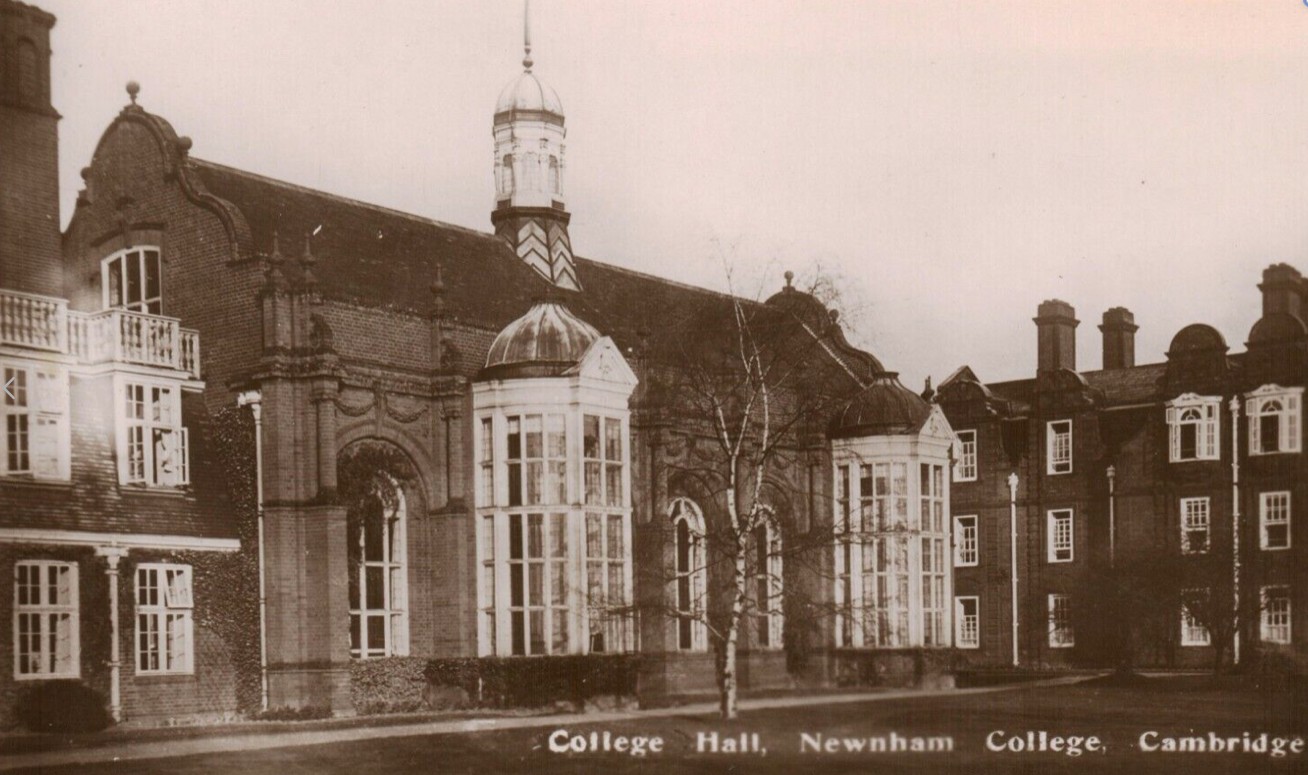
College Hall, Newnham College date unknown
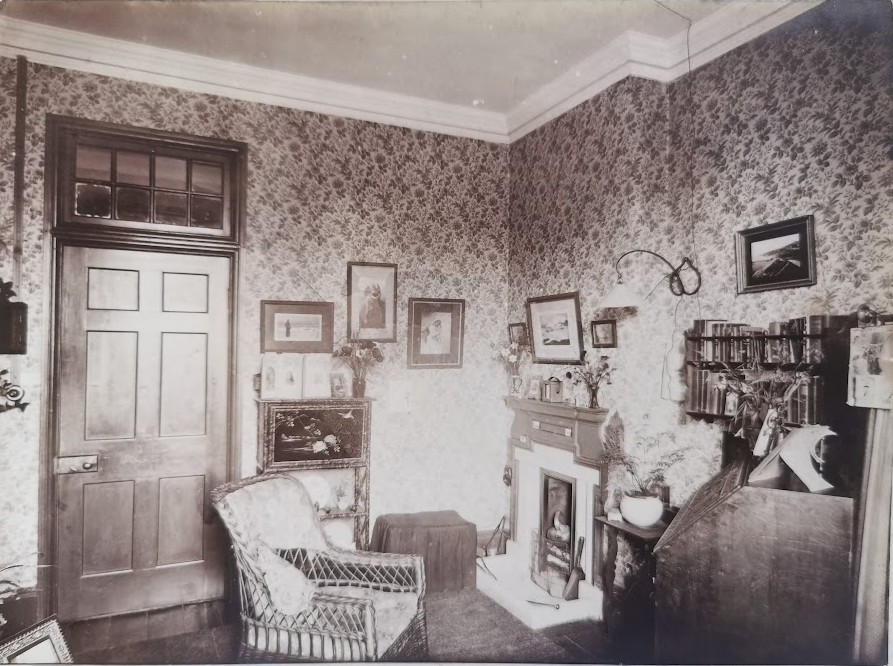
Study, Newnham College, (MoC1/5/70)
Henry Sidgwick founded the Society for Psychical Research (SOR) in 1882 and his wife , Eleanor née Balfour, was to play a major role in running the society. She was born in 1845 and her younger brother, Arthur, was to become Prime Minister in 1902. Mrs Sidgwick did not become a member of the SPR until 1884 but she became a competent administrator and responsible for sifting through reports of supernatural events and deciding which merited further study.
Both Eleanor and Henry continued to be active within the SPR; Henry died in 1900 but Eleanor continued at Newnham until 1919 and only retired from the secretaryship of the SPR in 1932. Another member of Newnham who worked for the SPR was the classic tutor, Mrs A W Verrall, who was renowned as an automatic writer. (See Cambridge College Ghosts by Geoff Yeates)
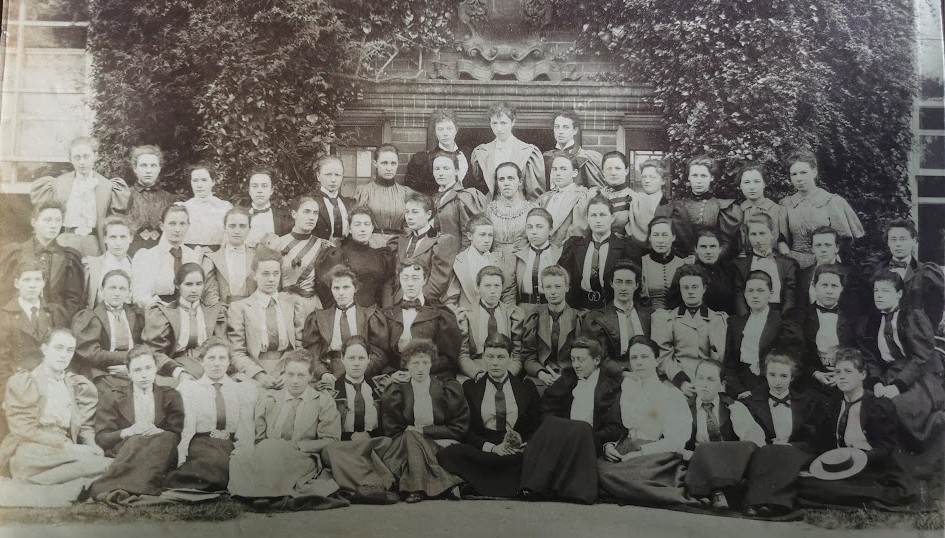
Newnham College 1894 (MoC3/5/70)
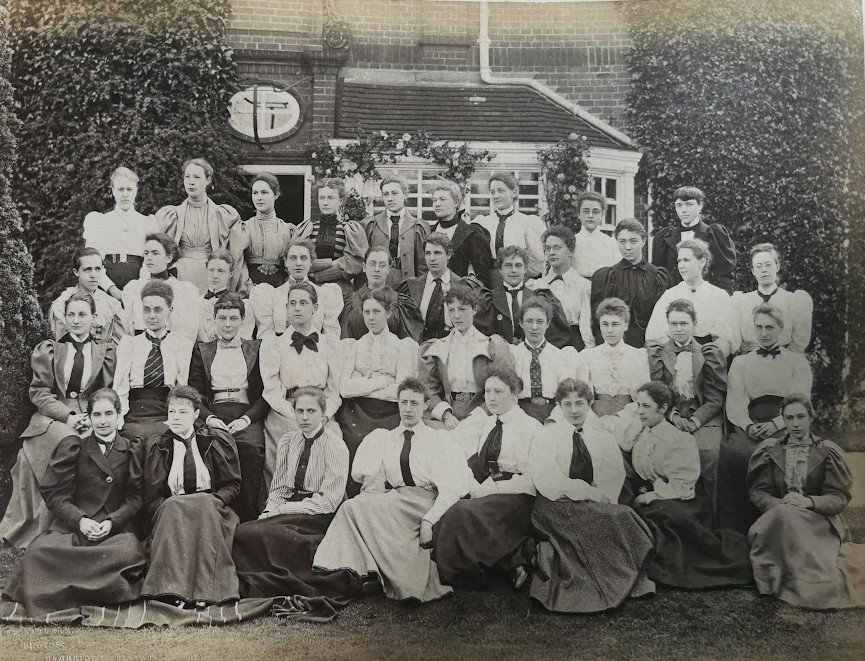
Newnham College 1895 (MoC4/5/70)
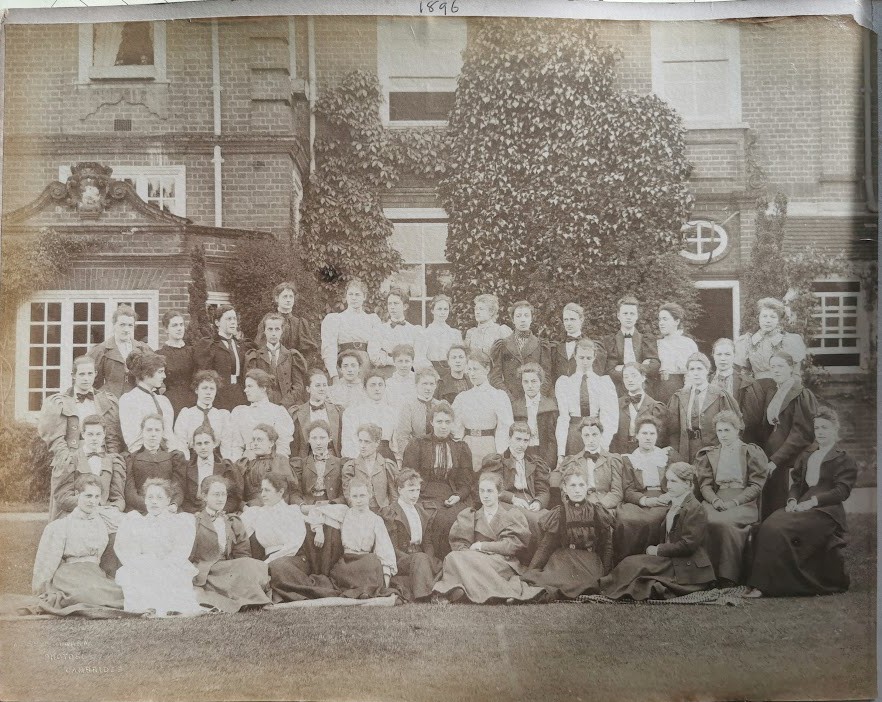
Newnham College 1896 (MoC)
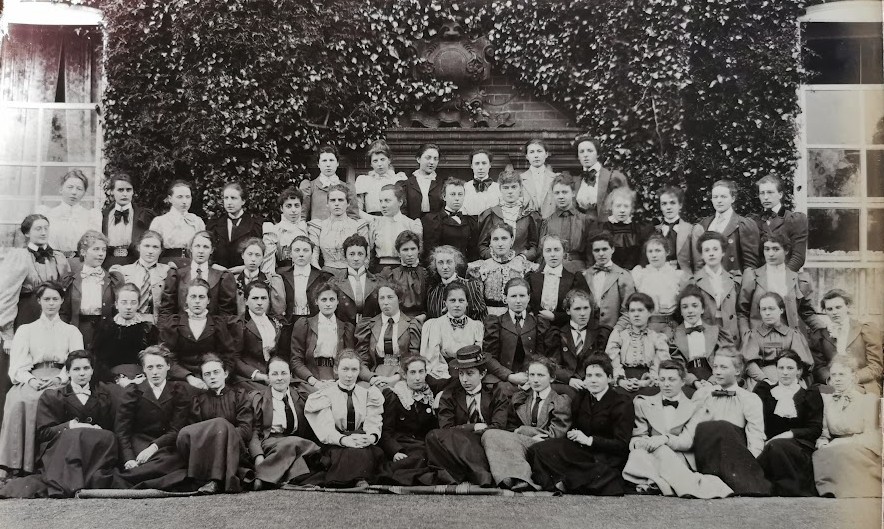
Newnham College 1897 (MoC6/5/70)
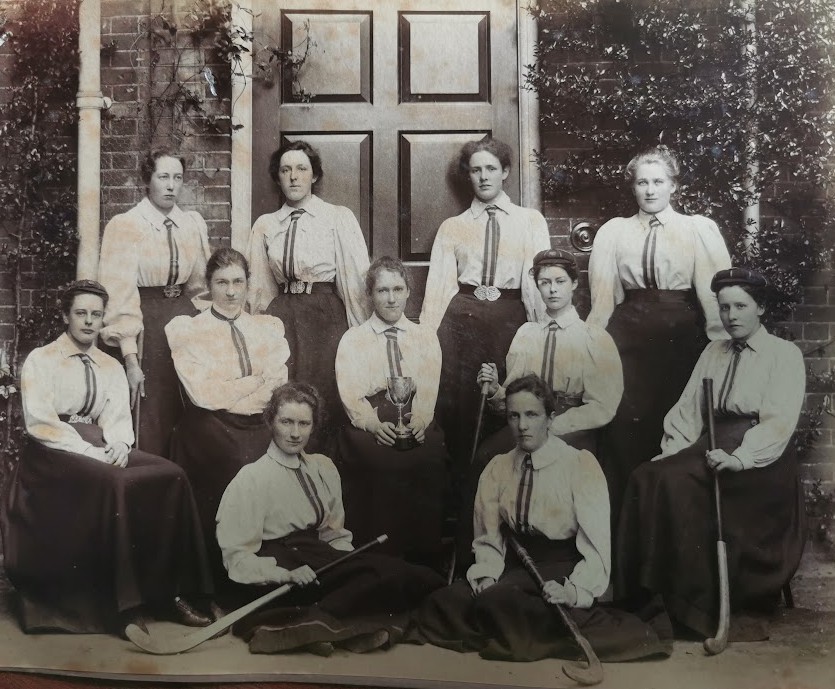
? Newnham College (MoC7/5/70)
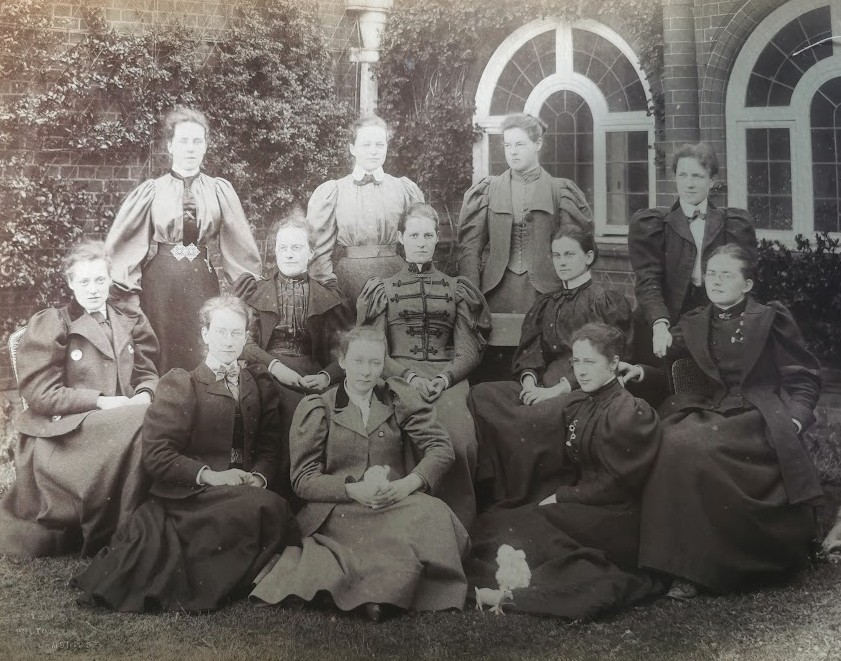
Newnham College ?
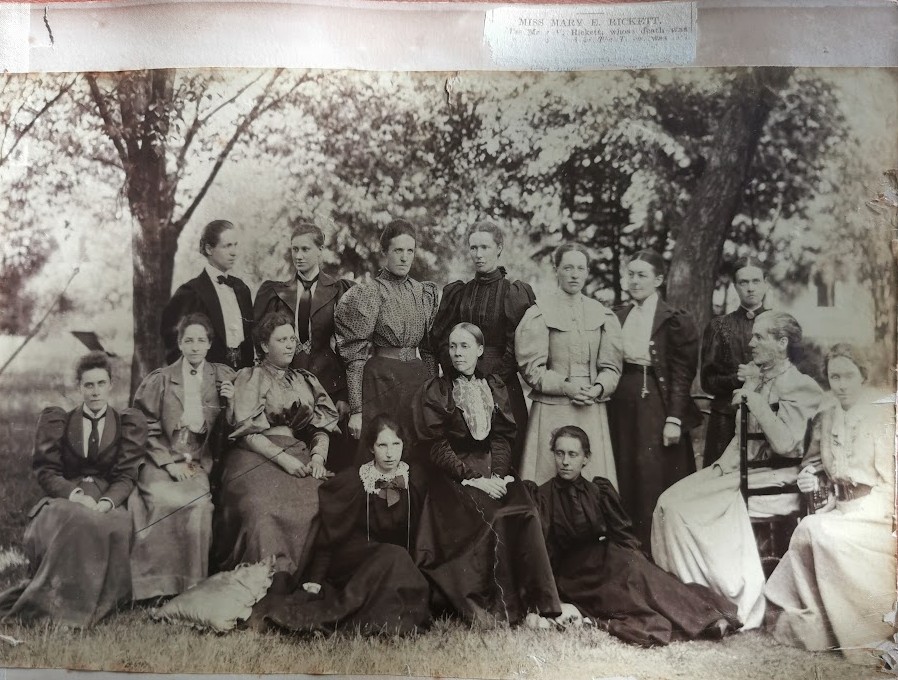
Newnham College ?
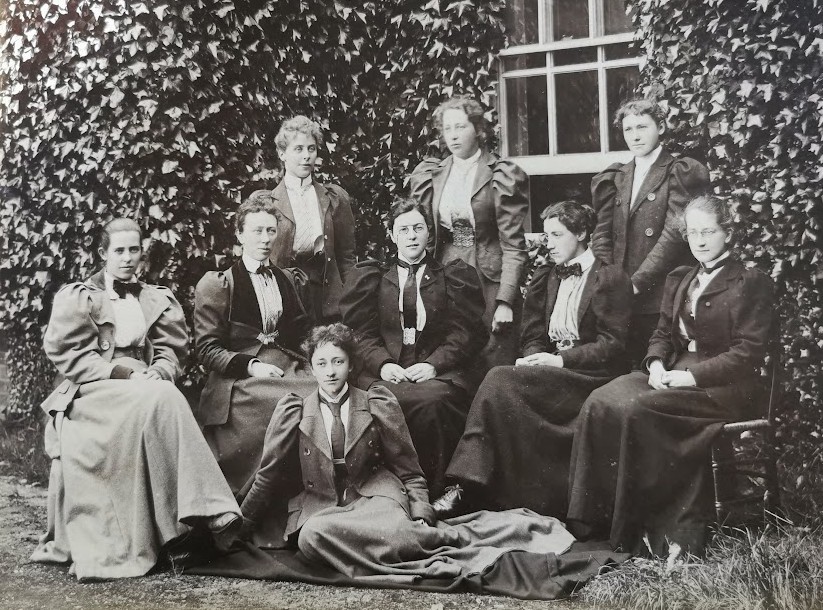
Newnham College ?
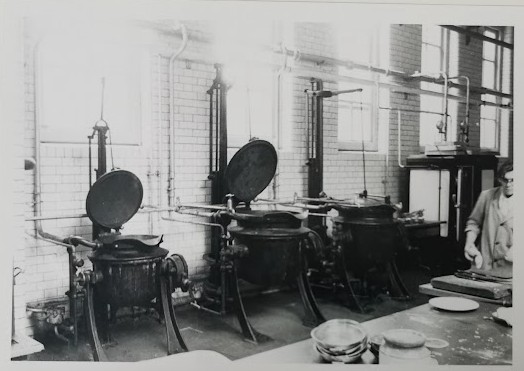
Newnham College boiler, installed c.1890 (MoC)
The Glossary of the Glynnese Language and Newnham College
Among the more unusual connections between Newnham College and the Gladstone family is a remarkable private dictionary known as the Glossary of the Glynnese Language. Compiled in the mid-nineteenth century, the glossary records the playful family language used by members of the Glynne, Gladstone and Lyttelton families, offering a rare glimpse into the humour, relationships and domestic culture of one of Victorian Britain’s most influential family networks.
The glossary was compiled in 1851 (reprinted 1904) by George William Lyttelton, later 4th Baron Lyttelton, and was intended as a scholarly parody of the dialect glossaries and philological works that were popular at the time. Rather than recording a regional dialect, however, it documented the words, expressions and invented vocabulary used within the extended Glynne family circle. The result is an affectionate and often amusing record of family life, preserving nicknames, private jokes and expressions that would otherwise have been lost.
The language took its name from the Glynne family of Hawarden Castle in Flintshire. Catherine Glynne, who married the future Prime Minister William Ewart Gladstone in 1839, was one of its principal speakers. The glossary therefore forms part of the wider cultural history of the Gladstone family, whose influence extended across politics, religion, education and social reform during the nineteenth century.
The connection with Newnham College comes through Catherine and William Gladstone’s daughter, Helen Gladstone (1854–1945). Helen entered Newnham in 1877, later becoming Vice-Principal and one of the leading figures in the college’s formative years. She played an important role in the development of women’s higher education at Cambridge and was closely associated with the expansion and consolidation of Newnham during the late nineteenth and early twentieth centuries.
Although the Glossary of the Glynnese Language was not compiled in Cambridge, it belonged to the family culture that Helen Gladstone brought with her to Newnham. The language linked generations of the Glynne, Gladstone and Lyttelton families and formed part of the intellectual and domestic world from which Helen emerged. Through her long association with the college, Newnham became one of the principal Cambridge locations connected with this curious linguistic survival.
Today the glossary is valued not only for its humour but also as an important source for historians. It reveals how language can strengthen family identity, preserve shared memories and create a sense of belonging. In an age when many prominent Victorians are known chiefly through their public achievements, the Glynnese Glossary provides a rare insight into their private lives.
For visitors exploring the history of Newnham College, the glossary offers a reminder that the college’s early community was shaped not only by academic ambition and social reform, but also by the personal relationships, family traditions and cultural worlds that its students and leaders brought with them. Through Helen Gladstone, Newnham holds one of Cambridge’s closest connections to this fascinating example of Victorian family language.
The Main Gates
Cambridge Inscriptions Explained by Nancy Gregory (2006) looks at the background to the main gateway, the Pfeiffer Arch [Clough Gates] in more detail:
In 1893, 18 years after Old Hall opened its doors, Basil Champneys completed the Pfeiffer Arch. The Memorial Gates were placed in the archway in honour of the college’s first Principal, Anne Jemima Clough, who had died the previous year. A memorial inscription can be seen on two pear shaped plaques in the centre of the gates:
Huic Collegio ANNE JEMIMA CLOUGH Prima Praefuit Cuius in Memoriam ANNO DOMINI MDCCCXCIII Potas p.c.Alumnae
The first Principal of this College was Anne Jemima Clough in whose memory the alumnae had these gates set up in 1893.
Champneys used a special kind of bronze, 9 parts copper to 1 of tin, for strength and malleability. … The subscribers especially asked hi to incorporate Miss Clough’s favourite flower, the sunflower.
Strong and malleable though they were, the gates were unable to withstand the violent assault made upon them on 20th October 1921. Two Graces had that day come before the Senate, of which one was successful but the other failed: women were at last granted the titles of degrees but were denied any privileges or any part in University government. A large crowd of undergraduates, by no means sober, tore off to Newnham and used a college handcart as a battering ram to storm the gates. The bronze scrollwork on the lower half of the gates was smashed to pieces.
Newnham College Gardens
http://www.newn.cam.ac.uk/about/gardens/tour-of-the-gardens/
The Newnham College Summer Schools for Working Women
Between 1922 and 1950 Newnham College and the Workers’ Educational Association ran a pioneering series of residential summer schools specifically to meet the educational needs of working women. Organised largely by women for other women, these remarkable schools were inter-generational, inclusive and non-hierarchial.
The Spring 2023 issue of Women’s History Today includes an article by Mary Joannou drawing on the voices, reports, letters and personal testimonies of the factory workers, domestic servants and seamstresses who attended, many of whom came from the ‘distressed areas’ of the country, as well as the recollections of their teachers.
1944 Letter to Constance Pyle from Mrs MacDonald
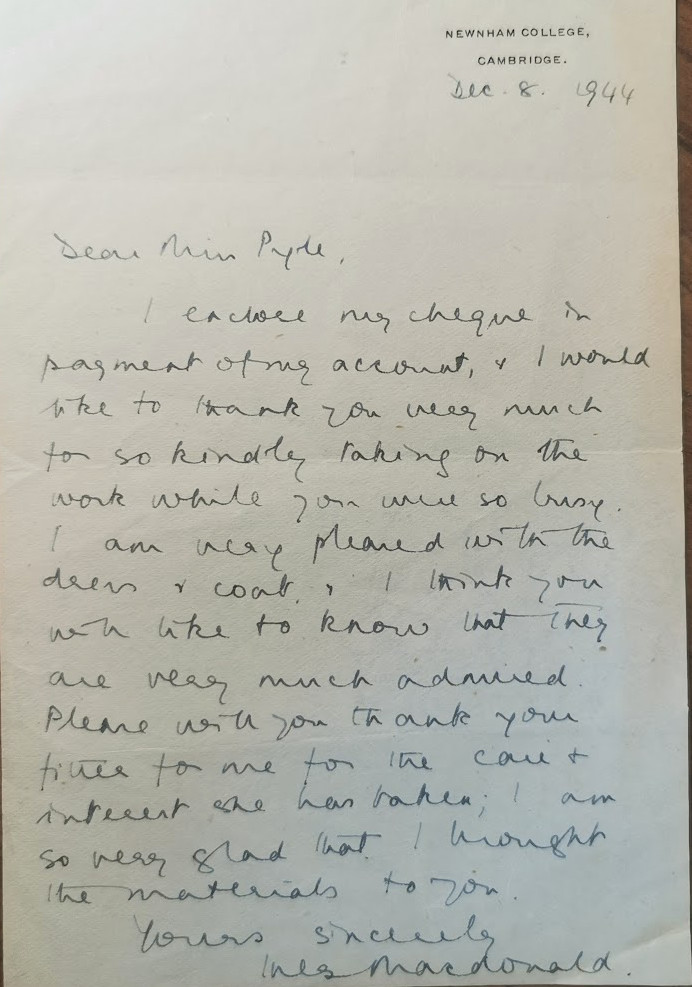
1944: letter to Constance Pyle
Notable People
Alice Grace Jenny Bragg, ‘Lady Bragg’, wife of Nobel prize winner Sir Lawrence Bragg, went to Newnham College in 1918 to study history. Her time there is described in a diary in ‘Crystal Clear’ p301f. It was while she was an undergraduate that she met Lawrence Bragg.
Jane Ellen Harrison, classicist and linguist. See ‘Cambridge Women – Twelve Portraits’ chapter 2, Hugh Lloyd-Jones, 1996.
Projects
Contribute
Do you have any information about the people or places in this article? If so, then please let us know using the
Contact page or by emailing
capturingcambridge@
Licence
This work is licensed under
CC BY-NC-SA 4.0


 not including content on external links as indicated
by
not including content on external links as indicated
by .
.