Search by topic
- archaeology
- Building of Local Interest
- chapel
- charity
- church
- crime
- dressmaker
- Great Eastern Railway
- Listed building
- Mapping Relief
- medieval
- oral history
- poverty
- Public House
- railway worker
- Religious House
- Roman
- scholar
- school
- Then and Now
- tudor
- women
- work
- world war one
- world war two
Search by text


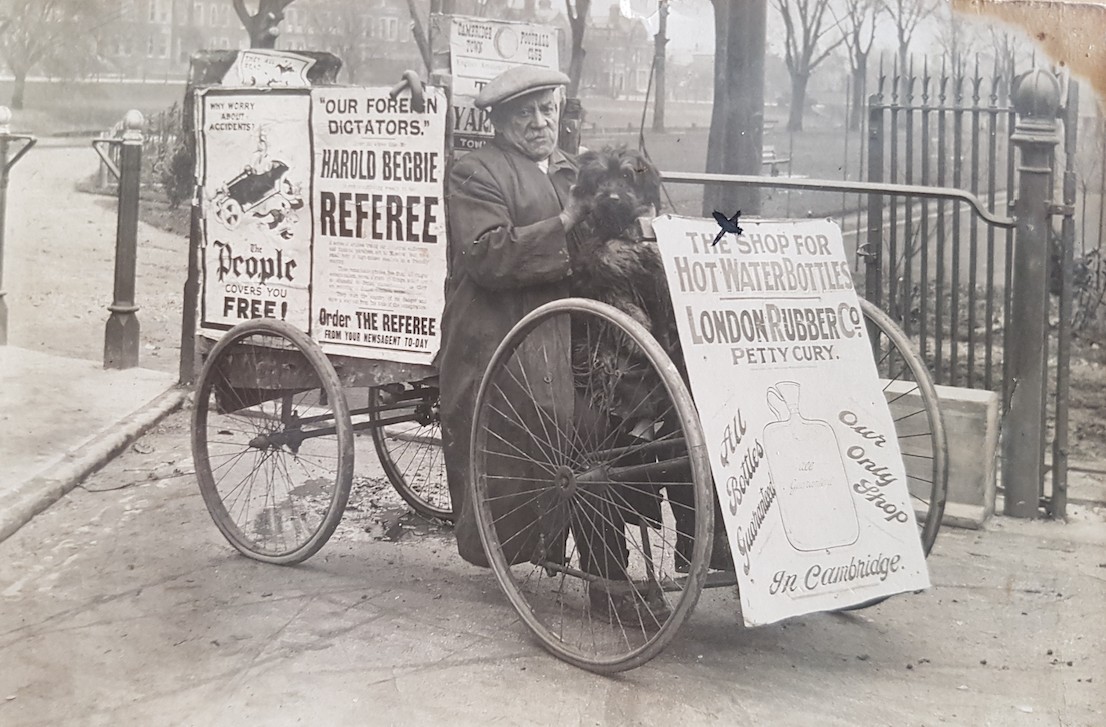 1925 Mr Mansfield at Jesus Green
Jesus Green
History of Jesus Green
1556
16th April John Hullier was burned at stake on Jesus Green for refusing to renounce Protestant faith. He had been vicar of Babraham from 1549 until he was deprived in 1556.
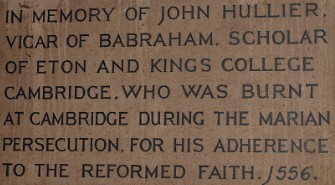
Inscription in Babraham Church commemorating martyrdom of John Hullier.
1645
‘the wife of one Lendale was hanged on Jesus Green for witchcraft’ (Bowtell, History of the Town of Cambridge)
1757 (18th July)
First recorded Cambridge town cricket match, against Saffron Walden.
Jesus Green would be the main venue for cricket inn Cambridge until towards the end of the 18th century. It then moved to Parker’s Piece.
Town v Gown; City v Village A History of Cricket in Cambridge, Tony Watts (2025)
1879 Flooding of Jesus Green
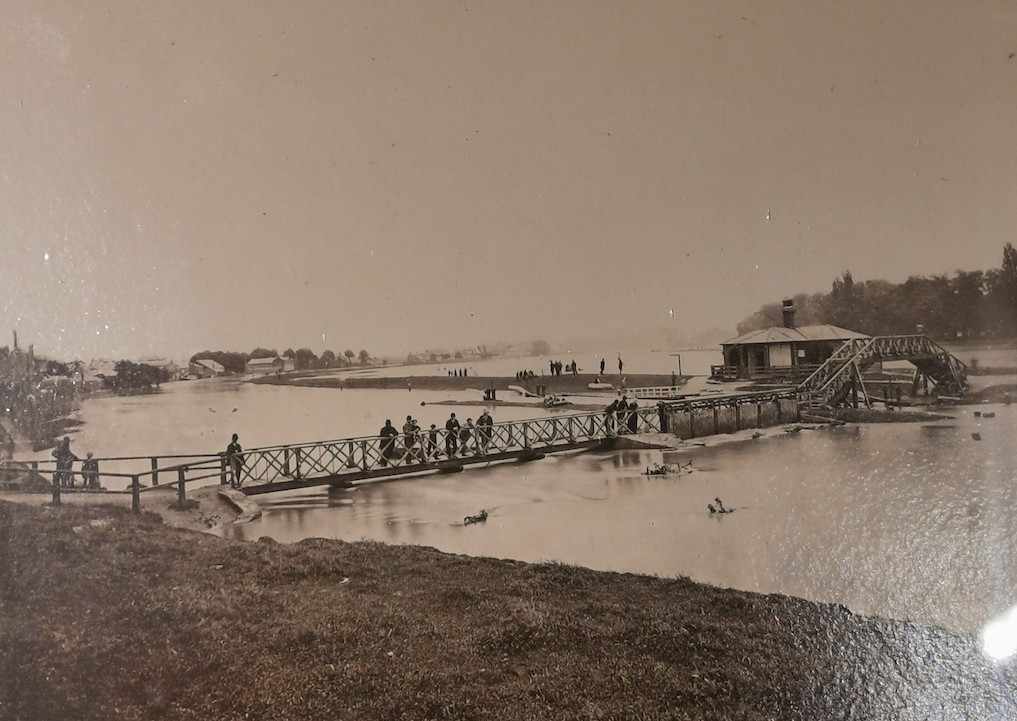
1879: Flooding of Jesus Green
1892
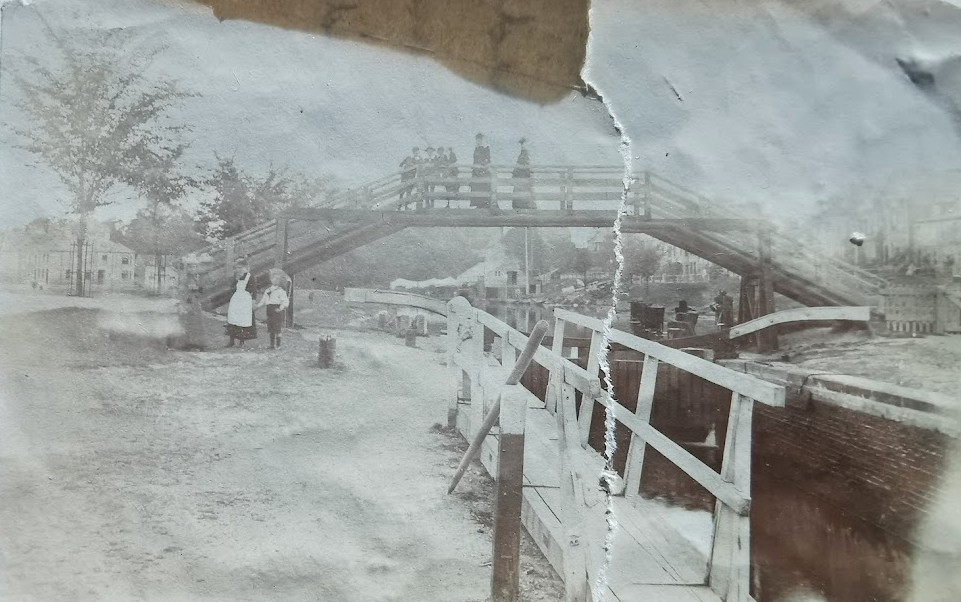
Jesus Green footbridge, 1892 (MoC100/73)
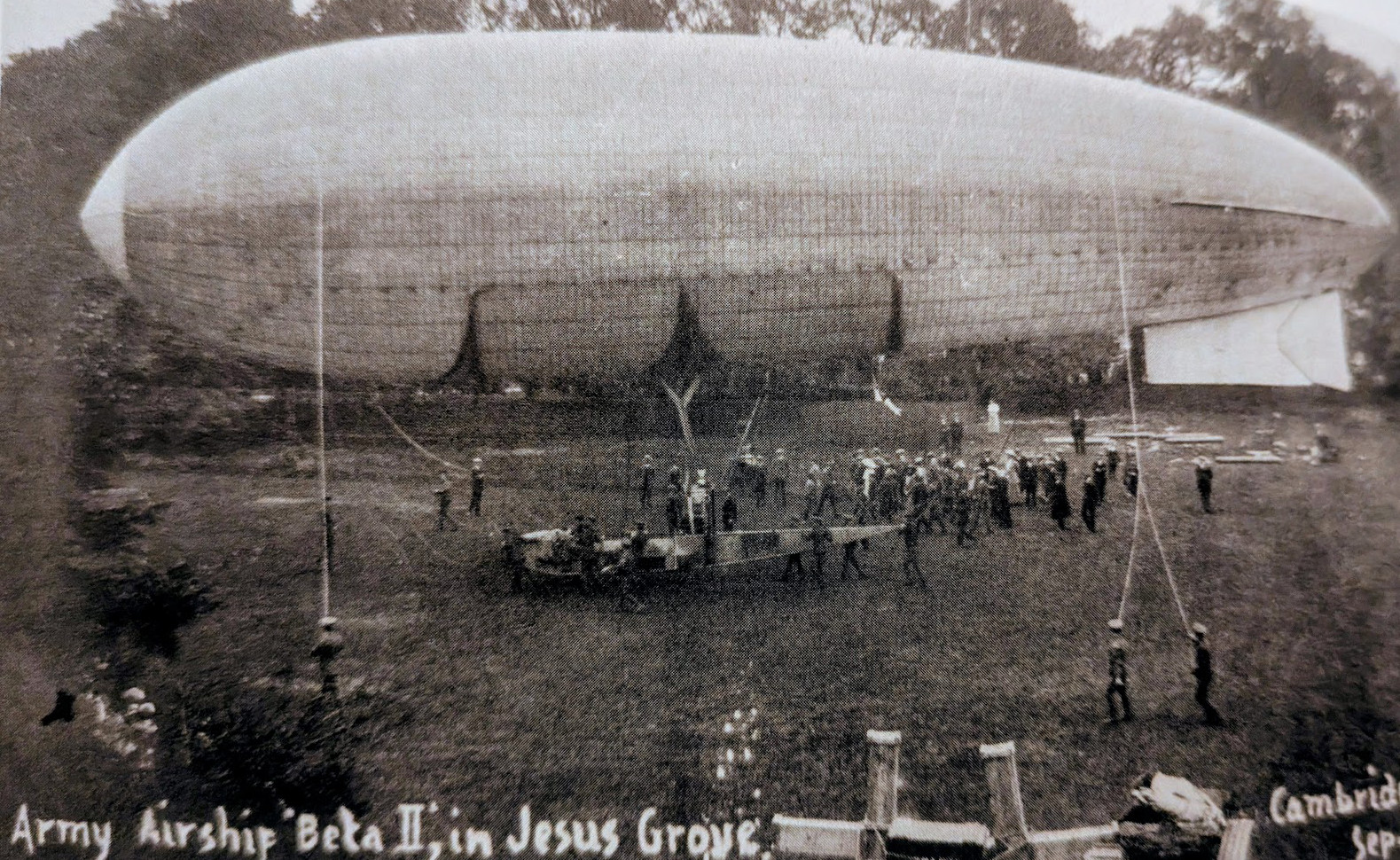
Airship Beta II, 1912, Jesus Green
The airship was part of large scale military manoeuvres around Cambridge in 1912 witnessed by the King.
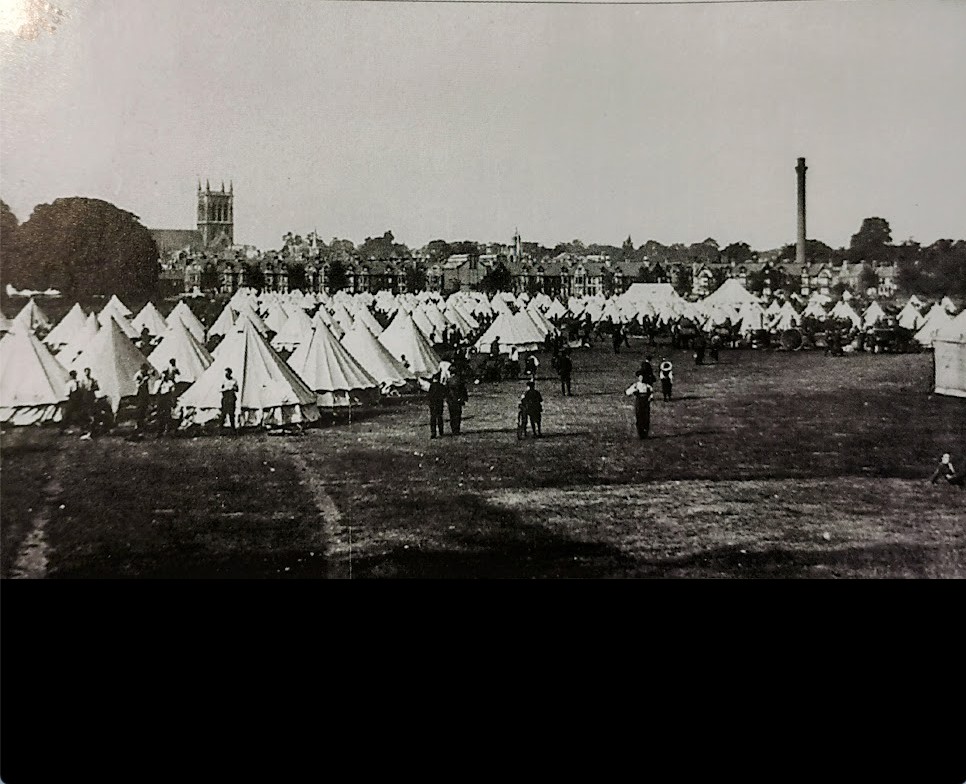
World War One mobilisation on Jesus Green (Cambridgeshire Collection)
The photo of the news-seller must have been taken in autumn 1925 after the publication of the Harold Begbie’s article in The Referee entitled “Our Foreign Dictators; Britain Enslaved.”
The new seller was called Mr Mansfield and in the background is the River Cam and Chesterton Avenue.
………………..
Projects
Contribute
Do you have any information about the people or places in this article? If so, then please let us know using the Contact page or by emailing capturingcambridge@
Licence
This work is licensed under CC BY-NC-SA 4.0