Search by topic
- archaeology
- Building of Local Interest
- chapel
- charity
- church
- crime
- dressmaker
- Great Eastern Railway
- Listed building
- Mapping Relief
- medieval
- oral history
- poverty
- Public House
- railway worker
- Religious House
- Roman
- scholar
- school
- Then and Now
- tudor
- women
- work
- world war one
- world war two
Search by text


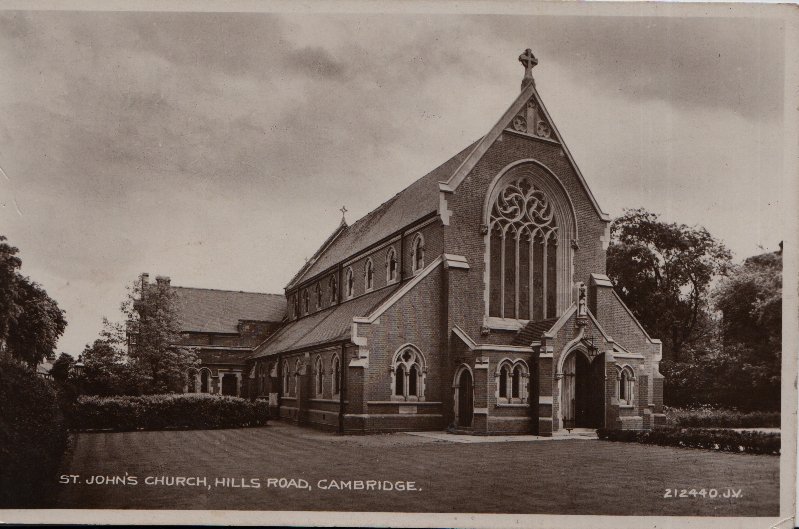 St John the Evangelist Hills Road early 20th century
St John the Evangelist, Hills Road, Cambridge
Notes on the history of the parish of St John the Evangelist
The official title of this church shows that it was originally founded within the Cherry Hinton parish.
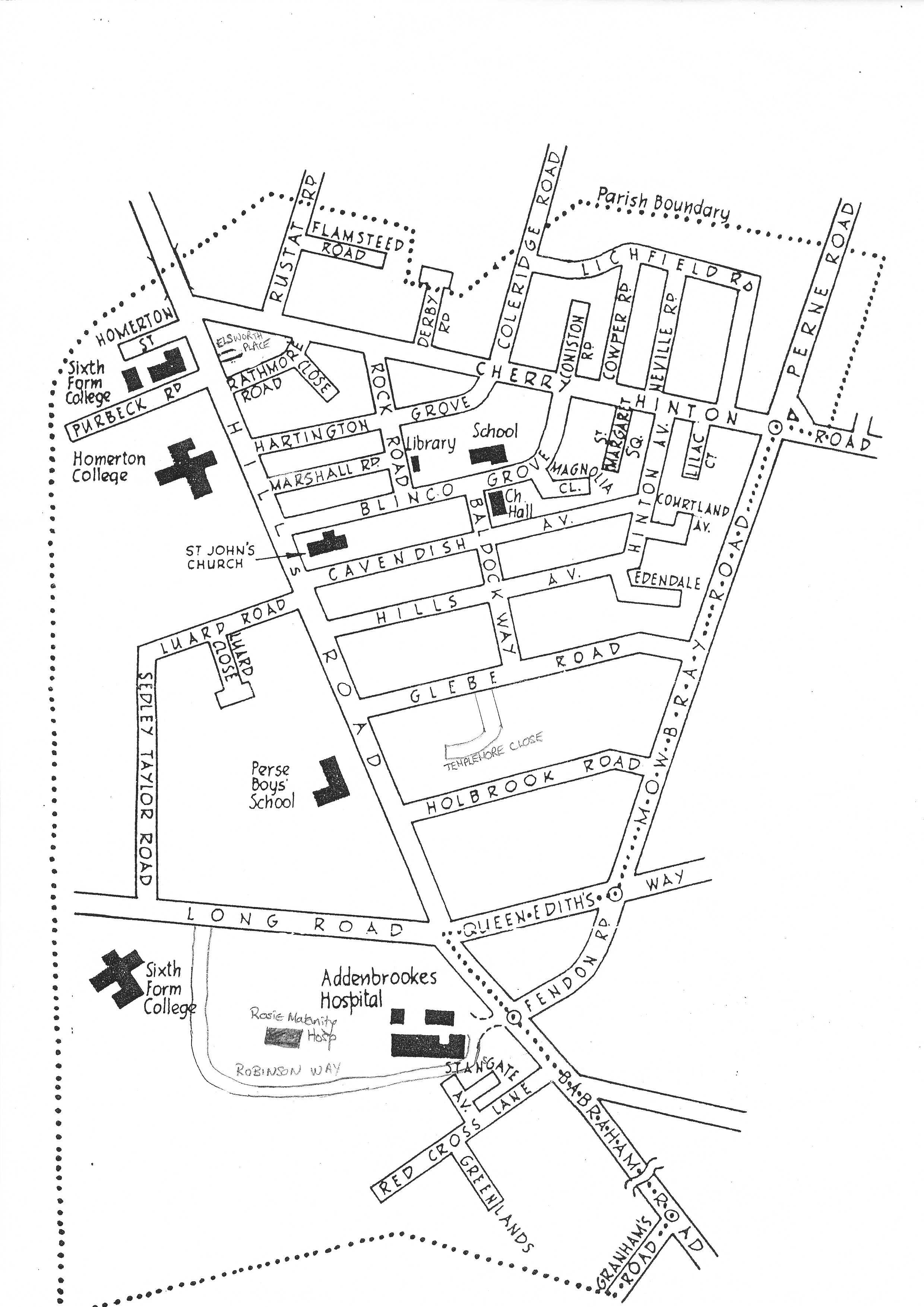
St John the Evangelist parish boundary
In 2023 the digital archive of St John’s was transferred from their web site to Capturing Cambridge.
The contents can be found here:
St John the Evangelist Hills Road
St John’s Parish Magazine 1908
St John’s Parish Magazine 1909
St John’s Parish Magazine 1910
St John’s Parish Magazine 1936
St John’s Parish Magazine 1937
World War One at in the Parish of St John’s
World War One – Cavendish Avenue
World War One – Cherry Hinton Road (south side)
World War One – Cherry Hinton Road (north side)
World War One – Hartington Grove
World War One – Hills Road (South)
World War One – Red Cross Volunteers
Cambridge history articles in Parish Magazine
St John’s parish photo archive
There was from the early days of the church a St John’s Music Society whose activities were published in the Homertonian, the college student magazine:
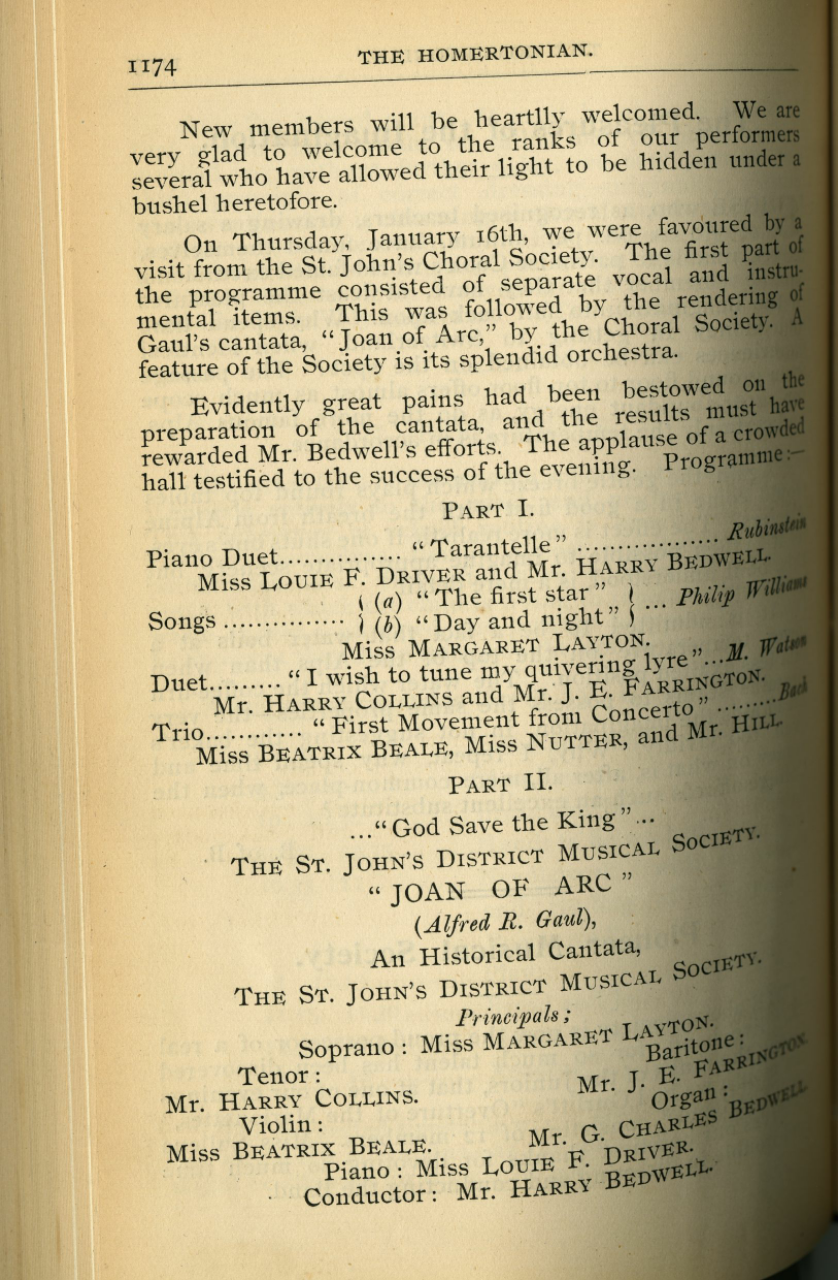
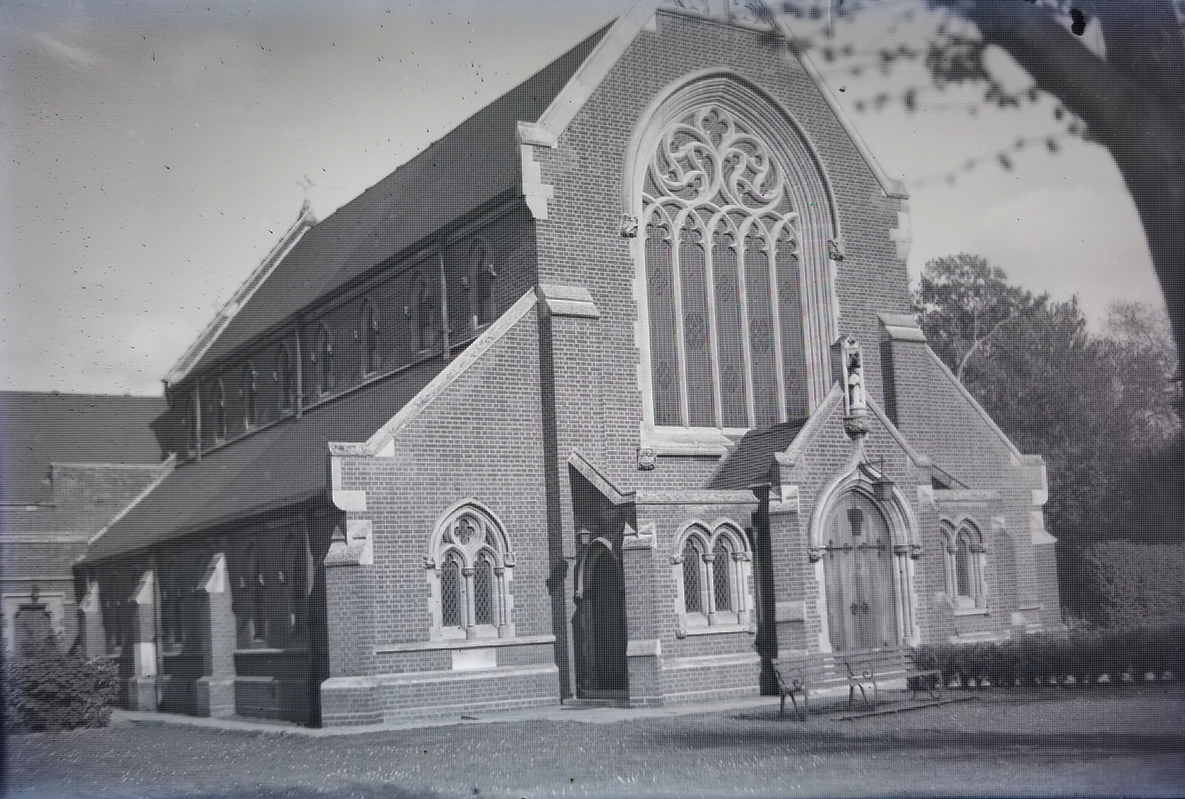
St John the Evangelist Hills Road (glass plate negative undated)
Marie Burrows was recorded in 2016 talking about her life in the parish. He she recalls her father’s time at St John’s.
Christened, confirmed and married at St John’s, she recalls her own earliest memories of church life.
Finally she recalls the circumstances around her wedding at St John’s.
Dorothy Sanders, who lived first in Hartington Grove in the 1930s then in Rock Road, is another longstanding members of St John’s. For a while though, after her marriage, she moved to Rampton where her husband was vicar. In 2016 she talked about her life:
She was married in Rampton church by the former vicar of St John’s, Rev. Jary.
After she returned to Cambridge from Rampton she and her husband became closely involved in the life of St Andrew the Great.
In 2016 Tony Whitmore reminisced about his relationship to St John’s where he went to Sunday School and helped to pump the organ, and his marriage at St James’s.
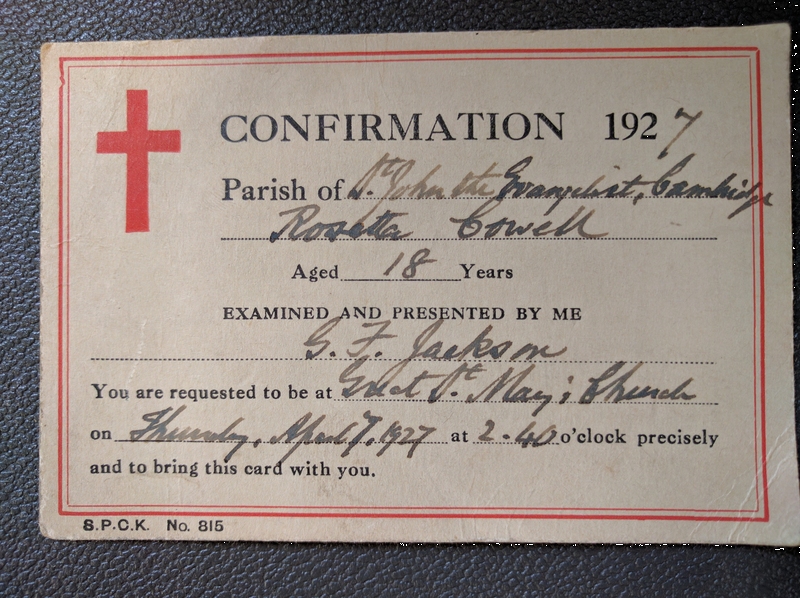
Tony’s mother, Rosetta Cowell, was baptised and confirmed at St John’s. Here are Rosetta baptism and confirmation certificates as well as the Holy Communion booklet she was given at confirmation:
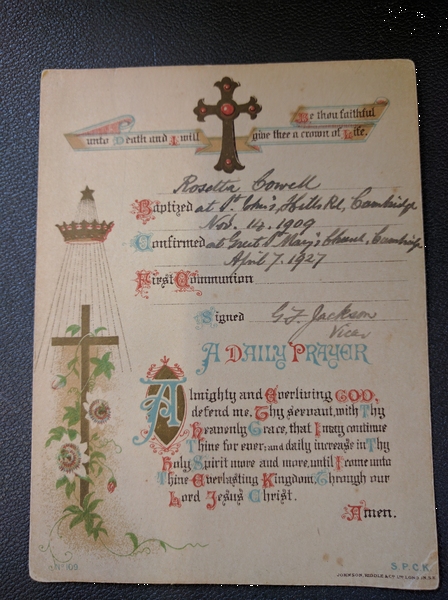

Although Peter West had lived for many years in the parish in Hills Avenue, he had been brought up as a Baptist and then joined the Congregationalists before finally joining St John’s. Over the years he and his wife have taken on many roles within the church. In 2016 he talked about his move to St John’s.
Pat Chapman has lived in Queen Edith’s for much of her life and knows the local churches well. She became a regular member of St John’s through a friend in the 1990s. Here she talks in
2016
Sources: interviews, St John’s web site
Sources
- Journal
- Oral / Unpublished Sources
- Photographs
- Sound Recording
Contribute
Do you have any information about the people or places in this article? If so, then please let us know using the Contact page or by emailing capturingcambridge@
Licence
This work is licensed under CC BY-NC-SA 4.0