Search by topic
- archaeology
- Building of Local Interest
- chapel
- charity
- church
- crime
- dressmaker
- Great Eastern Railway
- Listed building
- Mapping Relief
- medieval
- oral history
- poverty
- Public House
- railway worker
- Religious House
- Roman
- scholar
- school
- Then and Now
- tudor
- women
- work
- world war one
- world war two
Search by text


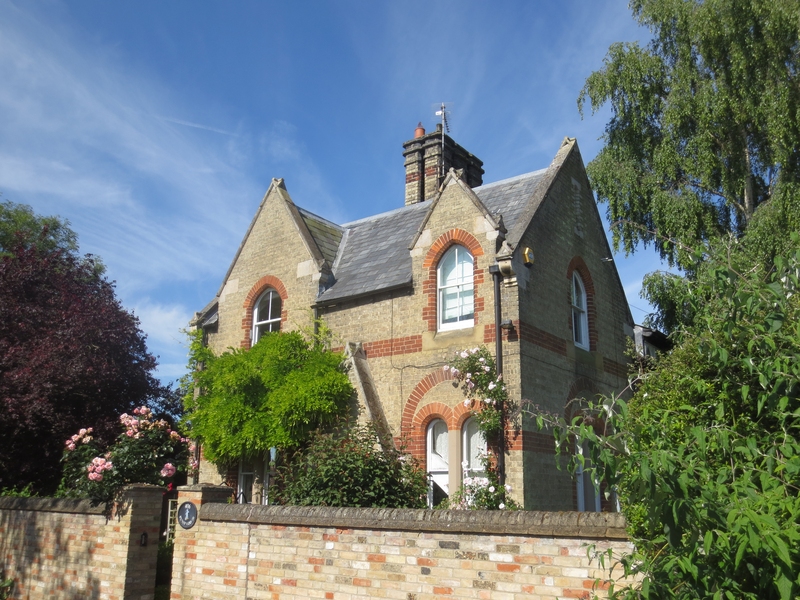 The Pump Lodge Cherry Hinton Road (RGL2026)
The Pump Lodge/Waterworks, Cherry Hinton Road, Cambridge
Information about the 1852 Pump Lodge
1855
Cambridge Waterworks opened. See entry on plague, cholera and water supply.
1881
(no number in Cambridge Road)
Harry J Barker, head, 32, engine fitter, born Cambridge
Harriet, 33, born Cambs
Walter Harry, 6, born Cambridge
John M, 3, born Cambridge
Janet M, 1, born Cherryhinton
1881
(no number)
George F Clark, 25, engine driver, born Cambridge
Harriet A, 23, born Cambridge
Grace F, 1 m, born Cherryhinton
1891
(Waterworks)
John William Kingdon, 54, engine fitter, born Devon
Rhoda, 45, born London
Elizabeth Bennet, sister, 58, born Devon
Virginia Ralling, visitor, 25, born Suffolk
Ernest Ralling, visitor, 1, born Essex
Clara Kidman, servant, 16, born Cambridge
1891
George Fred Clarke, engineman
Harriet A
Grace Florence
Louisa Mary
Harriet Maud
Percy George
Emma Plumb, servant, 14, born Cambs.
1901
(Cambridge Road)
William Coe, engine driver waterworks
Matilda
William A, 23, bricklayer labourer, born Cherryhinton
Annie, 27, born Devon
Harry, 20, bricklayer
In 1891 William Coe and family are living nearby on the Cambridge Road but not at the Waterworks.
1901
(Waterworks)
George F Clarke, 43, mechanical engineer
Harriet A
Grace F, 20, college student,
Louisa M, pupil teacher
Harriet M, dressmaker
Percy G F
1911
(Waterworks – 5 main rooms)
William Coe, head, 59, engineman waterworks, born Cherryhinton
Matilda, 54, born Cherryhinton
Harry, 29, bricklayer Fulbourn asylum, born Cherryhinton
1911
(Waterworks – 6 main rooms)
George Frederick Clark, head, 53, mechanical engineer, born Cambridge
Harriett Anne, 53, born Cambridge
Lovie Mary, 28, public elementary teacher Borough Council, born Cherry Hinton
Harriett Maud, 28, clerk in receiving office steam laundry, born Cherry Hinton
Percy George Fred, 21, natural science student, born Cherry Hinton
This pump lodge was built in 1852 when waste was sent to the Milton sewage works. The station closed in 1921 when the new Fleam Dyke well was opened. The wells in Cherryhinton road were then not necessary and were all sealed up and the property sold.
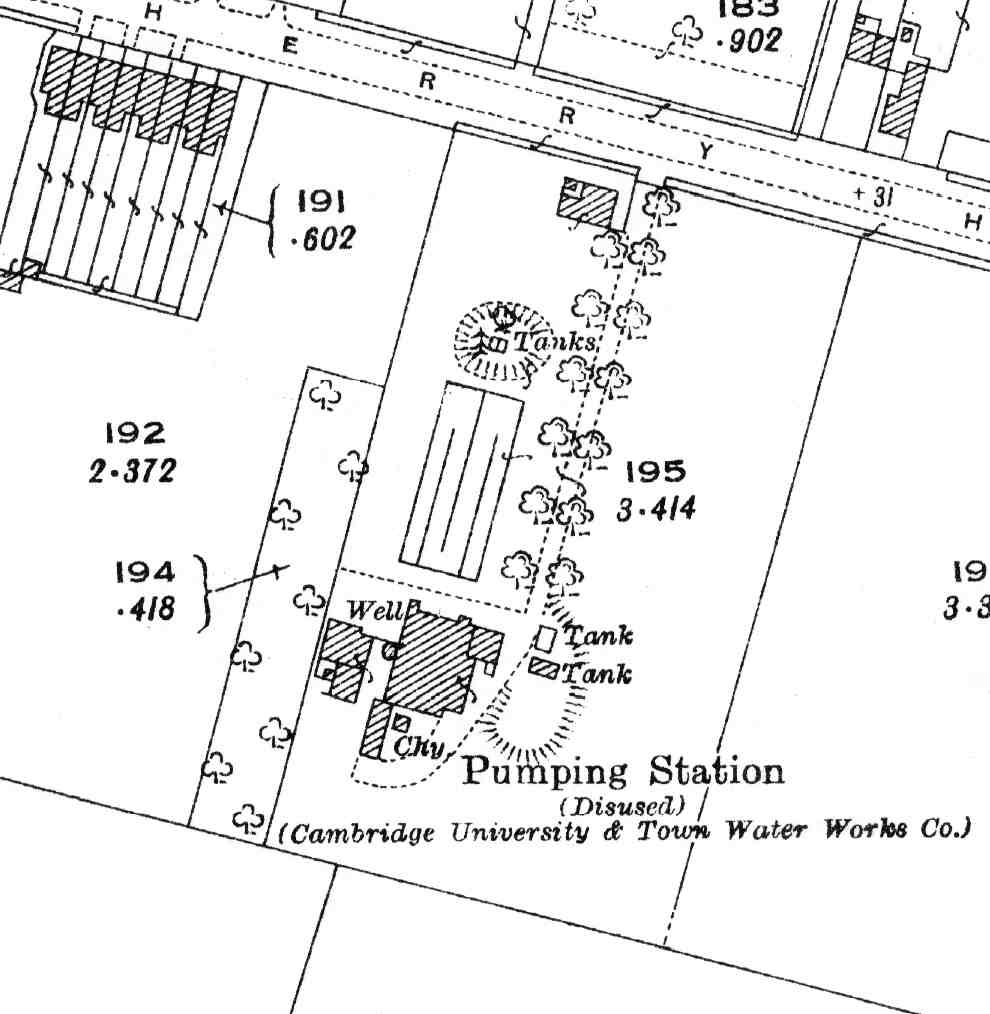
Cherry Hinton Road Pumping Station site 1927
The UK census returns reveal some of the residents of the Lodge and those who worked at the pumping station:
1871 Cambridge Road: William Hunt 39 engine driver, Mary 36, William 17 ag.lab., Caroline 15 gen.serv., Charles 13 farm serv., John 11 farm serv., Mary 8 scholar, George 5 scholar.
1871 Cambridge Road: Henry Barron 49 engine fitter, Maria 45, Susan 22 laundress, James 13 scholar, Henry 11 farm serv., Arthur 9 scholar, Alfred 6 scholar.
1881 Cambridge Road: George F Clark 25 engine driver, Harriett 25, Grace 1mos.
1881 Cambridge Road: Frederick Coe 25 engine cleaner, Mary 29, Frederick 6, Mabel 5, Alice 3, Arthur 9mos.
1881 Cambridge Road: Harry Barker 32 engine fitter, Harriett 33, Walter 6, John 3, Janet 1.
1891 Cambridge Road: George Clark engineman
1891 Cambridge Road: William Coe engine driver
1891 Waterworks: John Kingdom engineering fitter
1901 Pumping Station: George F Clark
1901 Waterworks: William Coe engineman
1911 Pumping station: George Clark mechanical engineer
1911 Waterworks: William Coe engineman
1913 Waterworks: George F Clark manager
1913 Waterworks: William Coe engine attendant
Sources: Cambridge News (Cambridgeshire Collection), UK census
Projects
Contribute
Do you have any information about the people or places in this article? If so, then please let us know using the Contact page or by emailing capturingcambridge@
Licence
This work is licensed under CC BY-NC-SA 4.0