Search by topic
- archaeology
- Building of Local Interest
- chapel
- charity
- church
- crime
- dressmaker
- Great Eastern Railway
- Listed building
- Mapping Relief
- medieval
- oral history
- poverty
- Public House
- railway worker
- Religious House
- Roman
- scholar
- school
- Then and Now
- tudor
- women
- work
- world war one
- world war two
Search by text


 19-22 Jesus Lane Cambridge
20 Jesus Lane
History of 20 Jesus Lane
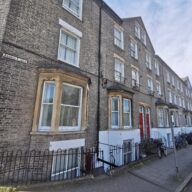
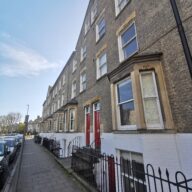
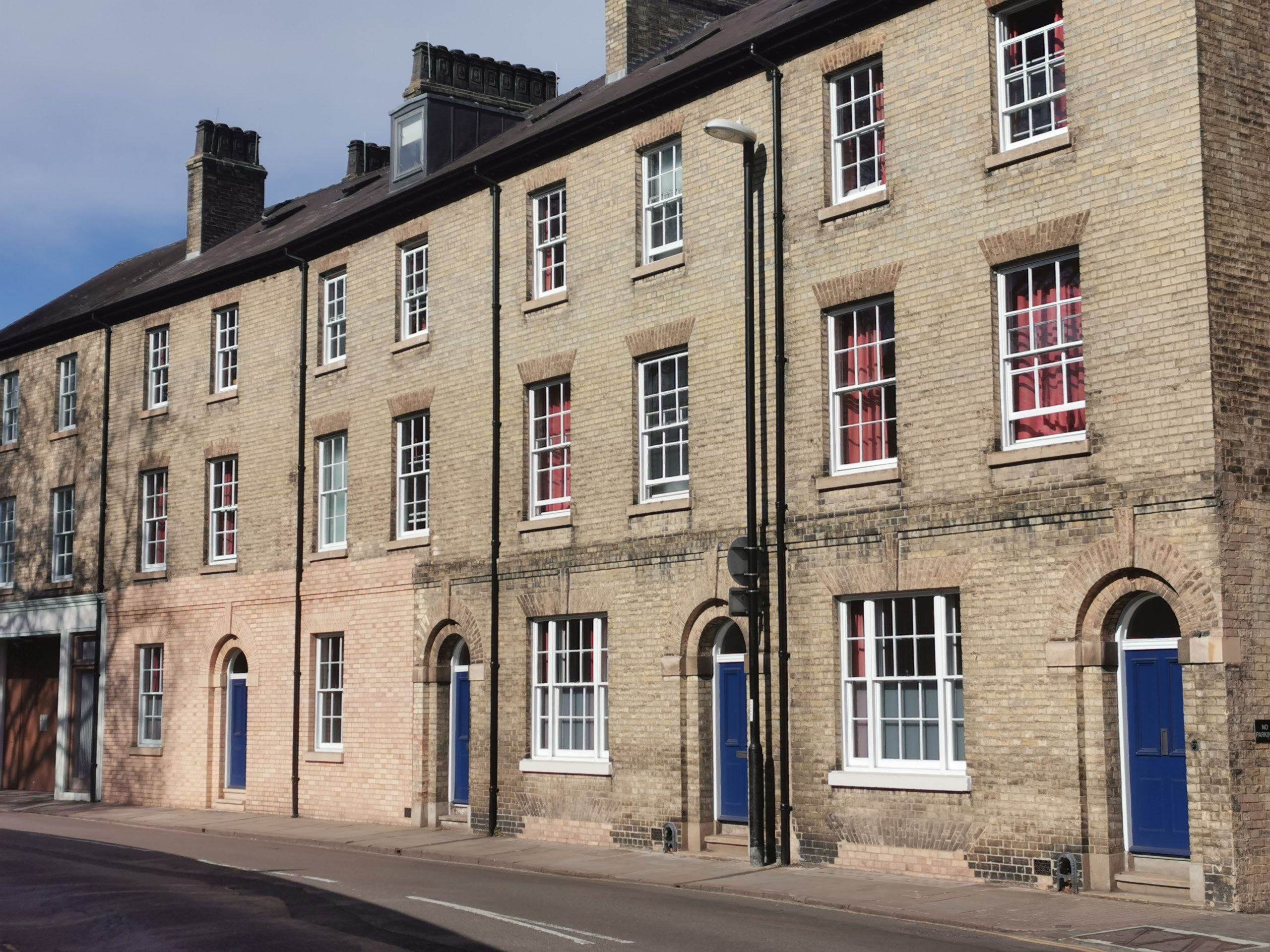
Nos.20 to 22 Jesus Lane are two houses in a terrace of originally four houses, probably built in c.1850. On the 1888 and 1903 OS maps the terrace is shown joined to a public house or inn (The Crown) at the west end, which by 1927 had been demolished to make way for an extended garage workshop for Marshall of Cambridge, who had acquired the block in 1912. The fifth house (which occupies the site of The Crown) also seems to have been built in the 1920s, but does not appear on the 1927 OS map. This shows the workshop extending from this plot across the land to the rear of the terrace, up to the boundary with Jesus College. Most recently the ground-floor of the additional house and the two C19 houses at the west end of the terrace have been used as a showroom for a soft furnishing store, with plate glass shop windows extending across the front elevation of all three. The workshop area contained an arcade of shops. The numbering of all five now runs from 19-22, with 19 incorporating the three houses that formed the shop (including the early C20 addition), while 20 and 22 refer to the two houses to the east.
1861
Robert Cunnington, 33, upholders [sic] clerk, b Wisbech
1913
Lewis Charles Nichols, dairyman
1962
(17 – 22) Marshall’s motor engineers
Projects
Contribute
Do you have any information about the people or places in this article? If so, then please let us know using the Contact page or by emailing capturingcambridge@
Licence
This work is licensed under CC BY-NC-SA 4.0