Search by topic
- archaeology
- Building of Local Interest
- chapel
- charity
- church
- crime
- dressmaker
- Great Eastern Railway
- Listed building
- Mapping Relief
- medieval
- oral history
- poverty
- Public House
- railway worker
- Religious House
- Roman
- scholar
- school
- Then and Now
- tudor
- women
- work
- world war one
- world war two
Search by text


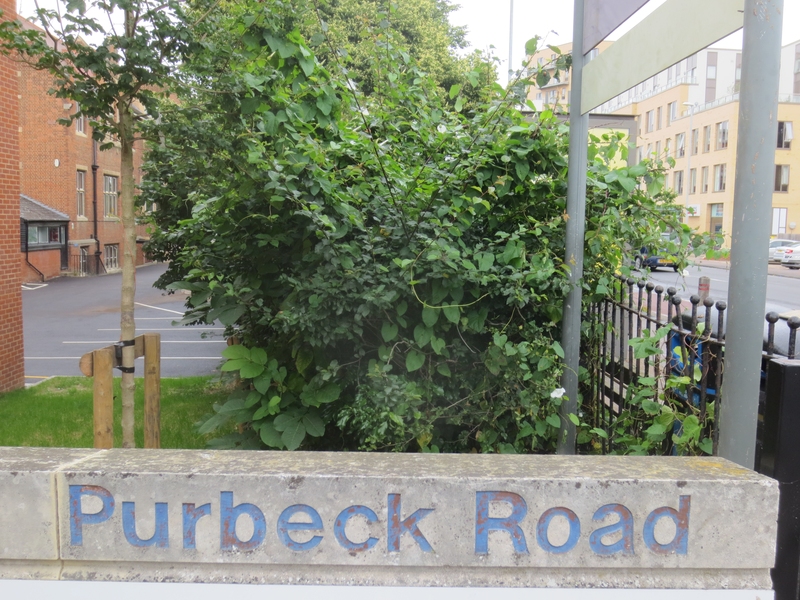
Purbeck Road, Cambridge
Historical Notes on Purbeck Road
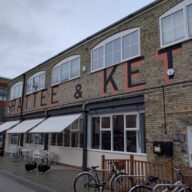
Purbeck Road and the land on either side originally belonged to Jesus College. In 1895 George Kett purchased a plot at the end of the road, on the south side. In 1905 ownership also past to his two sons. The freehold of the road remained with Jesus College but Rattee and Kett were obliged to make up the road. This plot became the property of the limited company of Rattee and Kett when it was formed in 1926.
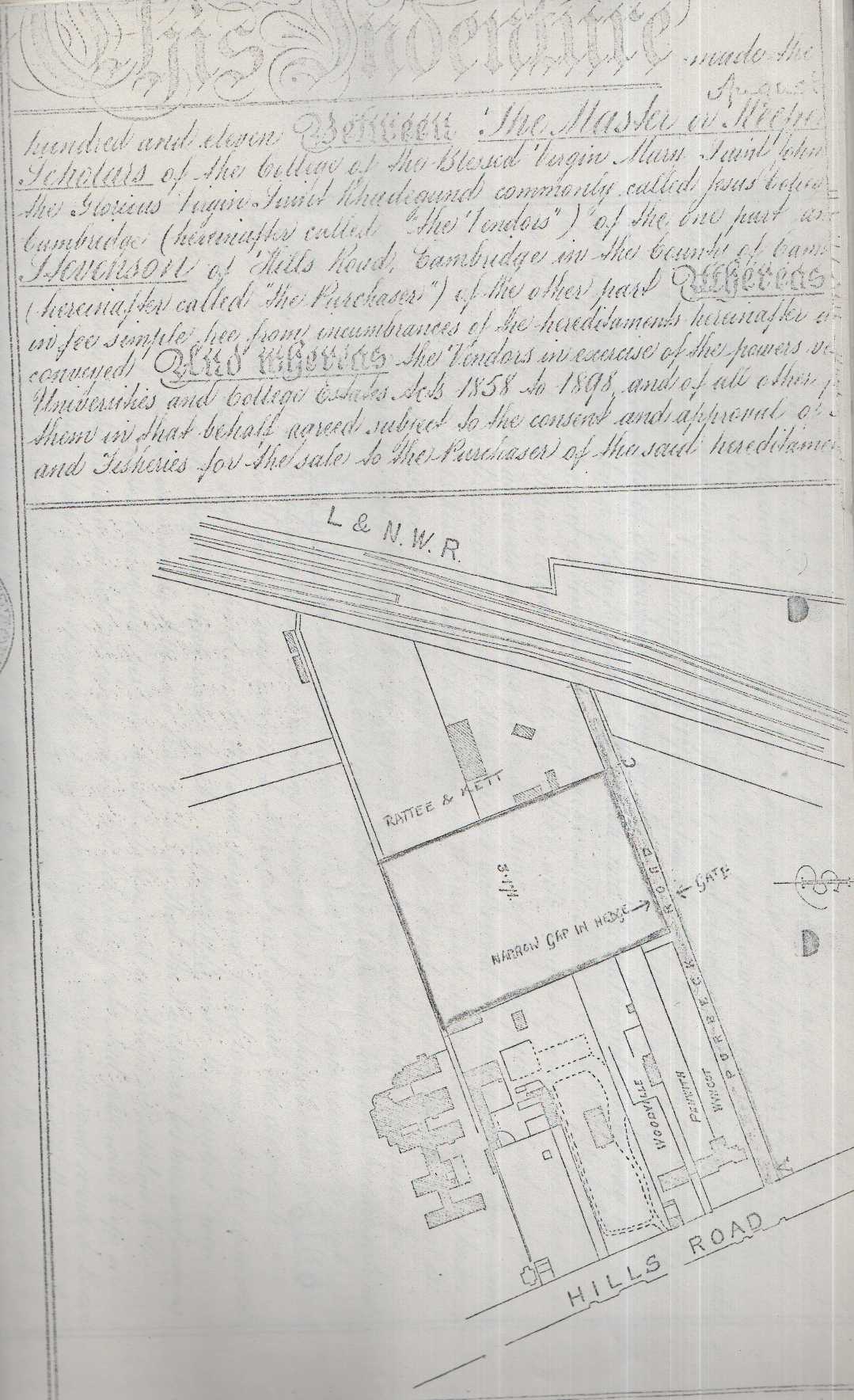
This is map of the site from the original 1895 conveyance from Jesus College to George Kett 19/12/1895.
During the 1950s the two terraced cottages at the far end of Purbeck Road belonging to Rattee and Kett that still survived in 2017 were lived in by Harry Sadler, masonry foreman, and Vic Leader, lorry driver.
In 1964 there arose an interesting dispute concerning access by pupils of the Cambridgeshire High School for Boys to their playing field on the other side of Purbeck Road. It was argued that the school had no right of access and the current practice of dashing across the road was likely to result in a serious accident involving Rattee and Kett vehicles. the problem was eventually resolved by the removal of a hedge to ensure better visibility and the provision of a self-shutting gate.
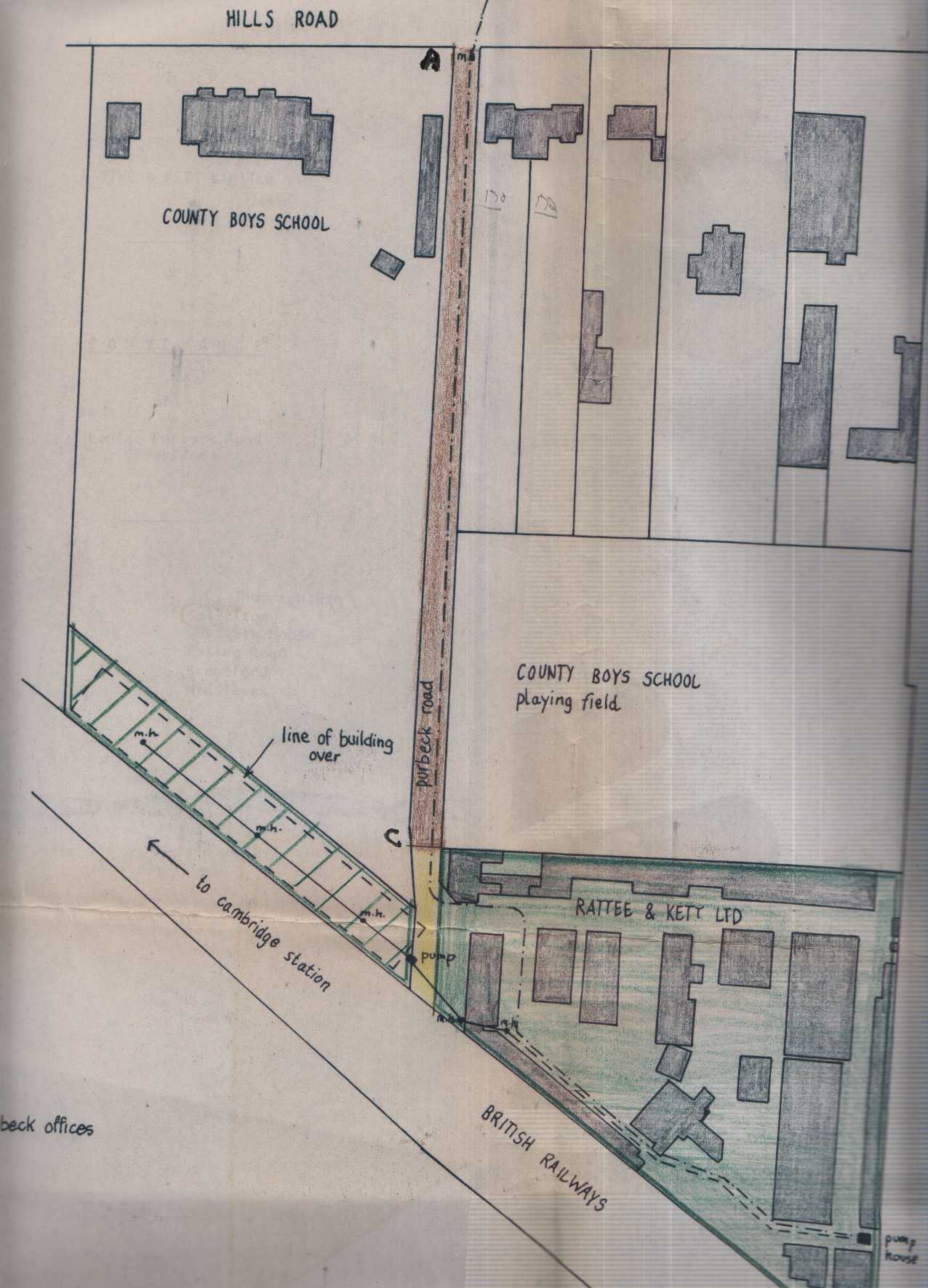
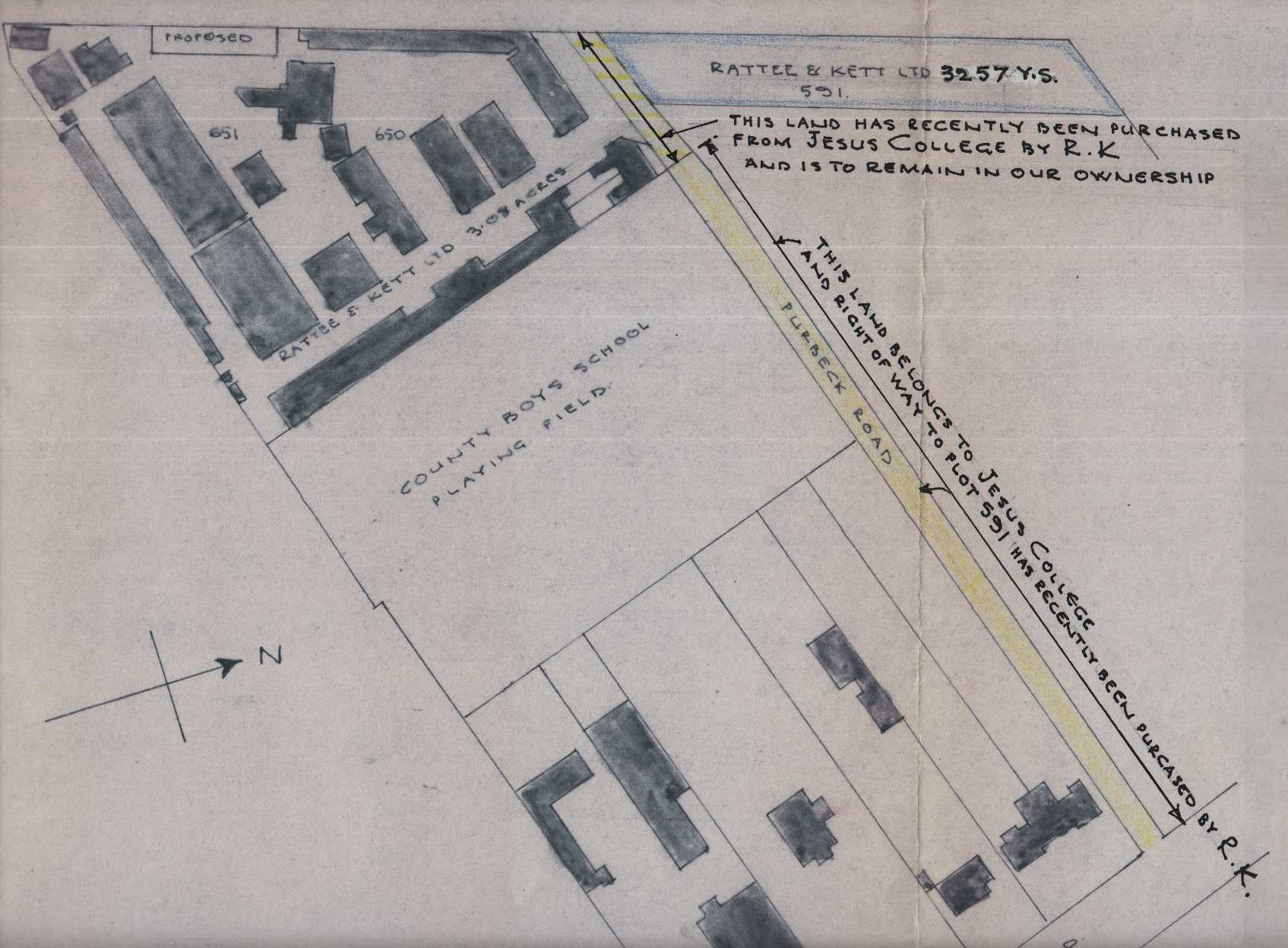
In 1967 Rattee and Kett bought land on the other side of Purbeck Road from the railways and then in 1973 bought the freehold of the piece of Purbeck Road that lay between the two sites from Jesus College. The map above is from the conveyance contract of 1972 showing the part of the road purchased from Jesus College and the property already owned by Rattee and Kett on either side. This is a another plot map included in correspondence in 1973 for clarification.
One contract involved the removal of choir stalls from Carlisle Cathedral to Purbeck Road for remodelling under the direction of Stephen E Dykes Bower.
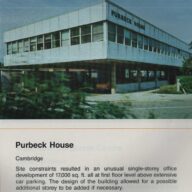
In 1999 the company moved from the Purbeck Road site to Longstanton. the site was acquired by the National Extension College. One of their projects at the site was the creation of a sculpture garden.
At the beginning of the 20th century there were playing fields along side Purbeck Road. There are many newspaper reports of matches between such teams as the County School Old Boys v The Church (1909), Cambridge Town v Long Melford (1908), Chesterton Laurels v Stamford Town in the F.A. Amateur Cup (1908).
In 1920 an appeal was launched by Cambridge Town F.C. to purchase the ground at Purbeck Road for £1,800. It was thought that Cambridge Town Council acquired the plot in the mid 1920s for the use of the school. A legal dispute in 1964 between Rattee and Kett and the Boys High School throws light on the history of usage and access to Purbeck Road.
The Cambridge Evening News in 2006 ran a report on Camstead Homes in Purbeck Road, the first privately owned scheme of student apartments in Cambridge.
Sources: British Newspaper Archive
Projects
Contribute
Do you have any information about the people or places in this article? If so, then please let us know using the Contact page or by emailing capturingcambridge@
Licence
This work is licensed under CC BY-NC-SA 4.0