Search by topic
- archaeology
- Building of Local Interest
- chapel
- charity
- church
- crime
- dressmaker
- Great Eastern Railway
- Listed building
- Mapping Relief
- medieval
- oral history
- poverty
- Public House
- railway worker
- Religious House
- Roman
- scholar
- school
- Then and Now
- tudor
- women
- work
- world war one
- world war two
Search by text


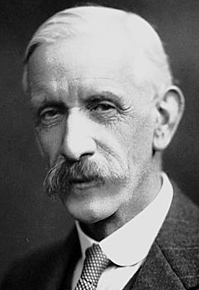 Frederick Gowland Hopkins
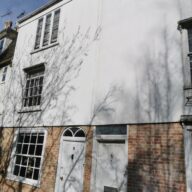
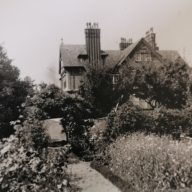
71 Grange Road, Saxmeadham
History of 71 Grange Road
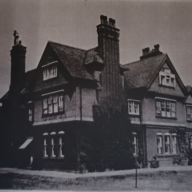
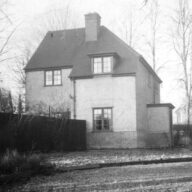
71 Grange Road was built for Frederick Gowland Hopkins in 1911 to the designs of Arnold Bidlake Mitchell FRIBA (1864-1944). Mitchell was articled to Robert Stark Wilkinson and became the assistant to George and Peto, amongst others, before entering the Royal Academy Schools in 1884 and setting up his own practice in 1886. He specialised in parish halls, houses and schools, many of which were featured in the contemporary architectural press. Mitchell’s academic buildings included the School of Agriculture in Cambridge (1909-10), and his domestic work included the Grade II* listed Trevelloe House in Paul, Cornwall (1911) a small Arts and Crafts country house with an unaltered interior in the C18 style. He is associated with seven buildings on the List, all Grade II except for Trevelloe House.
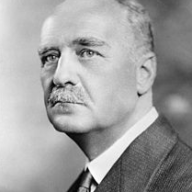
The first owner of 71 Grange Road, Frederick Gowland Hopkins (1861-1947), was a pioneering biochemist who first lectured at Cambridge in 1898, later being elected to the Chair of Biochemistry in 1914. Hopkins made several outstanding contributions to science and was awarded the Nobel Prize in 1929. He received numerous honours, including a knighthood in 1925 and the Order of Merit in 1935. After Hopkins’ death in 1947, the house passed into the ownership of the historian Dr J. P. T. Bury (1908-1987) of Corpus Christi College who wrote The College of Corpus Christi and of the Blessed Virgin Mary: a History from 1822 to 1952 (1952), and works on the history of France, including France 1814-1940 (1949). His son engraved the plaque bearing the house’s name ‘Saxmeadham’ (from the Saxon burial ground on which the house is built) at the David Kindersley Workshop in 1971. He also engraved the early C21 plaque to Hopkins.
1911 Saxmeadham
Remains of a burial were found: a bone pin, a small broken flagon of red ware and an iron spearhead. This was considered to be a Roman burial mixed up with a spearhead from a later Anglo-Saxon. Other Roman remains were found nearby (Proceedings of the Cambridge Antiquarian Society Vol. 67).
1939
Frederick Gowland Hopkins, b 1861, professor of Biochemistry [awarded Nobel Prize in 1929 for ‘discovery of vitamins’]
Jess A, b 1870
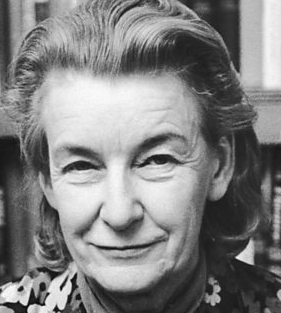
Jacquetta Hawkes
Jacquetta Hawkes, b 1910, archaeologist
Projects
Contribute
Do you have any information about the people or places in this article? If so, then please let us know using the Contact page or by emailing capturingcambridge@
Licence
This work is licensed under CC BY-NC-SA 4.0