Search by topic
- archaeology
- Building of Local Interest
- chapel
- charity
- church
- crime
- dressmaker
- Great Eastern Railway
- Listed building
- Mapping Relief
- medieval
- oral history
- poverty
- Public House
- railway worker
- Religious House
- Roman
- scholar
- school
- Then and Now
- tudor
- women
- work
- world war one
- world war two
Search by text


141 Sturton Street, Cambridge
The Family of a Tar & Coke Merchant
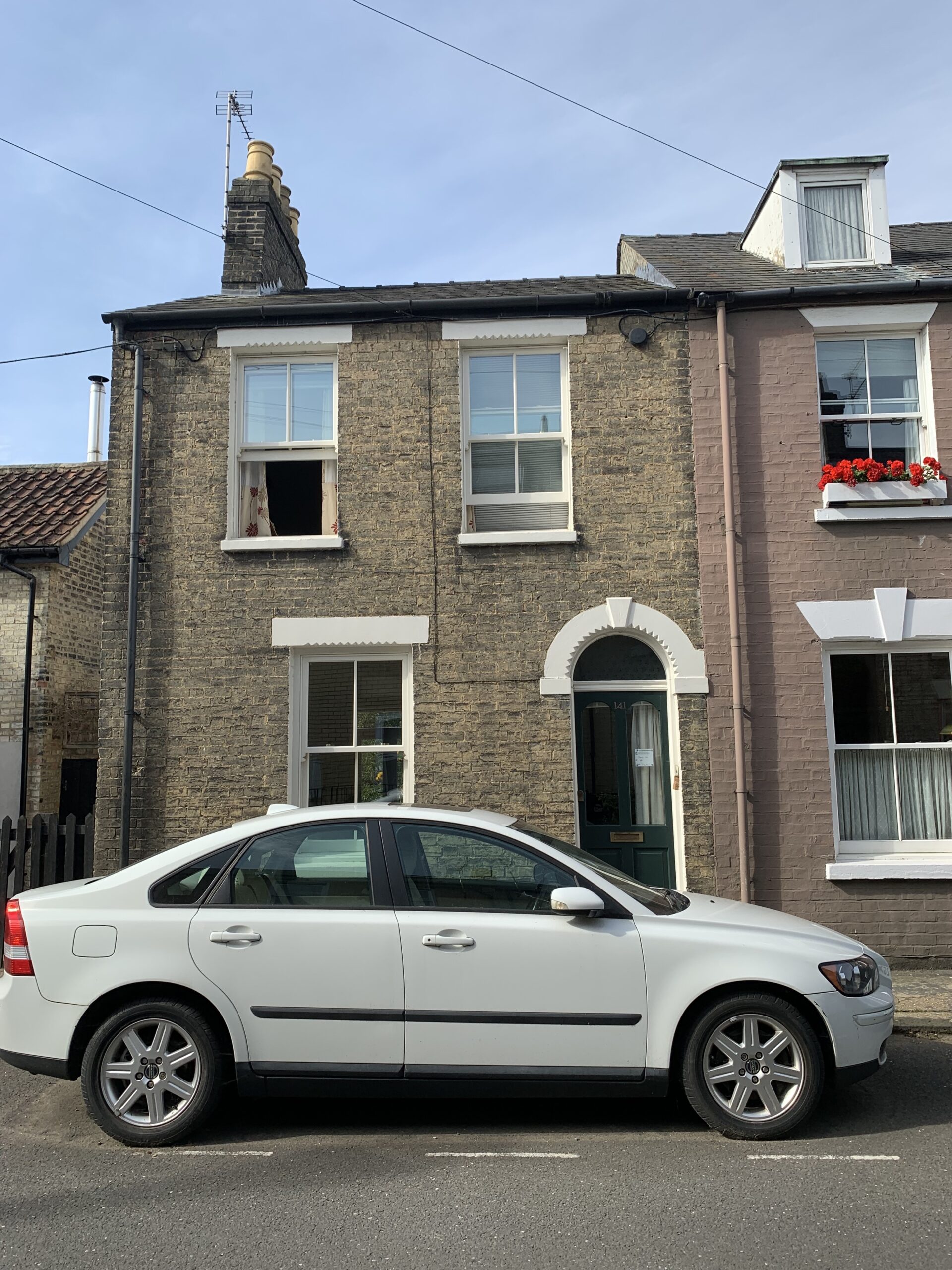
141 Sturton Street
1881
John Saggers, head, married, 56, bricklayers labourer, b. Cambridge
Mary Ann Saggers, wife, married, 51, b. Cambridge
Frederick Saggers, son, 26, gardener, b. Cambridge
Ann Courtney Saggers, daughter, 19, no employment, b. Cambridge
William Saggers, son, 13, scholar, b. Cambridge
John Saggers, son, 9, scholar, b. Cambridge
Ernest Saggers, son, 7, scholar, b. Cambridge
1891
John Saggers, 65, Tar and Coke Merchant, b. Fulbourn, Cambs
Mary Saggers, 60, b. Cambridge
Frederick Saggers, 36, Milkman, b. Cambridge
Ernest Saggers, 17, Draper, b. Cambridge
1901
John Saggers, 76, Tar and Coke Merchant, b. Fulbourn, Cambs
Mary A Saggers, 71, b. Cambridge
Ernest Saggers, 27, dairyman, b. Cambridge
Mary I Saggers, 24, sister-in-law, b. Sunderland
1911
Ernest Saggers, head, 37, married, dairy man, own account, at home, b. Cambridge
Mary Saggers, wife, 35, married, b. Sunderland, Durham
Leonard Saggers, son, 9, b. Cambridge
Hilda Saggers, daughter, 7, b. Cambridge, married 10 years, 2 children
Sources – 1881, 1891, 1901, 1911 UK Census
1962
Mrs M Saggers
Source – Kellys
1970
James Morrison
Source Kellys
Down Your Street, 1984, p.81 includes the following reminiscences dating from the 1920s: On the other side of the road was Mr Ernest Sagger’s small shop. He sold rabbits and fowls and he would soon skin and cut up a rabbit for about a shilling.
In 2022 MG sent us the following note:
I thought you might be interested to know that there is still an old gas lamp in my garden. I moved here in 1975 and back then the outbuilding that I recently renovated still had the stable where Ernie Saggers had kept his horse. I was nicknamed by locals ‘Mary from the Dairy’ because the outbuilding had indeed been Ernie’s dairy shop. I’m reliably told that he used to go out into the outlying villages e.g. Fulbourn and Teversham with his horse and cart and bring back milk, rabbits, eggs etc. This house has had few owners – the Saggers were here for three generations, until the 60s I believe, then there was a builder, followed briefly by a landlord, and now me for the past 47 years.
This area changed a lot in the 90s – there were few cars, much less money, children all out playing together in the streets, neighbours chatting on their front steps – but I expect you’ve already been told that.
Projects
Contribute
Do you have any information about the people or places in this article? If so, then please let us know using the Contact page or by emailing capturingcambridge@
Licence
This work is licensed under CC BY-NC-SA 4.0