Search by topic
- archaeology
- Building of Local Interest
- chapel
- charity
- church
- college servant
- crime
- dressmaker
- Great Eastern Railway
- Listed building
- Mapping Relief
- medieval
- oral history
- poverty
- Public House
- railway worker
- Roman
- scholar
- school
- Then and Now
- tudor
- women
- work
- world war one
- world war two
Search by text


95 Sturton Street, Cambridge
A Bricklayer and a Dairyman
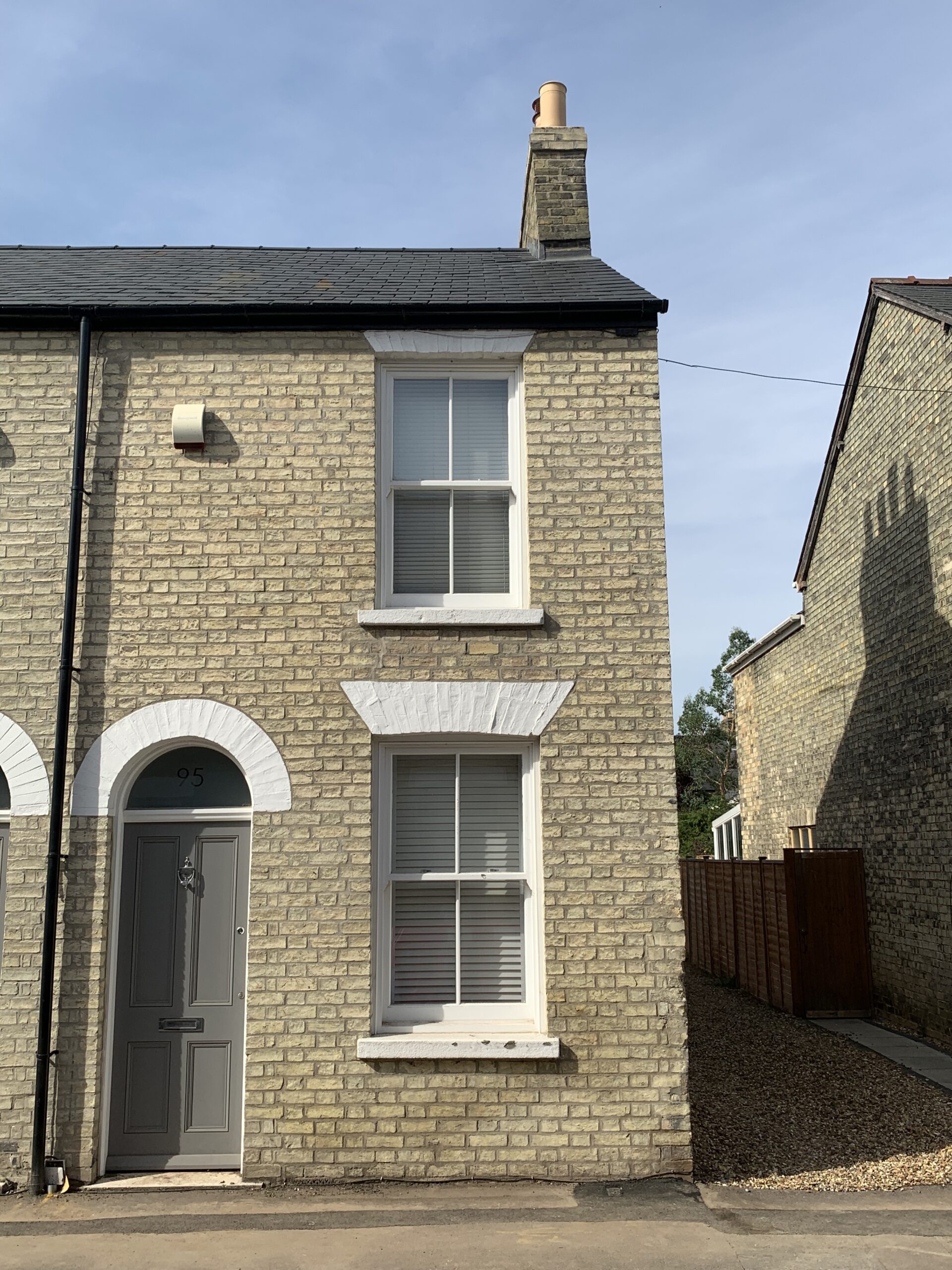
This property was built at some point between 1881 and 1891. It doesn’t appear on the 1881 Census or the 1888 Ordnance Survey Town Plan.
“SALE OF PROPERTY – … Nos. 93 and 95, Sturton Street, freehold, £305, purchaser Mr W. Pollard.” Cambridge Chronicle and Journal 20 June 1890
1891
Head of household in 1891 is Abram (or Abraham) Hunt, a 49 year old, bricklayer’s labourer, who was born in Cambridge. He is married to Hannah, 48, from Waresley in Huntingdonshire.
Hannah is a widow and four of her children are living with the couple. Elizabeth is 20 and a laundress, Herbert is 18 and a blacksmith. Eliza and George are 12 and still go to school.
Abram and Hannah have one child of their own. Stephen is 5 years old and goes to school.
The electoral registers show Abraham living here between 1891 and 1896, when he moves to 118 Sturton Street. Hannah died in the summer of 1896.
1901
Head of household in 1901 is Fred James Boreham, a 27 year old dairyman. Fred spent most of his childhood living at at 72 Sturton Street. He is married Susan (nee Bailey). She is 31 years old and was born in Fen Ditton.
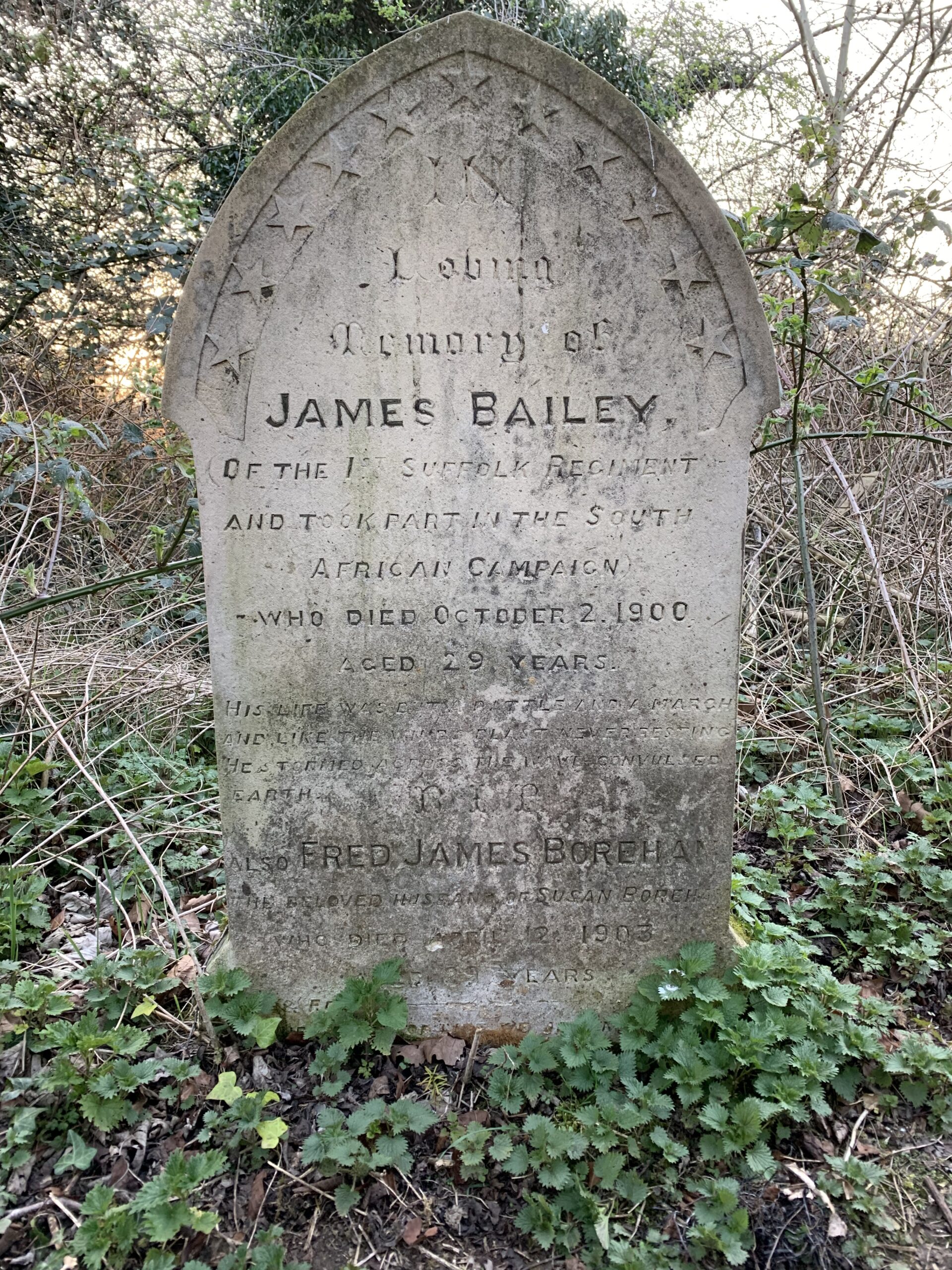
Susan’s brother, James William Bailey, died at 95 Sturton Street in 1900 after coming home from serving in the Boer War. Fred died here in September 1903. Both men are buried in Mill Road Cemetery.
In 1911, Susan is living on Pearce Lane in Fulbourn with her niece Ivy Boreham who is 8 years old.
1911
Thomas Finch, head, 45, married, cabman, own account, b. Astwood, Buckinghamshire
Eva Adela Finch, wife, 31, married, b. Coleridge N, Devon
Hilda Mary Finch, daughter, 8, b. Cambridge
Doris Evelyn Finch, daughter, 6, b. Cambridge
Arthur James Finch, son, 5, b. Cambridge
Edith Marjorie Finch, daughter, 3, b. Cambridge
Frank William Finch, son, 6 months, b. Cambridge
Married 12 years, 7 children of which 2 died
Sources – 1881, 1891, 1901, 1911 UK Census, Mill Road Cemetery, Ordnance Survey 1888 Town Plan, Cambridgeshire Electoral (1722-1966), National Burial Index For England & Wales, Cambridge Chronicle and Journal (20 June 1890),
Projects
Contribute
Do you have any information about the people or places in this article? If so, then please let us know using the
Contact page or by emailing
capturingcambridge@
Licence
This work is licensed under
CC BY-NC-SA 4.0


 not including content on external links as indicated
by
not including content on external links as indicated
by .
.