Search by topic
- archaeology
- Building of Local Interest
- chapel
- charity
- church
- crime
- dressmaker
- Great Eastern Railway
- Listed building
- Mapping Relief
- medieval
- oral history
- poverty
- Public House
- railway worker
- Religious House
- Roman
- scholar
- school
- Then and Now
- tudor
- women
- work
- world war one
- world war two
Search by text


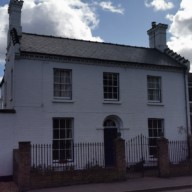
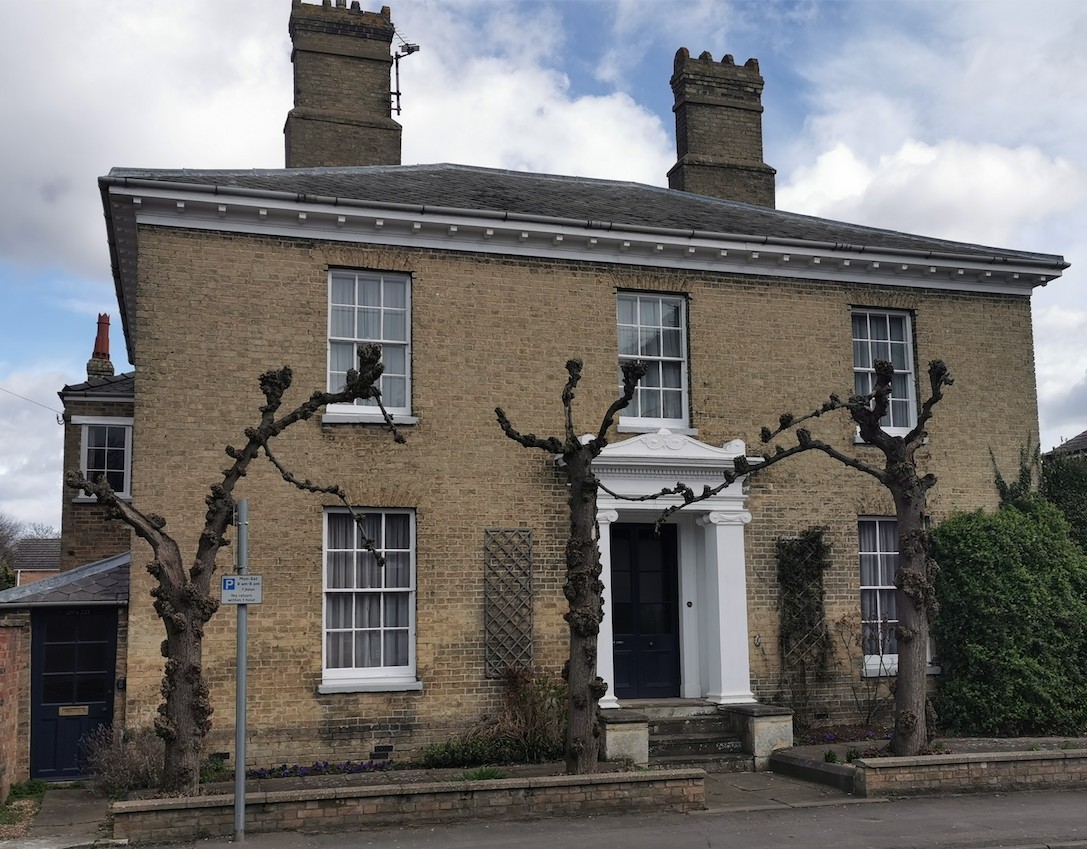 221 High Street Cottenham
219 – 221 (155) High Street, White Horse, The Limes, Cottenham
History of 219 - 221 High Street
Listed building:
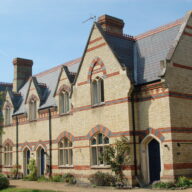
Villa, c1860. Local gault brick with slate roof, hipped, and two symmetrical internal stacks with cut brickwork to upper courses.
See Francis Garrett: Cottenham’s Inns and Hostelries.
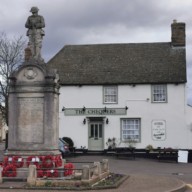
This was probably the largest of the Cottenham Inns. Belonging from the 17th century to the Dowsing family it was occupied by Thomas Branscombe, who was made licensee in 1730.
1753 Alice Dowsing licensee, followed by son, William Tenison Dowsing. House was called the Grey Horse, the Yorkshire Grey.
1786 called the White Horse
1792 Ann Dowsing, then Robert Norman, her husband, ran the house and brewery.
1829 Robert Norman died; Richard took over the business.
1850 house and brewery destroyed in great fire of April 1850, then managed by 22 year old Richard Haddow Norman.
Grandmother, Ann Norman, gave part of the burnt out site of the White Horse to another grandson, Norman Smith, who built “The Limes”.
1851
Norman Smith, 24, farmer 57 acres employing 3 labourers, b Cottenham
1861 approx.
Norman Smith, 34, farm 110 acres employing 4 men, b Cottenham
1891
Charles Hayden Cox, 34, registered general practitioner
1901
Charles H Cox, surgeon
1911
Charles Hayden Cox, b 1854, physician and surgeon, b Dublin
1939 (155)
Robert Ellis, b 1884, doctor of medicine (Major RAMC retired)
Ethel, b 1885 ( WVS leader Cottenham)
Pamela Bruce-Clarke, b 1915 (driver of car first aid party)
Current: (221)
Projects
Contribute
Do you have any information about the people or places in this article? If so, then please let us know using the
Contact page or by emailing
capturingcambridge@
Licence
This work is licensed under
CC BY-NC-SA 4.0


 not including content on external links as indicated
by
not including content on external links as indicated
by .
.