Search by topic
- archaeology
- Building of Local Interest
- chapel
- charity
- church
- crime
- dressmaker
- Great Eastern Railway
- Listed building
- Mapping Relief
- medieval
- oral history
- poverty
- Public House
- railway worker
- Religious House
- Roman
- scholar
- school
- Then and Now
- tudor
- women
- work
- world war one
- world war two
Search by text


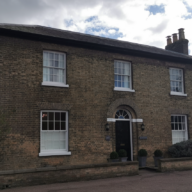
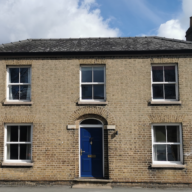
 102 High Street Cottenham
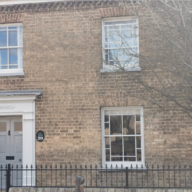
102 High Street, Cottenham
History of 102 High Street
According to Cottenham in Focus (2002) p78, this was the site of the workhouse until 1834, when the poor of Cottenham had to go to Chesterton workhouse. The site was sold in 1840 to James Chivers who built the house.
Herbert Male, butcher, added the bay windows to let extra light into the rooms. Three of his children had consumption and it was felt that more light was beneficial. Sadly, the three children, Selena, Clara and Lizzie died of the disease.
1891
Herbert J Male, 34, butcher, b Cottenham
Dorah née Emerson, 40, b Cottenham
Frank W, 14, b Cottenham
Dorah E, 13, b Cottenham
Lizzie, 10, b Cottenham
Selina, 8, b Cottenham
Clara, 4, b Cottenham
Thomas J, 11 mos, b Cottenham
May Phipers, visitor, 13, b Cottenham
Lucy Maskell, 8, servant, b Cottenham
1892
Lizzie Male, a student at Cottenham School in 1892 made these needlework samples. The piece shows delicate skills in some small samples, keeping to a colour scheme of white blue and red. The red-backed piece from left to right shows needle-turned appliqué, weaving, knitting, cross-stitching and pleating, most likely using a smock machine. The pink backed piece shows weaving, knit, smocking, needle-turned appliqué and cross stitching.
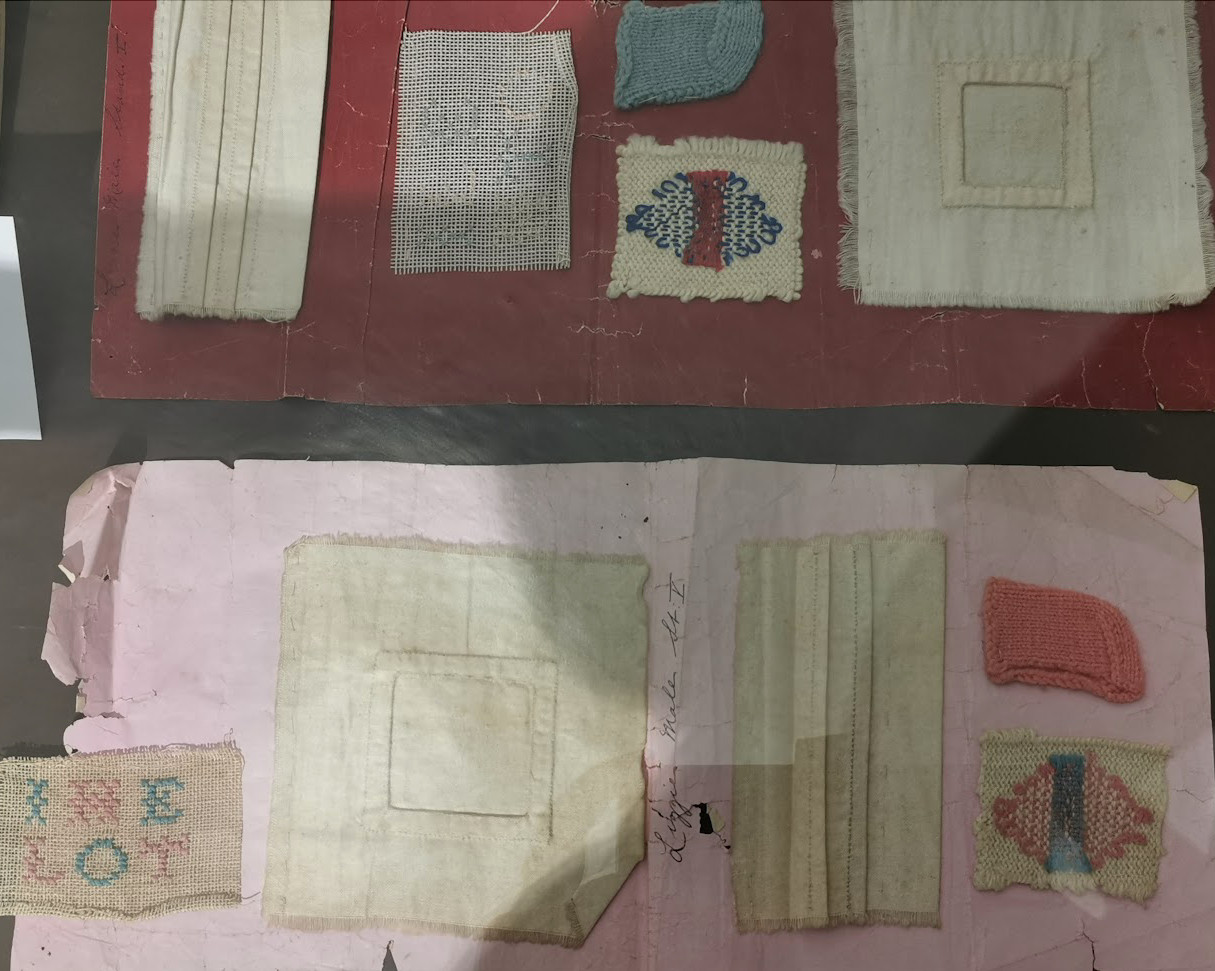
The work of Lizzie Male, c 1892 (MoC)
Red-backed sampler, CAMFK:1.64.47
Pink-backed sampler, CAMFK:2.64.47
Selina Male, c.1883, d.Mar 1904
Clara Male, b c.1887, d. Sep 1905
Lizzie Males died in 1918 in Chesterton. She had married Ernest Charles Short at the Ebenezer Meeting House in Cottenham in Nov. 1908.
Projects
Contribute
Do you have any information about the people or places in this article? If so, then please let us know using the Contact page or by emailing capturingcambridge@
Licence
This work is licensed under CC BY-NC-SA 4.0