Search by topic
- archaeology
- Building of Local Interest
- chapel
- charity
- church
- crime
- dressmaker
- fire
- Great Eastern Railway
- Listed building
- Mapping Relief
- medieval
- oral history
- poverty
- Public House
- Religious House
- Roman
- scholar
- school
- Then and Now
- tudor
- women
- work
- world war one
- world war two
Search by text
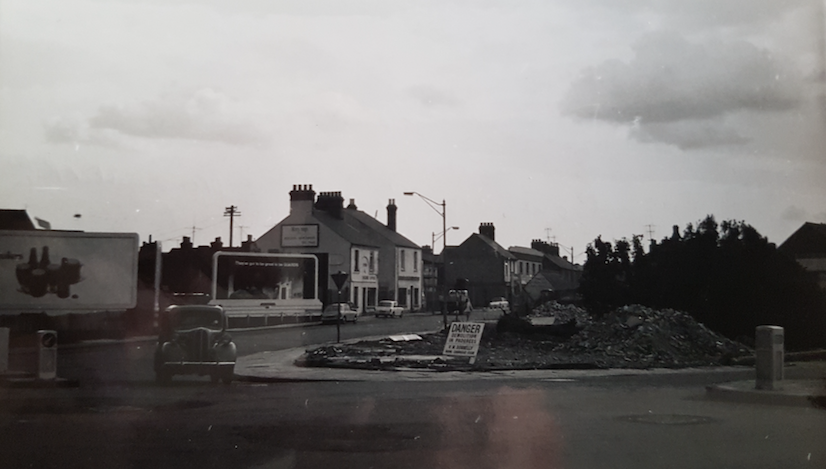 1969 East Road junction with Newmarket Road (probably looking east along East Road)
East Road
History of East Road
In 1966-68 major sewer works took place across the city. It was at the time, and is still probably, the biggest hand-excavated pipe jacking contract in the world. The first phase went from Grantchester Street right across the City to finish next to the River Cam near Newmarket Road. Pipejacking at the time was a new technology; this pioneering project was in the vanguard of work that became highly mechanized world-wide. (information from PS in South Africa 2020)
The article here explains the techniques used which were very innovative. The main pipe was stuck 20 feet underground.
East Road sewer page 1
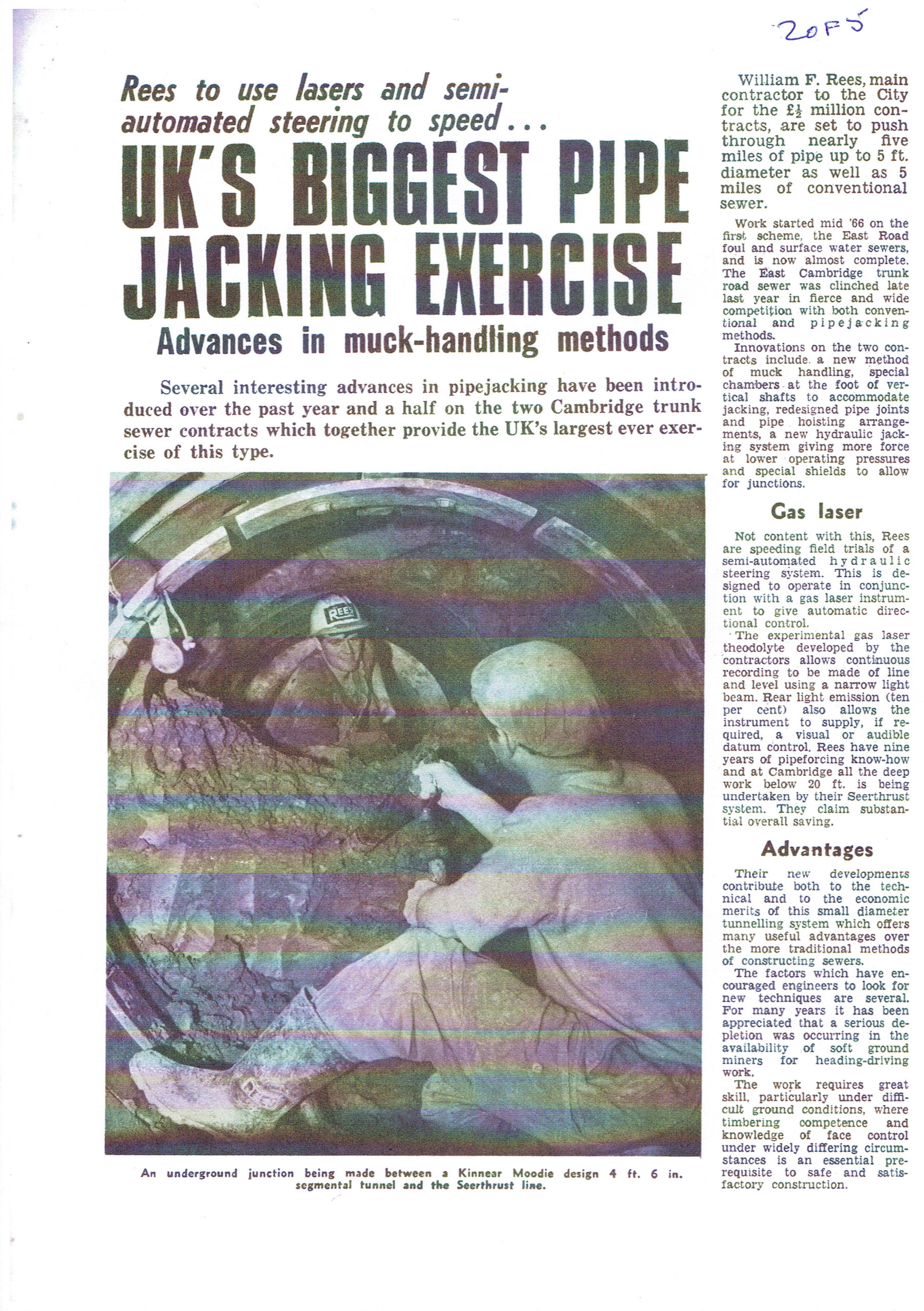
East Road sewer page 2
The photo above was taken on a section of the tunnel on the south side of Parker’s Piece swimming pool. The miners shown are John Donovan (hardhat) and Bill Lougherey.
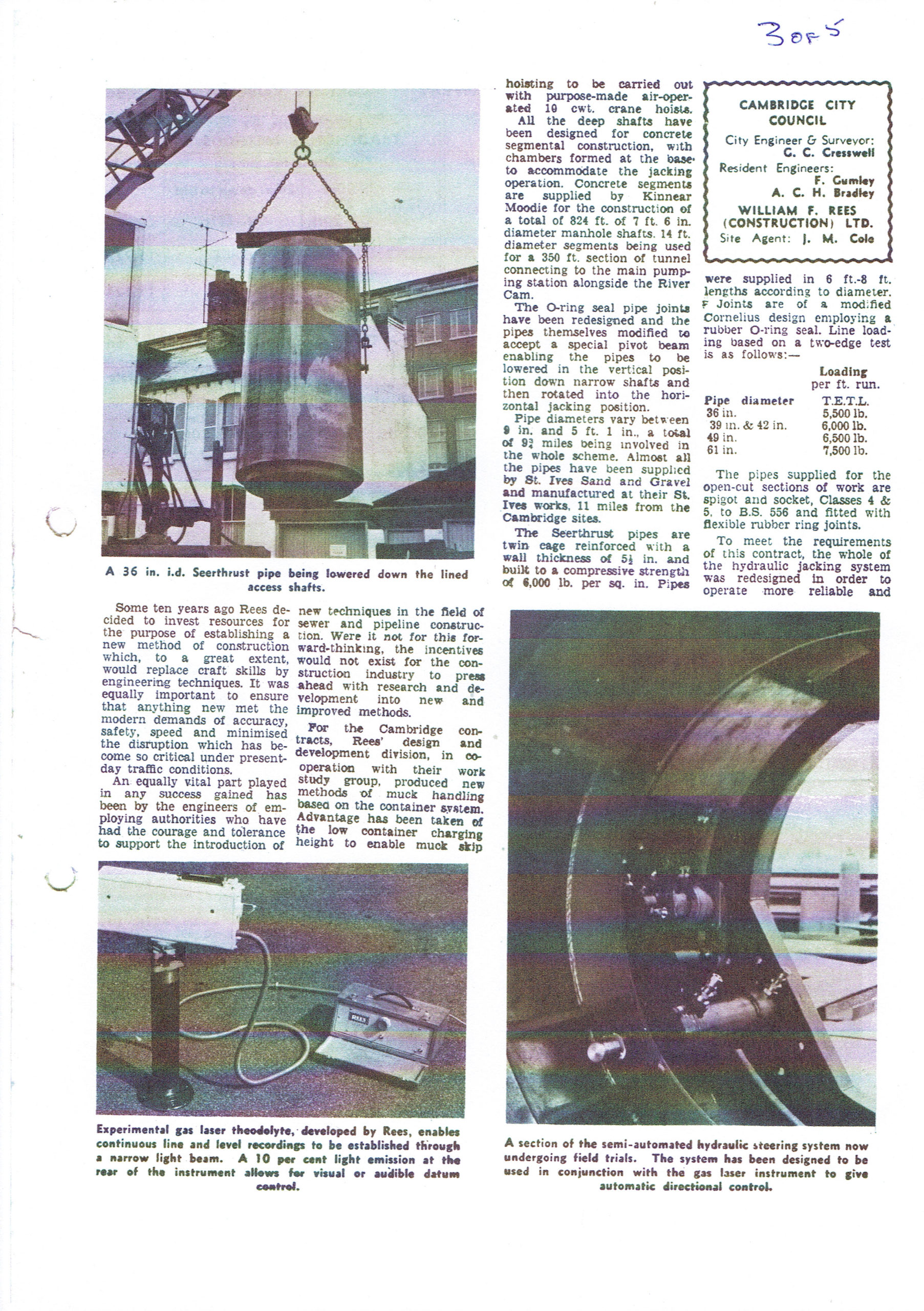
East Road sewer page 3
The photo above was taken near the corner of Newmarket Road and Elizabeth Way.
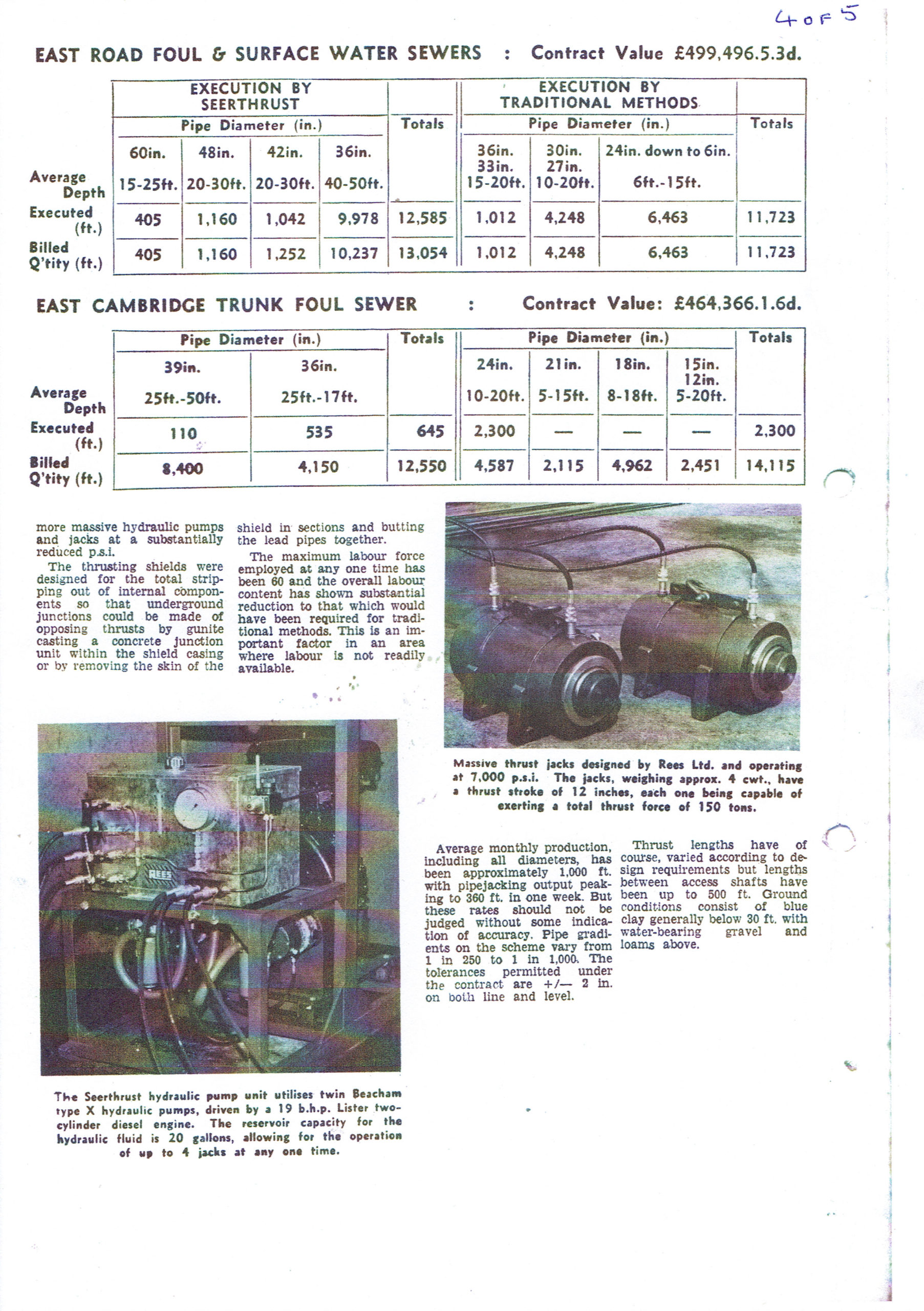
East Road sewer page 4

East Road sewer page 5
In 2021 Mary Burgess of the Cambridgeshire Collection held an online talk showing many old photos of East Road and talking about the building’s history. This talk accompanies her book, East Road 1950 to now: 70 years of change in Cambridge, from which some of the East Road entries have been drawn.
Projects
Contribute
Do you have any information about the people or places in this article? If so, then please let us know using the Contact page or by emailing capturingcambridge@
Licence
This work is licensed under CC BY-NC-SA 4.0