Search by topic
- archaeology
- Building of Local Interest
- chapel
- charity
- church
- crime
- dressmaker
- fire
- Great Eastern Railway
- Listed building
- Mapping Relief
- medieval
- oral history
- poverty
- Public House
- Religious House
- Roman
- scholar
- school
- Then and Now
- tudor
- women
- work
- world war one
- world war two
Search by text
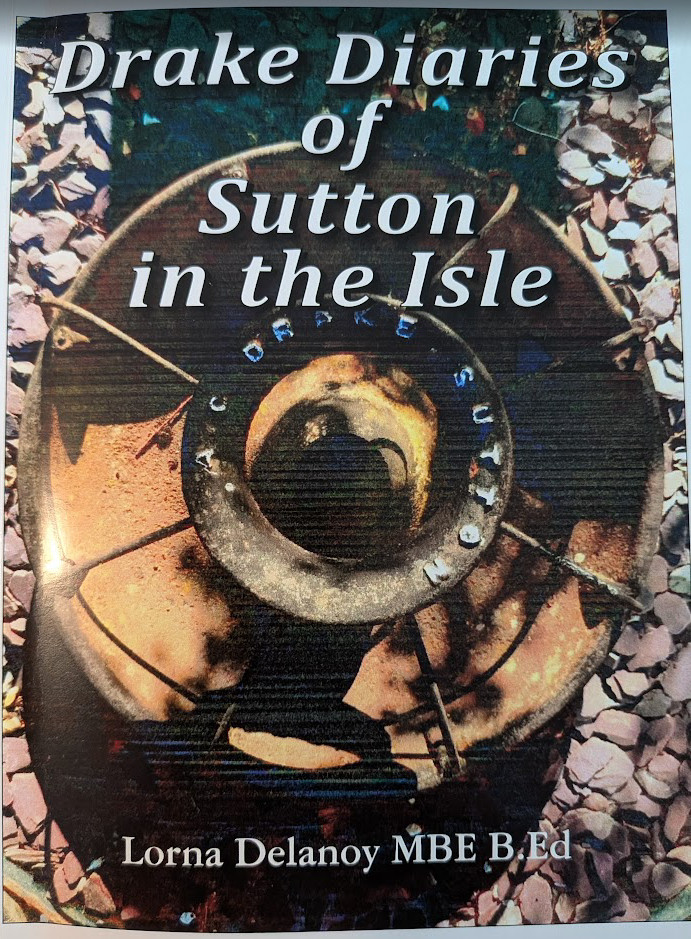
Drake Diaries of Sutton in the Isle: Fenland Family, Farming and Village Life
A detailed account of life in Sutton in the Isle from the 1880s onwards, based on the Drake family diaries and later recollections. It covers chapel life, farming, village customs, steam engines, tran
Drake Diaries of Sutton in the Isle compiled by Lorna Delanoy
Introduction
Drake Diaries of Sutton in the Isle brings together material from the Drake family papers and later reminiscences to tell the story of life in Sutton from around 1880 into the twentieth century. The introduction explains that Richard Drake’s daughter Lizzie and his son Arthur wrote diaries of their early years in the Fen village of Sutton in the eighteen-eighties, and that Richard’s grandson Eric later provided memories of village life in the 1920s. These family sources are combined with later research to create a study of everyday life in Sutton in the Isle.
The booklet is especially valuable because it moves between personal memory and wider local history. It covers religion, farming, local trade, engineering, transport, leisure, family life, and the changing landscape of the Fens. It is therefore not just a family record, but a strong resource for the history of Sutton and the Isle of Ely.
Sutton in the late nineteenth century
The diary extracts begin in the 1880s and 1890s and show a village shaped by chapel life, agricultural work, and family enterprise. The Wesleyan chapel played an important role in the lives of the Drake family, with services, concerts, baptisms, and Sunday gatherings forming part of the regular rhythm of village life. The booklet notes that the chapel drew support from Sutton, Haddenham and nearby villages, and that members of the Drake family were closely connected with it.
One striking feature of the diaries is the way they record routine movement across the Fenland landscape. Family members walked long distances to services, social events, and work, and travelled between Sutton, Haddenham, Witcham, Ely and beyond. This gives a vivid sense of how connected rural Fenland life could be, even before modern transport.
Chapel, Methodism and village society
A major theme of the booklet is the importance of Methodism in Sutton. The Drake family were closely involved with the Wesleyan chapel, and one page reproduces information about the laying of the chapel stone, including names associated with the congregation and schoolroom. The caption makes clear that Haddenham Methodists referred to the chapel as “Drake’s Chapel”, showing how strongly the family was identified with this part of village life.
The diaries also show how chapel life was social as well as religious. Singing, anniversary events, teas, and Sunday gatherings helped shape local relationships and respectability. The booklet suggests that chapel culture was central to the formation of family identity, community standing, and education in Sutton.
Everyday life, hobbies and recreation
The diary extracts give an unusually rich account of recreation and domestic life. They mention concerts, card games, collecting, photography, skating in hard winters, picnics, excursions, and local entertainments. There are also glimpses of friendships, visiting customs, and the importance of tea, supper, and social gatherings in the home. One section explicitly notes that life was “not all work and no play” for the Drakes.
These passages are particularly useful because they show village life in the round: not only work and religion, but leisure, humour, shopping, outings, and family sociability. This is exactly the kind of evidence that helps reconstruct the texture of everyday life in Sutton in the Isle.
Richard Drake and Sons
The Drake family were not only diarists but significant local business figures. The booklet includes headed paper for Richard Drake & Sons Ltd, based at the East Anglian Forage Works, Sutton, Isle of Ely, and shows that the firm dealt in straw, chaff, coal merchants’ work, and threshing machine proprietorship. This material places the family within the commercial and agricultural life of the district.
Another page reproduces a patent specification from 1895 for improvements in machinery connected with riddles or sifters in chaff-cutters and threshing machines, underlining Richard Drake’s reputation for inventiveness. The caption notes that he was often described as “a man ahead of his time”.
Steam power, engines and agricultural technology
A major strength of the booklet is its coverage of agricultural machinery and steam power. Several pages reproduce images of traction engines and related equipment, and later pages include an article on the rise and fall of the Drake dynasty as a Fenland engineering and haulage concern. These materials show the Drakes not just as farmers or merchants, but as active participants in the mechanisation of Fenland agriculture.
The illustrations and captions link Sutton with wider networks of engineering, haulage, threshing, and land drainage. They also reveal how steam engines transformed work in the Fens, from threshing and transport to the movement of goods and agricultural materials. This makes the booklet especially useful for anyone researching rural industry in Cambridgeshire.
Eric Drake’s memories
Later in the booklet, extracts from letters written by Eric Drake describe childhood memories of Sutton in the 1920s. These recollections include water supply, chapel music, village amusements, local bird life, marbles, wasp stings, rabbiting, and the rhythms of school and home. They are especially valuable because they preserve the sensory detail of village life: what people did, what they heard, and how they occupied their time.
Eric also recalls local landmarks and changing places, including Hickling House, the post office, the one-shop, bridges, and the waterways around Sutton. His memories make the village legible as a lived landscape, not just a place on a map.
Water, bridges and the Fen landscape
The booklet repeatedly shows how important water and drainage were to Sutton life. There are references to drainage mills, steam and diesel pumps, the New Bedford River, Hickling Broad, barge unloading, and the movement of hay and produce across the Fenland waterways. One image caption notes the concrete bridge over the New Bedford being built in 1930 near the place where a great-grandfather’s barges were unloaded.
This is a reminder that Sutton’s history cannot be separated from the engineered Fen landscape. Roads, drains, pumps, bridges, and waterways all shaped local trade, work and memory.
Family, inheritance and continuity
The booklet also includes family-history material, including a probate document and comments on inheritance and succession. These details help explain how business, land, and responsibility passed through the Drake family, and why the family remained locally significant across several generations.
Because the source combines diaries, legal documents, photographs, recollections, and later commentary, it offers a layered view of continuity and change within one Sutton family and the wider village around them.
Why this source matters
This booklet is valuable because it combines several kinds of evidence: family diary, oral recollection, business archive, photographs, and local history commentary. Together they create a detailed account of everyday life in Sutton in the Isle across a period of major change. It shows chapel culture, family life, local enterprise, steam technology, changing communications, and the lived experience of the Fen landscape.
Sources
- Diary
- Oral / Unpublished Sources
- Photographs
Contribute
Do you have any information about the people or places in this article? If so, then please let us know using the Contact page or by emailing capturingcambridge@
Licence
This work is licensed under CC BY-NC-SA 4.0