Search by topic
- archaeology
- Building of Local Interest
- chapel
- charity
- church
- crime
- dressmaker
- fire
- Great Eastern Railway
- Listed building
- Mapping Relief
- medieval
- oral history
- poverty
- Public House
- Religious House
- Roman
- scholar
- school
- Then and Now
- tudor
- women
- work
- world war one
- world war two
Search by text
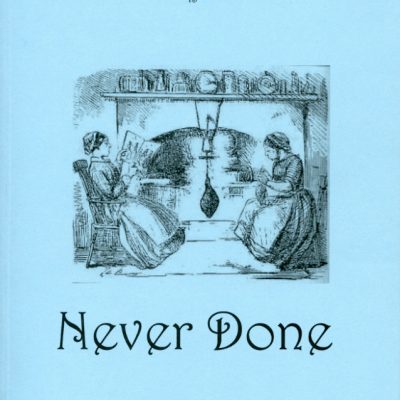
Never Done: Memories of Work and Life in the Fen Country
An evocative collection of oral history accounts describing the relentless nature of work and daily life in the Cambridgeshire Fens, capturing farming, domestic labour, poverty, resil
“Never Done”
Memories of work and life in the Fen Country
Introduction
“Never Done” is a powerful collection of oral history material focusing on the constant, often exhausting labour that shaped everyday life in the Cambridgeshire Fens.
The title reflects a recurring theme in the accounts: work—whether in the fields or the home—was continuous, physically demanding and rarely finished. The booklet draws on interviews recorded in the 1970s and 1980s, preserving first-hand memories of earlier generations.
The meaning of “never done”
The phrase “never done” appears frequently in accounts of domestic life, especially from women.
It refers to:
- Endless household labour
- Cooking, cleaning and washing without modern appliances
- Caring for large families
- Supporting farm work alongside domestic duties
This concept captures the rhythm of life in the Fens before mechanisation and modern conveniences.
Women’s work and domestic labour
A central theme is the scale and intensity of women’s work.
Accounts describe:
- Washing clothes by hand
- Baking and preserving food
- Fetching water and managing fuel
- Preparing meals for large households
Domestic labour was not separate from economic life—it was essential to the survival of farming families.
Farming and field work
Alongside domestic work, many women and children also contributed to agricultural labour.
This included:
- Harvesting crops
- Working in fields during peak seasons
- Supporting livestock care
The division between “home” and “work” was often blurred.
Childhood and early responsibility
Children were expected to contribute from an early age.
Recollections include:
- Helping with household chores
- Assisting in the fields
- Taking on responsibilities well before adulthood
These experiences shaped a strong sense of duty and resilience.
Poverty and resourcefulness
Many accounts describe limited financial resources.
Examples include:
- Making do with very little money
- Reusing and repairing clothing and tools
- Growing and preserving food to survive
Despite hardship, the accounts often emphasise ingenuity and adaptability.
Food and household economy
Food preparation was central to daily life.
Activities included:
- Baking bread
- Preserving fruit and vegetables
- Managing seasonal supplies
- Feeding large households with limited means
Rationing and scarcity, especially during wartime, required careful management and creativity.
Community and mutual support
Despite hardship, there was strong community cohesion.
The accounts describe:
- Neighbours helping each other
- Sharing resources
- Informal support networks
This sense of community was essential in a demanding rural environment.
Change over time
The booklet also reflects on change across the twentieth century.
Key developments include:
- Mechanisation of farming
- Improvements in housing and water supply
- Reduced reliance on manual labour
- Changing roles within families
These changes transformed daily life but also marked the end of older ways of living.
Sources
- Book
- Oral / Unpublished Sources
Contribute
Do you have any information about the people or places in this article? If so, then please let us know using the Contact page or by emailing capturingcambridge@
Licence
This work is licensed under CC BY-NC-SA 4.0