Search by topic
- archaeology
- Building of Local Interest
- chapel
- charity
- church
- crime
- dressmaker
- fire
- Great Eastern Railway
- Listed building
- Mapping Relief
- medieval
- oral history
- poverty
- Public House
- Religious House
- Roman
- scholar
- school
- Then and Now
- tudor
- women
- work
- world war one
- world war two
Search by text
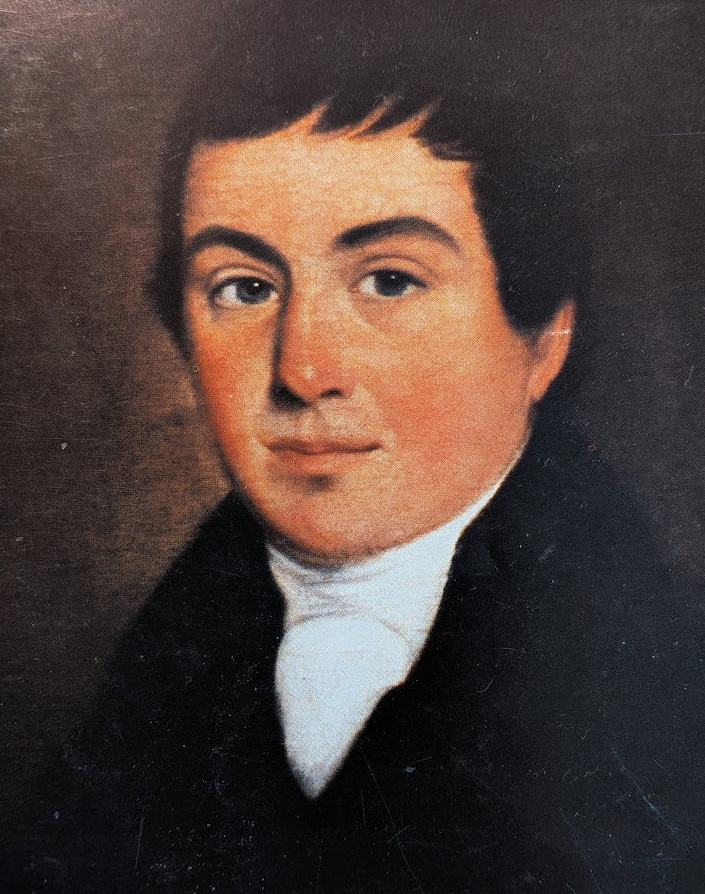 John Peck of Parson Drove
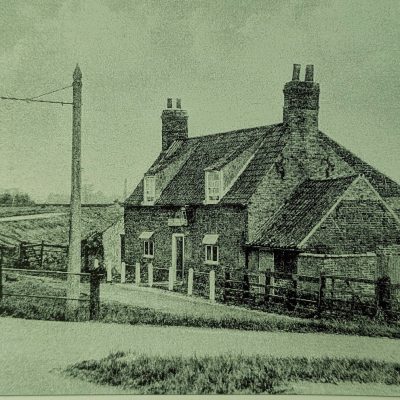
Inham Hall, Parson Drove
History of Inham Hall
Listed Building
House built 1723 with early C19 facade.
“John Peck of Parson Drove – an exceptional Fenman” by Dian Blawer (1997) is a detailed account of the life of John Peck who moved to In ham Hall in 1811. S Egar writing in 1895 describes the village as:
… apparently nearly cut off from the rest of the world. Good roads there were none. The dikes or banks kept up by the adjoining owners served a double purpose, protection against the floods, and roads which for the greater part of the year were nearly impassable even for packhorses.
The nearest doctor was at Wisbech, four hours away. The only regular communication with the town was a public carrier who went once a week. Villagers could walk, ride, occasionally use a wagon, or skate in the winter.
John Peck kept a diary from 1814. to 1851 which survives in 36 volumes. He farmed between 350 and 400 acres; in addition he was Constable, a Surveyor of Highways and a Commissioner of Income Tax. He was very interested in travel and once the railway came to East Anglia took full advantage.
Peck was a tenant until he bought Inham Hall Farm in 1843. The 1840s were difficult years for farmers. The price of grain had been guaranteed by the Corn Laws but in 1846 Sir Rbert Peel proposed to abolish these. The price of wheat went into a downward spiral. Peck believed that it was no worth growing wheat as the market became flooded with foreign imports.
As Constable of parson Drove, John Peck was involved in the cases including that of John Rolfe sentenced to death for murder of John Lander at Littleport, and the execution of Israel Garner and James Coleback in 1819 for the robbery of Arthur Ward at Thorney Fen.
The local gibbet stood at Guyhirn until in 1831 is was swept away by a sea flood from the Wash.
One story peck tells is that of the last time the gibbet was used:
Michael Quin, James Culley, Thomas Quin and Thomas Markin, four Irishmen, murdered William Marriott in Wisbech Fen in July 1795. They were arrested at Uttoxeter and executed at Wisbecj on october 24th. The bodies of Markin and Michael Quin were delivered to the suregons for dissection. James Culley and Michael Quin were hanged in chains at Guyhirn opposite the house where the murder was committed. For some years before the gibbet was washed away, not a vestige of their bones could be seen.
The Wisbech Advertiser in 1890 continued the story: The iron framework in which the culprit’s head was fixed on the gibbet was popularly called “Paddy’s nightcap”. and is of iron, round in shape with crossbars, and having a heavy iron collar which fitted around the neck. The framework came into the possession of the late Mr Joseph Peck many years ago, he having given a man 10s to fetch it down from the gibbet.”
A mysterious death was that of John Turner, an Upwell farmer found dead in 1831 in a field near Wisbech. A local man, James Bridges, was convicted of the murder on the basis of circumstantial evidence and sentenced to transportation for life.
Another duty of the constable was chasing down the father’s of illegitimate children. Otherwise such children and their mothers became a charge on the parish. In one case in 1819 Peck had to track down a Francis Ward to Wildmore Fen. Ward was arrested and taken to Boston, then to Wisbech gaol. The mother, Sarah Brown and child were then fetched and brought to St Mary’s Wisbech where the couple were married. Peck then dined with the newly married couple and went home to Parson Drove.
The great drainage work which is associated with John Peck was the construction of a new river that passed through Gorefield Fen and achieve the natural drainage of Parson Drove Fen. He was awarded with a magnificent silver cup on October 21st 1826 at the White Hart in Wisbech in recognition of his contribution to the project.
Sources
- Book
- Diary
Projects
Contribute
Do you have any information about the people or places in this article? If so, then please let us know using the Contact page or by emailing capturingcambridge@
Licence
This work is licensed under CC BY-NC-SA 4.0